
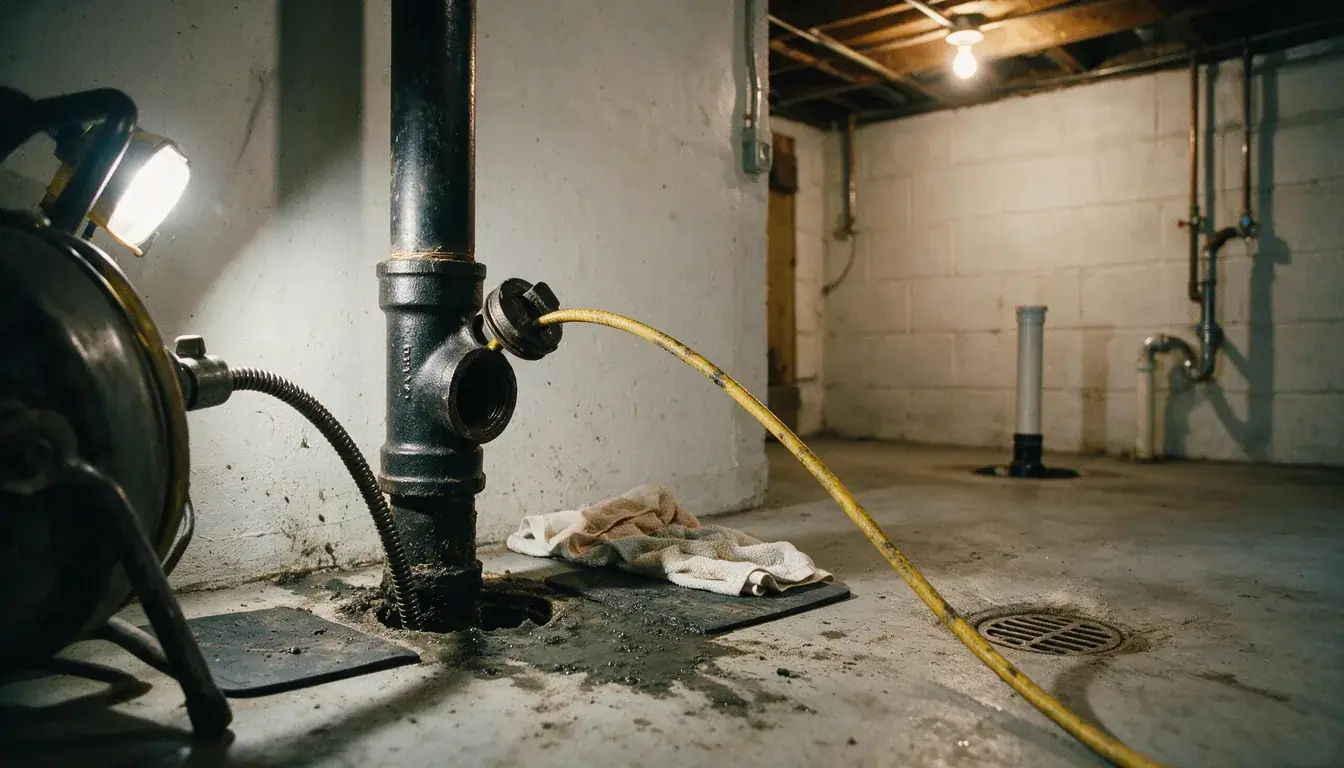
Emergency Drain Cleaning in Pittsburgh, Pennsylvania
Drain Cleaning in Pittsburgh, Pennsylvania clears clogged drains, slow drains, and backed-up sinks fast. Local conditions in Pittsburgh: water measured at 7, a 36 frost line and a median home age of 84 years.
Active water damage compounds by the hour — the 24/7 line connects calls to independent local plumbers serving Pittsburgh in our partner's network.
Who do I call for a clogged drain in Pittsburgh?
A plumber for drain cleaning. One slow sink is routine; several fixtures backing up at once, or sewage coming up a floor drain, points to the main line and is urgent in any Pittsburgh home.
What does the local plumbing data show for Pittsburgh, PA?
Seeing these conditions at your place in Pittsburgh? Describe them on the call to a state-licensed local plumber — free, no obligation.
What are the pipe conditions in Pittsburgh, PA?
Drain cleaning in Pittsburgh addresses two distinct problems: immediate blockage clearance (snake or jet, usually one visit) and the underlying condition causing recurring clogs (root intrusion, scale buildup, pipe belly, or grease accumulation requiring treatment beyond a single service call). The right approach depends on the root cause — a cable machine clears the blockage without revealing what caused it; a camera scope adds a separate charge but determines whether the drain will re-block in weeks or hold for years. AlertPlumber routes your call to an independent Pennsylvania-licensed plumber — ask them to price both options up front. Freeze events and frost-depth requirements add pipe insulation, exterior faucet winterization, and burst-risk assessment to service calls in this climate.
Pittsburgh's water utility maintains an active lead service line (LSL) replacement program. With a median home age of 84 years, a portion of the housing stock may still have lead service laterals connecting the water main to interior supply — a consideration during any work near the service entry point. Ask a licensed plumber to confirm whether supply-side work requires utility coordination. Homes of other eras in Pittsburgh may have galvanized pipe, copper pipe or polybutylene supply lines instead; ask the plumber which your home has.
Hard water in Pittsburgh accelerates scale buildup inside water heater tanks, on heating elements, and at fixture connections. Sediment accumulation in tank heaters reduces efficiency and shortens element life; visible deposits at aerators and showerheads are an early indicator. Ask a licensed plumber to assess whether a water softener or conditioner is appropriate for the home's service configuration.
Frost line depth in Pittsburgh means supply lines and outdoor plumbing must be installed below the freeze threshold — typically 36 — to prevent pipe burst during cold events. Exterior hose bibs, irrigation shutoffs, and any exposed pipe runs are the most common winterization service points in freeze-risk markets.
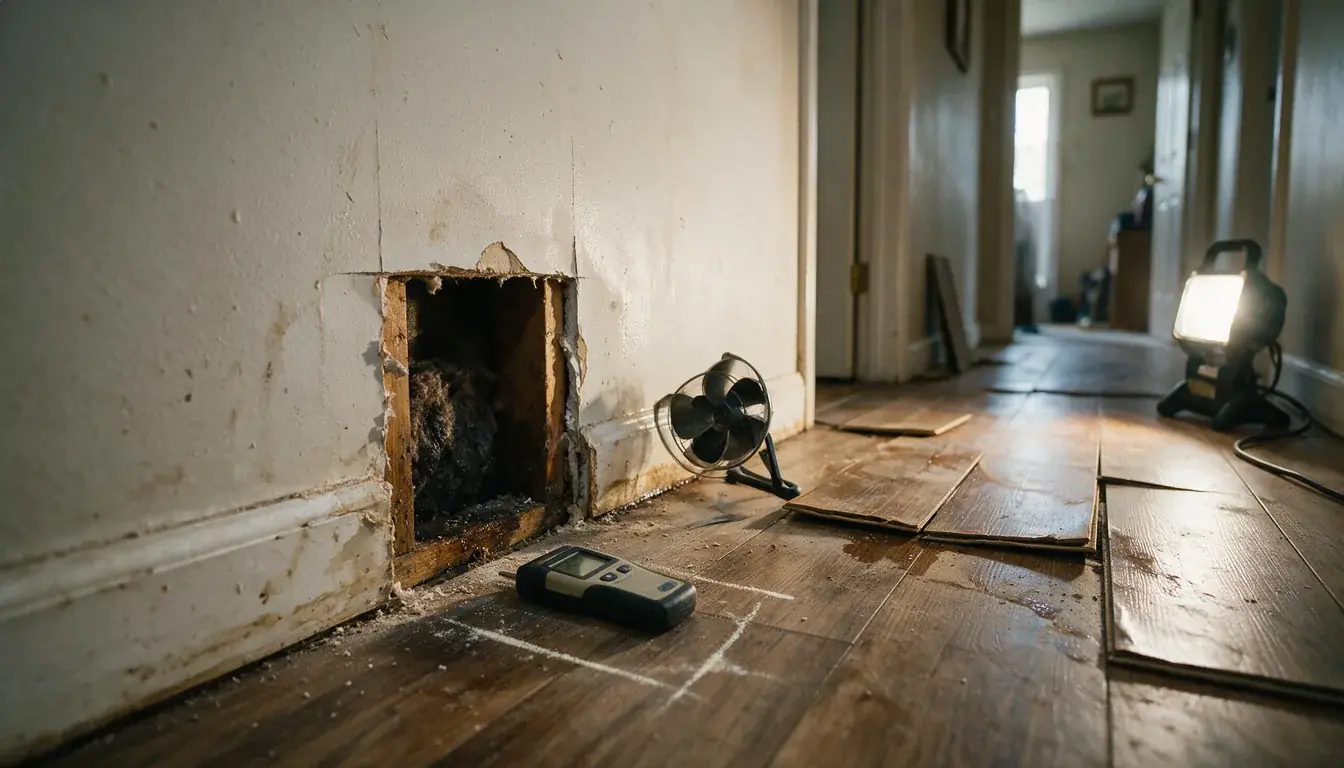
- Median home age
- 84 yrs
- Water hardness
- 7 gpg
- Frost line
- 36 in.
- Permit
- City fee schedule
Census housing age, Pittsburgh city, Pennsylvania: median year built 1942; 68.8% of homes built before 1960, 83% before 1980. Source: U.S. Census Bureau, ACS 2020–2024 5-year estimates, tables B25034 and B25035, read 2026-09-30.
Mention these conditions when you describe the symptom to the PA plumber you reach.
What shapes plumbing demand in Pittsburgh, PA?
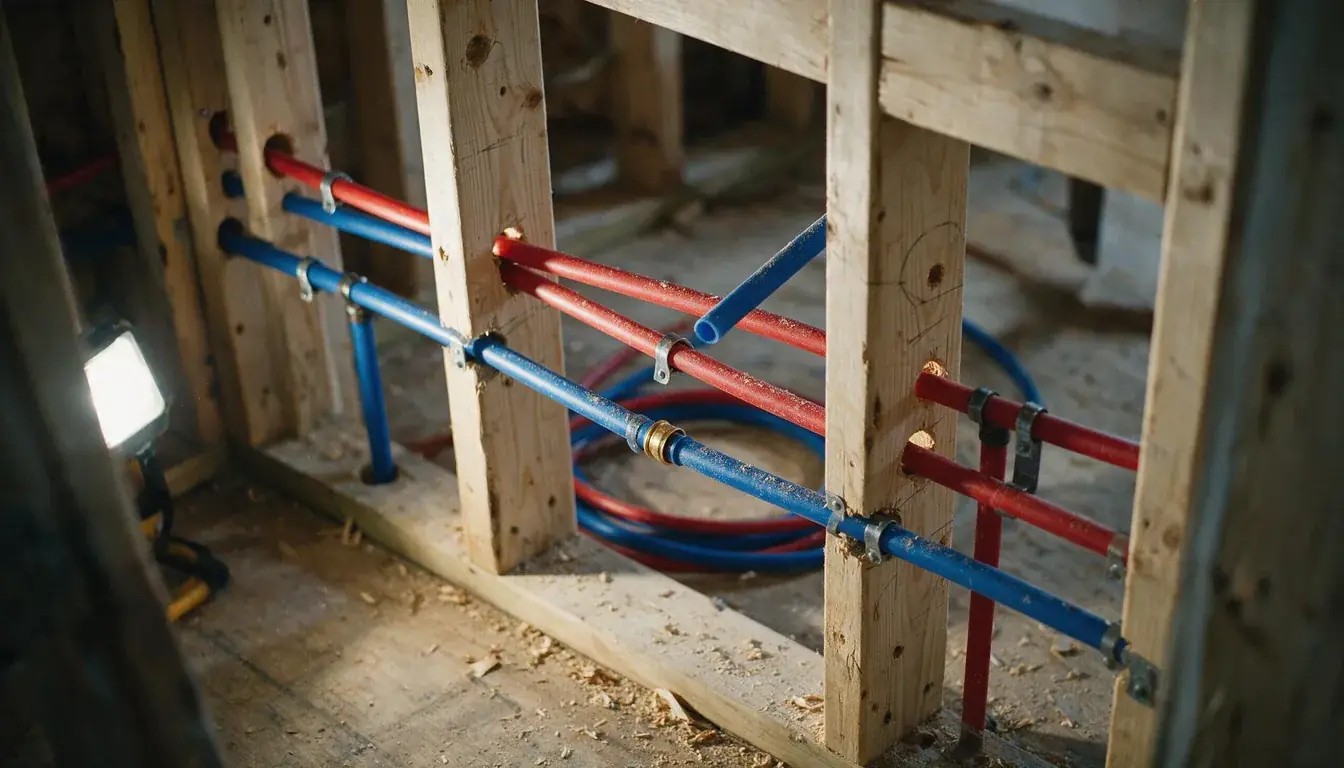
Galvanized supply lines and cast iron drain systems from the 1880s–1940s are past their 40–70-year design life across much of Pittsburgh. Interior rust scale progressively narrows pipe bore. Plumbers here routinely scope supply lines before quoting any repair — the underlying pipe condition often makes full replacement more cost-effective than patching.
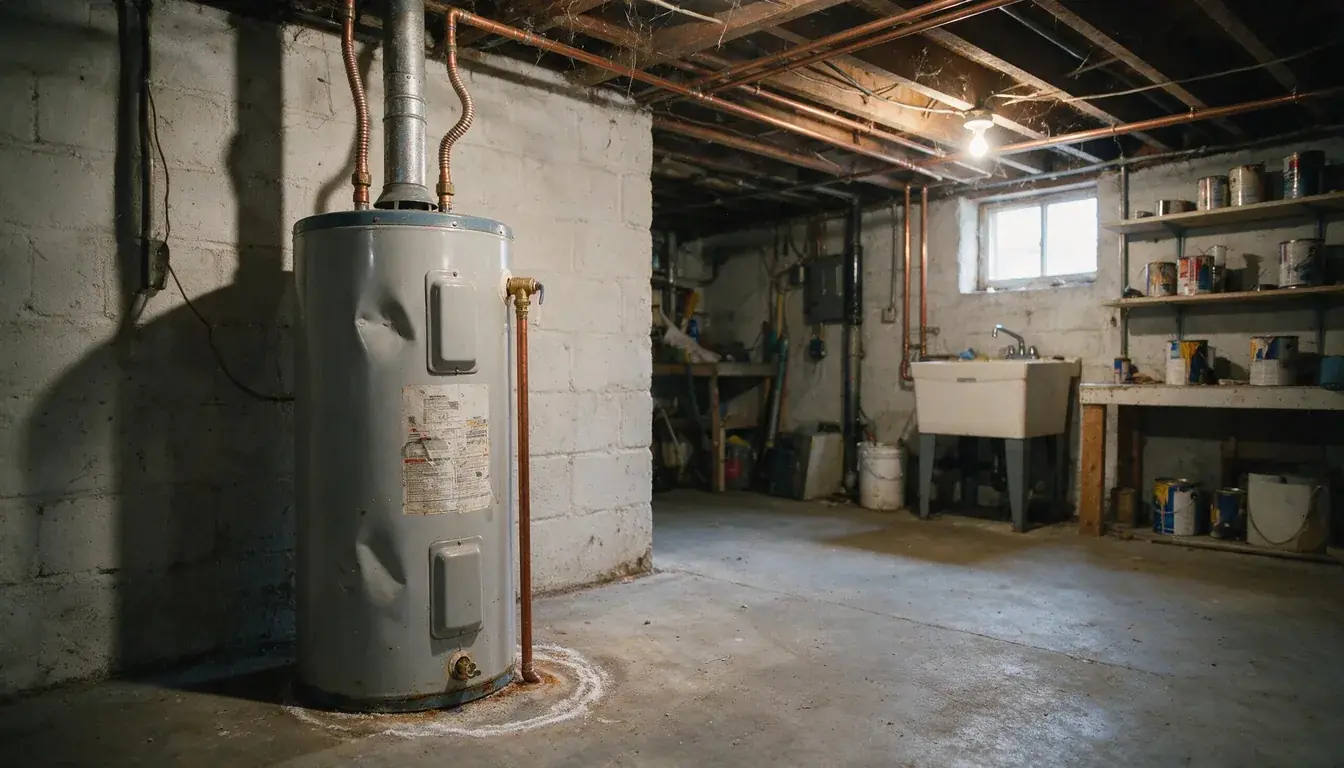
8–14 GPG shortens water heater service life to 8–11 years in Pittsburgh and drives rolling maintenance demand at aerators, shower cartridges, and heat exchanger ports. Annual flushing prevents premature failure; skipped maintenance cycles push units toward early replacement. Scale-related calls represent a significant share of the annual service workload here.
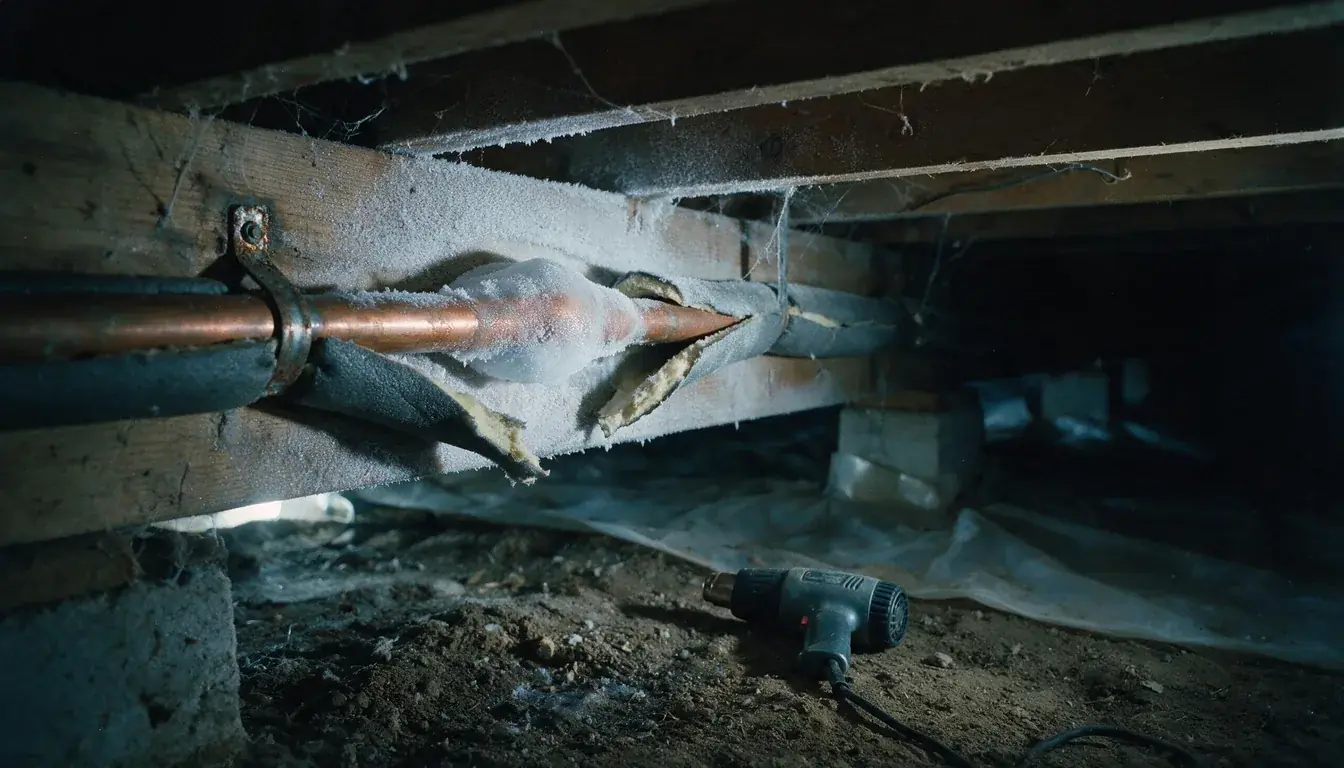
The primary surge in Pittsburgh runs January–March, with a secondary wave at the spring thaw — when pipes that held through the freeze rupture as pressure is restored above 32°F. Scheduling competition peaks exactly when emergency calls are highest. Homeowners who wait for visible damage compete for the same limited plumber slots at the worst possible time.
Active damage in Pittsburgh — how is it contained, assessed and restored?
Submit your Pittsburgh address and describe the active damage — flooding, failed shutoff, burst or frozen line. AlertPlumber passes the request to an independent PA-licensed plumber in its partner's network — ask them to confirm receipt and give you an arrival window.
On arrival, ask the plumber to locate the nearest shutoff and map the damage boundary — affected lines, access points, material condition — and to tell you what requires immediate containment and what can wait until the full repair scope is confirmed.
Ask for a written containment and repair scope to approve before any work begins, with temporary isolation priced separately from full restoration. Give your explicit sign-off before each phase proceeds.
Drain Cleaning cost calculator — Pittsburgh
Pre-filled for drain cleaning in Pittsburgh. Adjust the ZIP for a neighboring area, or change the service to compare. Calculator pulls from the city's scraped permit-fee + state plumber-density data.
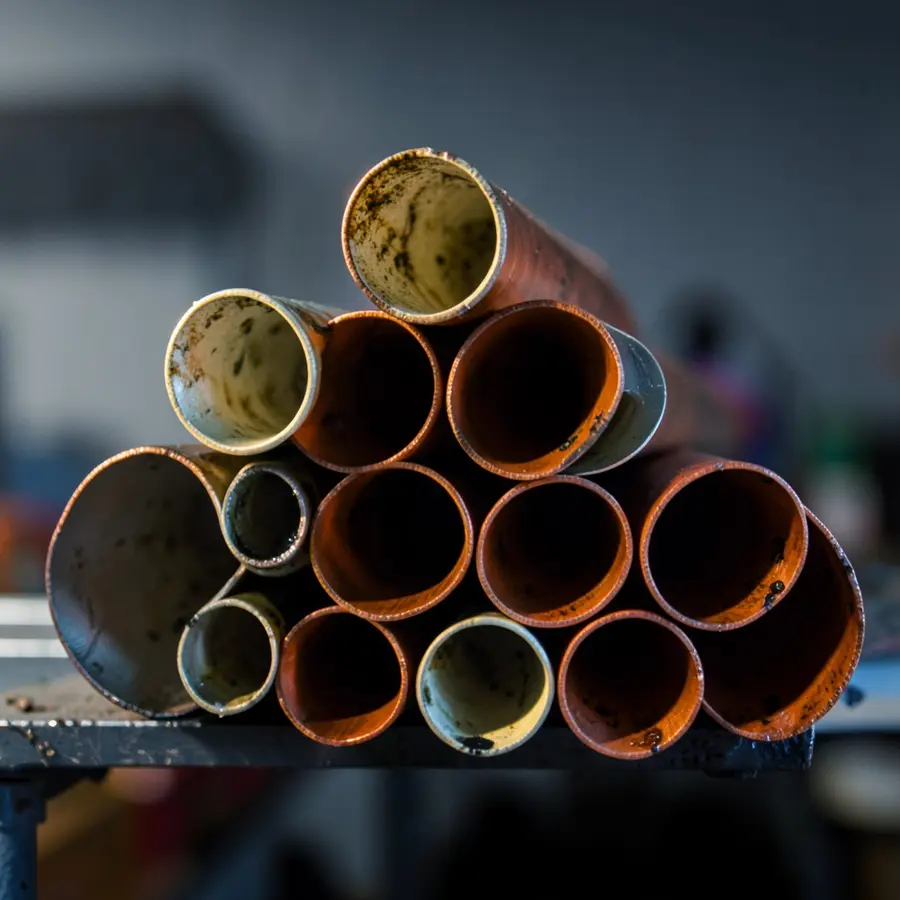
Drain Cleaning in Pittsburgh — the longer it runs, the more it costs.
Slow failures compound: soft pipe walls, root penetration, mineral buildup. Ask the plumber you reach for a scope-first estimate before anything is dug up.
What else do people ask about drain cleaning in Pittsburgh?
How much does drain cleaning cost in Pittsburgh, PA?
Drain cleaning in Pittsburgh typically runs less for a single fixture than for a main-line clog requiring power snaking or hydro jetting. Pricing reflects the Pittsburgh PLI plumbing permit fee of the scheduled fee plus inspection, plus the higher labor needed on Squirrel Hill 1920s-1940s brick colonials and Lawrenceville Victorian rowhouses where cast-iron stack work and tight cellar access add time. Roots intruding through clay laterals push estimates toward the upper end. Price ranges: drain cleaning cost guide.
How fast can a Pittsburgh plumber reach my home for a drain emergency?
Arrival times depend on which independent plumber takes the call, the time of day and the season — ask for an arrival window on the call. ETAs depend on which neighborhood the call originates from — Squirrel Hill, Shadyside, and Strip District arrivals tend to be faster than hillside Mount Washington or outer Mon Valley because of crew density across the Three Rivers footprint. Ask the plumber who takes the call for an arrival window.
Do I need a permit for drain cleaning in Pittsburgh?
No permit is required for routine fixture-side snaking. A permit IS required if work involves replacing pipe, repairing a sewer lateral, or opening a wall to access cast-iron stack. Pittsburgh PLI charges a plumbing permit fee plus inspection, and 4,200 residential plumbing permits were issued across the city in 2024. Ask whether the plumber will pull the permit on your behalf. Permit fee ranges: permit fee estimator.
What causes most drain clogs in Pittsburgh rowhouses?
The dominant cause in Pittsburgh housing stock (84-year median home age, 1940 build) is internal cast-iron rust scale narrowing the stack bore. PWSA water averages 7 gpg — soft-to-moderate — so the clog driver is corrosion, not mineral scale. In Lawrenceville and Squirrel Hill, secondary root intrusion through pre-1900 clay sewer laterals is common, and Pittsburgh still has roughly 16,000 lead service lines slated for PWSA replacement.
Will my Pittsburgh homeowners insurance cover drain cleaning?
Standard Pennsylvania homeowners policies typically do NOT cover routine drain cleaning, but they may cover water damage caused by a clog-driven backup, subject to your deductible. Sewer-backup endorsements are sold separately and strongly recommended in Pittsburgh given the cast-iron stack and aging clay-lateral pattern across Squirrel Hill, Lawrenceville, and South Side Flats rowhouses. Confirm coverage with your carrier before assuming.
Should I pour a chemical drain cleaner down my Pittsburgh cast-iron line first?
Most Pittsburgh-area plumbers recommend AGAINST chemical drain cleaners on cast-iron stack work. The corrosive chemistry accelerates rust-scale flaking, can damage aging lead-and-oakum joints common in pre-WWII Pittsburgh plumbing, and rarely clears a true clog. Mechanical snaking or low-PSI jetting is faster and far less risky for the pipe — especially on the original stacks still in service across Squirrel Hill and Lawrenceville.
Snake or hydro jet — which does a Pittsburgh cast-iron drain need?
Snaking handles a single localized clog. For Pittsburgh cast-iron stacks with decades of rust and grease scale, hydro jetting at moderate pressure (1,500-2,500 PSI, NOT full residential 4,000 PSI) scours the entire pipe interior without breaking through brittle joints. Jetting on Pittsburgh cast-iron typically runs a scope-based price and is the right call for any line that has clogged twice in 12 months. Price ranges: drain cleaning cost guide.
How often should Pittsburgh homeowners get drains professionally cleaned?
For Pittsburgh homes with original cast-iron drains or a known root-intrusion history, a professional inspection every 12-18 months is reasonable. PWSA delivers 7 gpg water from the Allegheny, so mineral deposition is mild and the real issue is internal corrosion of pre-WWII pipe rather than scale. Multifamily Lawrenceville and Squirrel Hill owners with shared waste stacks should consider annual jetting to head off backups.
How do I check the license of a plumber in Pennsylvania?
Yes. Every plumber reached through AlertPlumber in Pittsburgh holds an active state credential through PA L&I and registers with Pittsburgh PLI for in-city work. AlertPlumber verifies credentials against the state database (~2,800 active PA L&I plumbers serving the Allegheny County market) so you are not connected to an unverified handyman.
What ZIP codes around Pittsburgh does AlertPlumber cover?
AlertPlumber's call line accepts calls from all Pittsburgh ZIP codes (152xx prefix covering Downtown through Squirrel Hill, Lawrenceville, South Side Flats, Strip District, and Mount Washington) plus the inner-ring Allegheny County communities — Mt. Lebanon, Bethel Park, Penn Hills, Wilkinsburg, Bellevue, Aspinwall, and Castle Shannon. PWSA service-area calls and Greater Pittsburgh suburban routing both work through the same intake form.
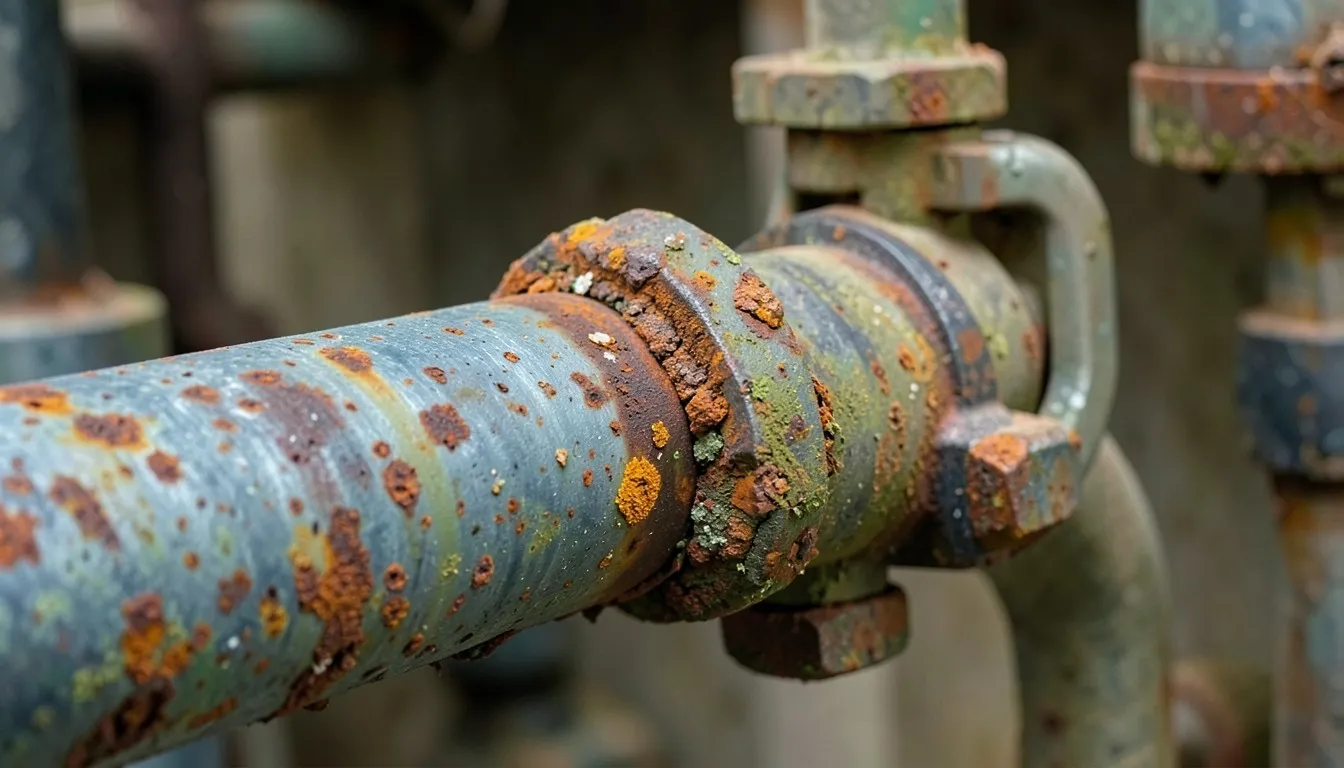
The fix gets cheaper the sooner a plumber sees it.
Degradation problems compound quietly. Call now, or use the form below to reach an independent Pennsylvania plumber, and ask for an estimate for the drain cleaning — you are under no obligation.
Need a drain cleaning callback in Pittsburgh?
In a meeting, with the kids, or just prefer not to call? Drop your ZIP and number below. AlertPlumber sends your request to our routing partner — if a participating plumber serves your area, they may call you back directly. For anything urgent, call the number on this page.
- 1 Submit your info. ZIP, phone, and what kind of work you need.
- 2 AlertPlumber passes it on to our routing partner for your area.
- 3 If a participating plumber serves your area, they may call you back. Ask for a written estimate before work starts.
Drain Cleaning in Pittsburgh — catch it early
Degradation-driven failures worsen over time and cost more to fix the longer they run. Ask the independent PA plumber you reach in Pittsburgh to diagnose your specific condition and put the scope in writing before any work begins.