
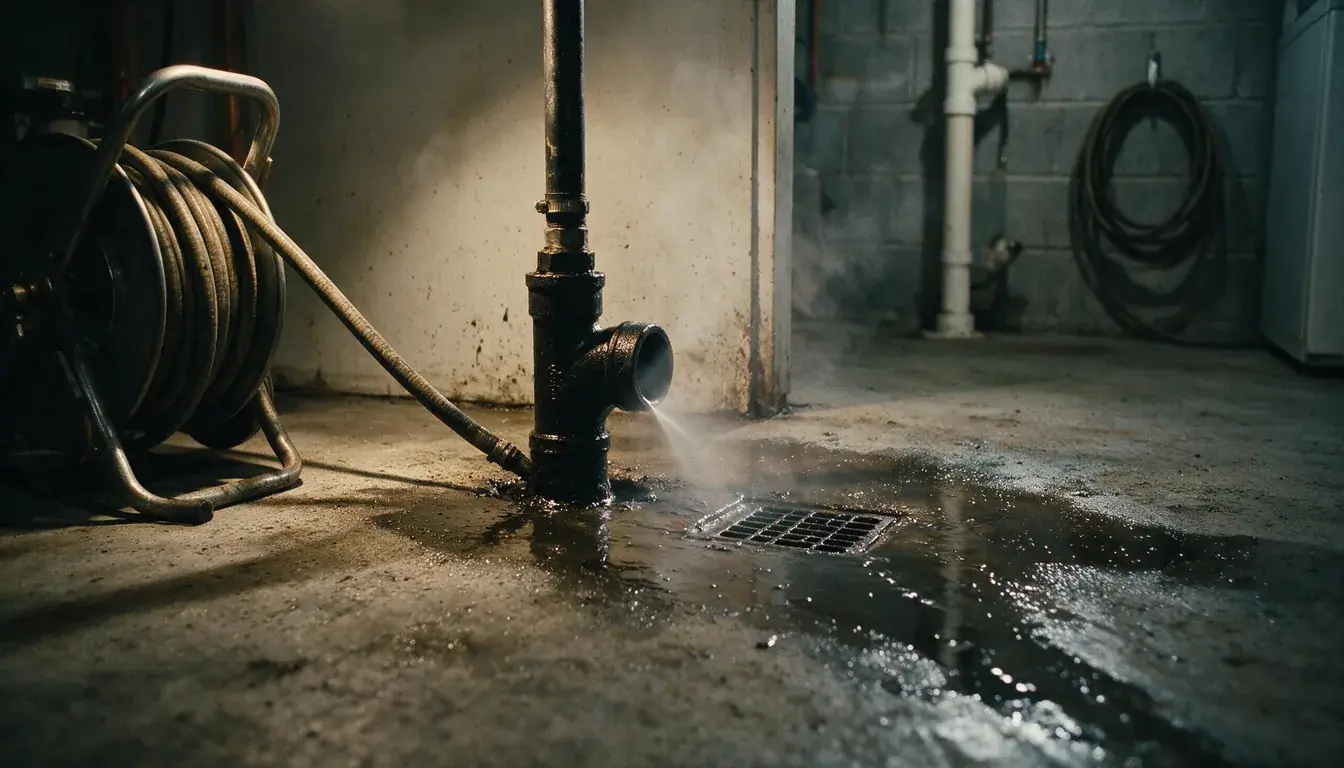
Emergency Hydro Jetting in Greenville, South Carolina
Hydro Jetting in Greenville, South Carolina is high-pressure water jetting to clear severe clogs and grease in main lines. Local conditions in Greenville: water measured at 1, a 12 frost line and a median home age of 47 years.
Camera first, quote second — know exactly what's wrong in your Greenville home before you approve a dollar.
What does the local plumbing data show for Greenville, SC?
Seeing these conditions at your place in Greenville? Describe them on the call to a state-licensed local plumber — free, no obligation.
What are the pipe conditions in Greenville, SC?
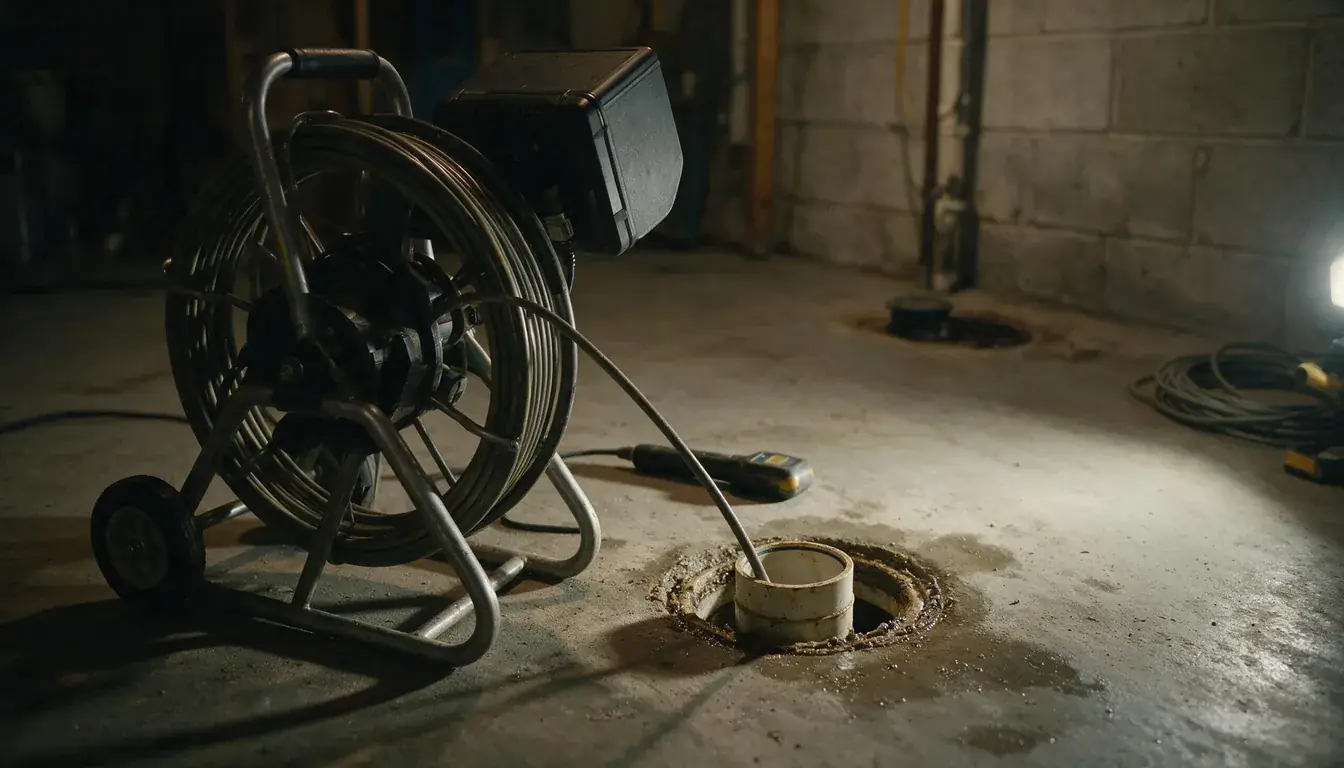
Hydro-jetting in Greenville clears what drain snaking leaves behind: scale buildup from hard water, grease layers coating pipe walls, and root tendrils that regrow from fragments left by a cable machine. The process uses 3,000–4,000 PSI water pressure through a rotating nozzle that scrubs the pipe wall — not just punches through the blockage. A camera scope before jetting confirms the pipe can withstand high pressure and identifies any structural defects that jetting would worsen. AlertPlumber connects your call with an independent South Carolina-licensed plumber — ask them to scope the line before jetting.
Greenville's housing stock spans multiple construction eras — median home age 47 years — meaning pipe materials and failure modes vary significantly by neighborhood and building vintage. An inspection-led approach that confirms pipe material before recommending a service path is standard practice for mixed housing profiles. Homes of other eras in Greenville may have galvanized pipe, copper pipe or polybutylene supply lines instead; ask the plumber which your home has.
Frost line depth in Greenville means supply lines and outdoor plumbing must be installed below the freeze threshold — typically 12 — to prevent pipe burst during cold events. Exterior hose bibs, irrigation shutoffs, and any exposed pipe runs are the most common winterization service points in freeze-risk markets.
- Median home age
- 47 yrs
- Water hardness
- 1 gpg
- Frost line
- 12 in.
- Permit
- City fee schedule
Census housing age, Greenville city, South Carolina: median year built 1987; 22.5% of homes built before 1960, 41.8% before 1980. Source: U.S. Census Bureau, ACS 2020–2024 5-year estimates, tables B25034 and B25035, read 2026-09-30.
Mention these conditions when you describe the symptom to the SC plumber you reach.
What shapes plumbing demand in Greenville, SC?
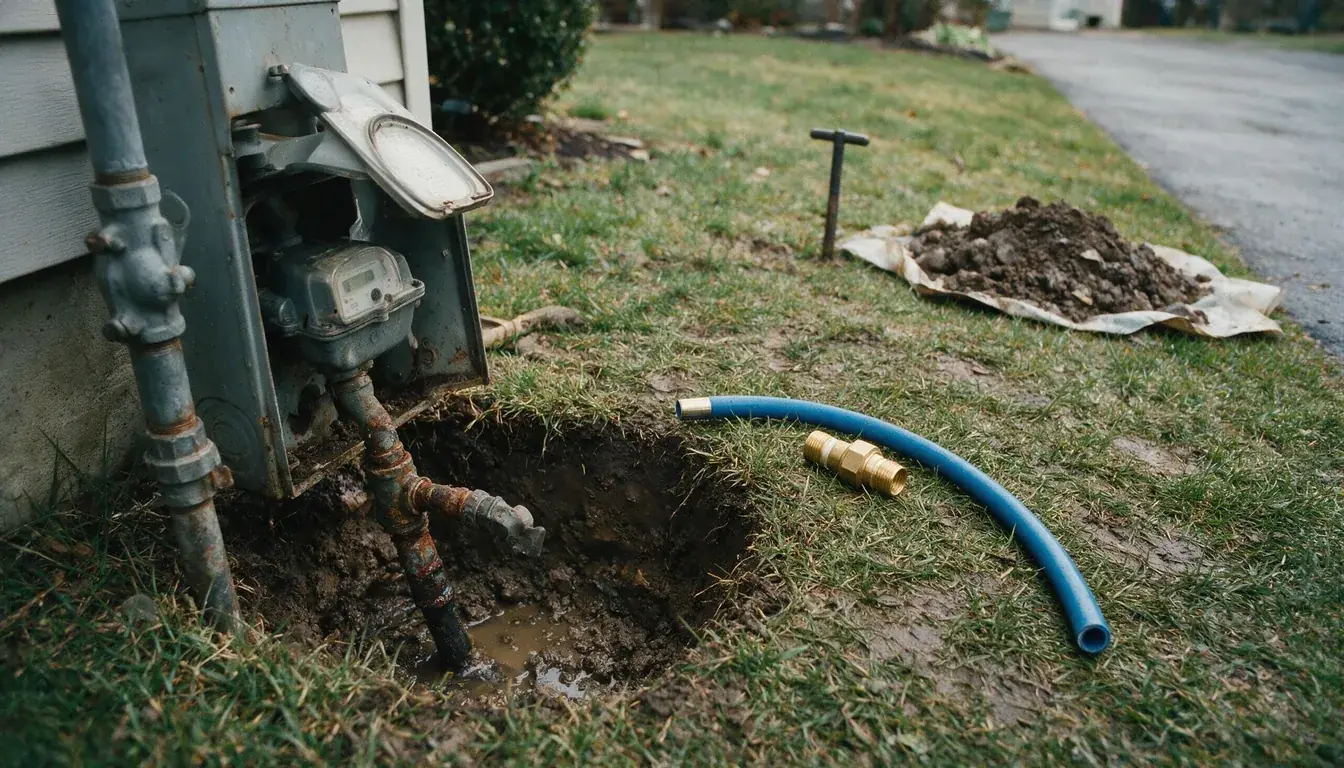
1950s–70s copper supply is now 50–70 years into its service cycle in Greenville. Thermal fatigue at fittings and slab-on-grade access complexity — common in Sun Belt construction — make repair vs. replacement a live decision on most jobs. This housing cohort is the active primary replacement wave in this market.
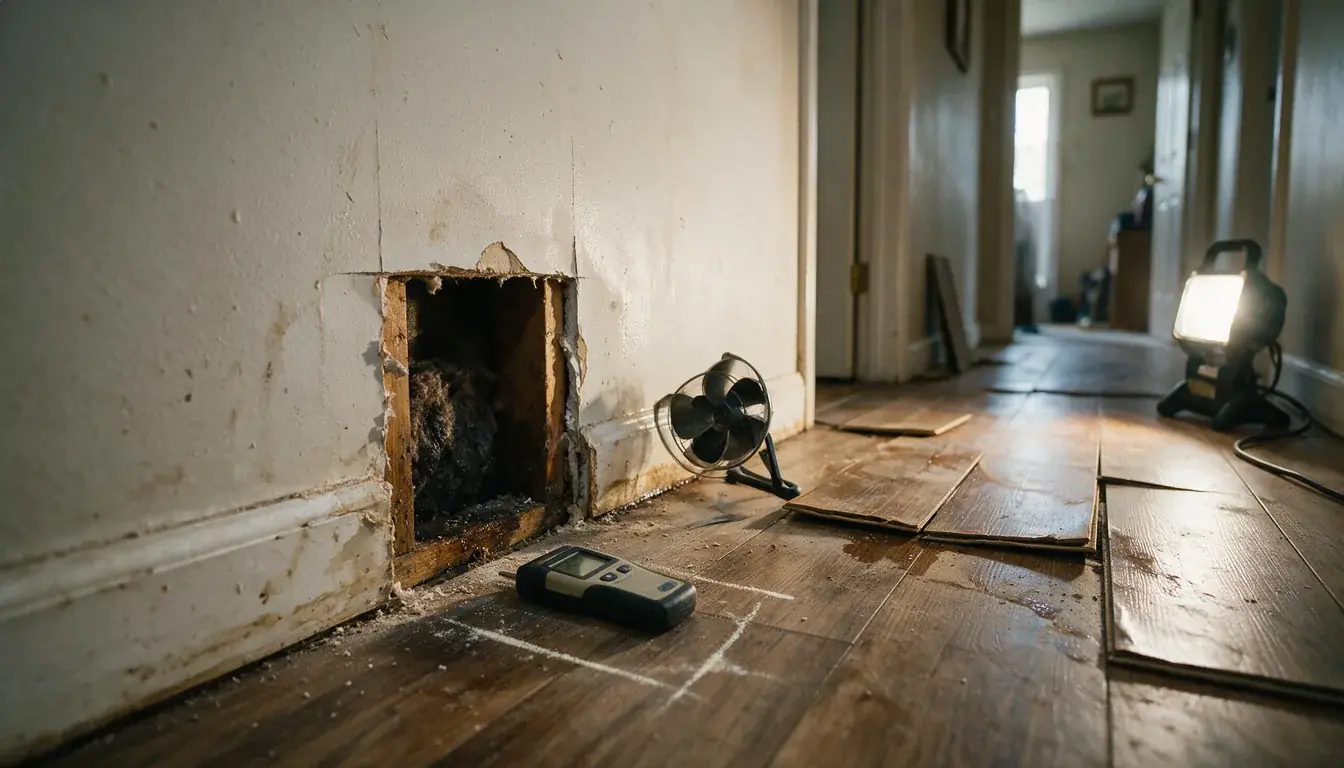
Soft, slightly acidic water in Greenville is corrosive to copper pipe and solder joints — the opposite failure pattern from hard-water markets. Pinhole failure at fittings and elbows is the dominant non-emergency repair category. Anode rods also deplete faster in soft water, shortening effective tank life without timely replacement.
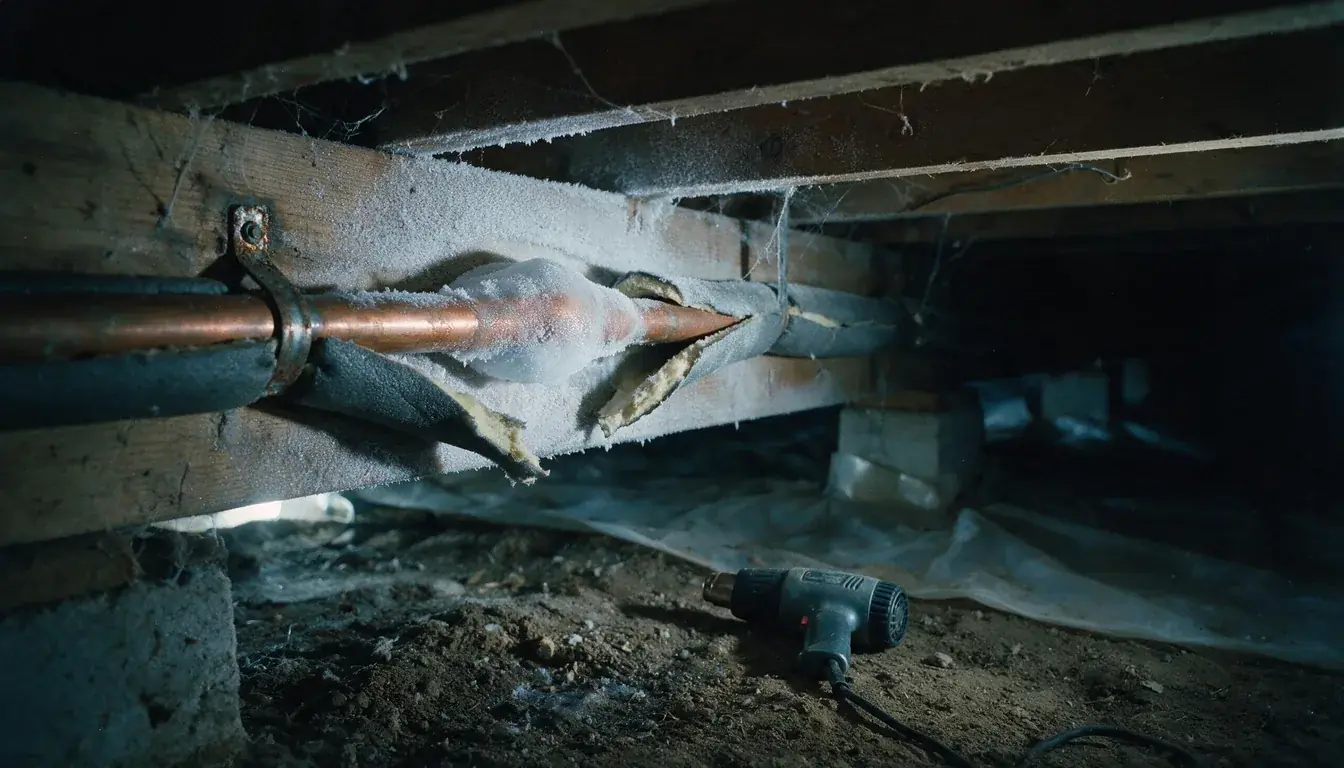
The primary surge in Greenville runs January–March, with a secondary wave at the spring thaw — when pipes that held through the freeze rupture as pressure is restored above 32°F. Scheduling competition peaks exactly when emergency calls are highest. Homeowners who wait for visible damage compete for the same limited plumber slots at the worst possible time.
Why diagnose before repairing in Greenville?
Describe the symptom — not the repair. AlertPlumber routes the call to an independent SC-licensed plumber in its partner's network — ask whether the site visit will use camera tracing, acoustic detection, or hydrostatic pressure testing matched to the reported failure type.
Ask the plumber for a written diagnostic report: confirmed failure location, available repair methods, and tradeoffs — disruption level, material durability, long-term cost, and whether a Greenville building permit applies to the selected method.
You select the repair path. Ask for a fixed scope and price on the authorized method before the South Carolina-licensed plumber proceeds and, where required, who files the permit application to Greenville.
Hydro Jetting cost calculator — Greenville
Pre-filled for hydro jetting in Greenville. Adjust the ZIP for a neighboring area, or change the service to compare. Calculator pulls from the city's scraped permit-fee + state plumber-density data.
Hydro Jetting in Greenville — the longer it runs, the more it costs.
Slow failures compound: soft pipe walls, root penetration, mineral buildup. Ask the plumber you reach for a scope-first estimate before anything is dug up.
What else do people ask about hydro jetting in Greenville?
How much does hydro-jetting cost in Greenville, SC?
Greenville hydro-jetting typically runs a scope-based price for a residential main-line jet on modern PVC lateral, a scope-based price on 1960s copper or transition-era cast-iron, and a scope-based price on West End / Pettigru pre-1920 textile-mill cottage cast-iron where the work has to be done at reduced PSI to protect 100-year-old pipe walls. Pre-job camera scope can add a separate charge. The City of Greenville Building & Property Maintenance permit attaches only when scope crosses into pipe replacement or fixture re-pipe — jetting itself is maintenance and permit-exempt. AlertPlumber routes to a state-credentialed plumber who quotes the job by phone before call-out. Price ranges: hydro jetting cost guide.
Why does Greenville hydro-jetting use lower PSI than most cities?
Two Greenville-specific reasons. (1) Textile-mill era cast-iron pipe walls. West End / Pettigru cottages and brick warehouses along the Reedy River date to pre-1920 — original cast-iron drain stacks are 100+ years old and the pipe wall is thinner than the day it was installed. Standard residential jetting at 3,500–4,000 PSI will punch through Brandon Mill era stack walls. The right approach is 1,500–2,500 PSI with a controlled nozzle. (2) 1 gpg ULTRA-SOFT corrosive water. Greenville Water delivers approximately 1 gpg from the Table Rock and North Saluda Reservoirs in the Blue Ridge watershed. USGS hardness classification puts that at the soft floor. Counterintuitively, soft water at 1 gpg is mildly aggressive — it has been slowly thinning the inner wall of those textile-era stacks for decades. The plumber adjusts PSI to the documented condition, not a default residential setting.
Is hydro-jetting the right call for a Greenville cast-iron stack?
Yes, at the right pressure. Here is the counterintuitive part: hydro-jetting in Greenville is NOT about dissolving mineral scale (the way it is in 16-gpg hard-water markets like Phoenix or Las Vegas) because the 1 gpg ULTRA-SOFT Blue Ridge water doesn't lay down scale in the first place. The job in West End / Pettigru / Pendleton Street textile-mill homes is to flush iron-oxide debris and rust flake that has accumulated on the inside of corroding cast-iron stacks over 80–100 years. Low-PSI water is the gentlest mechanical method for removing that debris without damaging fragile lead-and-oakum joints from the 1920s. A cable snake just punches a hole through the debris; jetting carries it out.
When does jetting NOT make sense for a Greenville drain?
Three situations route to mechanical cabling instead of jetting in Greenville. (1) Oak-root intrusion at a North Main clay-lateral joint. 1920s–1940s craftsman bungalows with mature oak canopy frequently have root mass at the joint — a cable root-cutter breaks up the mass, then a low-PSI jet flush carries it out. Jetting alone on a heavy root ball is the wrong order of operations. (2) Foreign object (toy, utensil, root section). Jet pressure pushes the object further down the line. Cable retrieval first. (3) Documented cast-iron stack with Brandon Mill era lead-and-oakum joints already compromised on the camera scope. If NASSCO grading shows Grade 4–5 wall thinning, the call is replacement, not jetting at any pressure.
How long does a Greenville hydro-jetting job take?
Modern PVC lateral in a 1990s+ Greenville suburb: 2–3 hours including pre-job camera scope and post-jet verification. 1960s–1980s Augusta Road / Cleveland Forest copper-supply with transition-era cast-iron drains: 2.5–4 hours. West End / Pettigru / Pendleton Street pre-1920 textile-mill cast-iron at reduced PSI: 3.5–5.5 hours — slower because the plumber works in stages, scopes between passes, and verifies no joint disturbance. Add 30–45 minutes anywhere a cleanout has to be located or installed, common on pre-1940 Greenville stock that pre-dates two-way cleanout code.
How do I check the license of Greenville hydro-jetting plumbers in South Carolina?
Every plumber routed through AlertPlumber for jetting in Greenville maintains active South Carolina state-credentialed status. SC LLR Contractor's Licensing Board, 2024 lists approximately 5,200 active SC LLR Plumbing Tier 1, Tier 2, and Tier 3 credentials statewide. AlertPlumber does not independently verify on a per-call basis — confirm the specific credential number at the SC LLR portal before authorizing work, especially on pre-1940 West End or North Main stock where pipe-handling judgment matters more than equipment rental.
Do I need a permit to hydro-jet a drain in Greenville?
No. Jetting is classified as maintenance under the South Carolina adoption of IPC § 707 maintenance procedures — the City of Greenville Building & Property Maintenance permit attaches only when scope crosses into pipe replacement, fixture re-pipe, or any code-altering install. Ask whether the plumber will pull the permit on those expanded jobs and include the fee in the written quote. Price ranges: hydro jetting cost guide.
What does the pre-job camera scope tell the Greenville plumber?
Four things specific to Greenville pathology. (1) Pipe material. Pre-1920 textile-mill cast-iron in West End / Pettigru behaves differently than 1960s copper in Augusta Road or 1990s+ PVC in the suburbs — PSI gets set to the material, not a default. (2) Wall condition. The scope grades remaining wall thickness against NASSCO PACP scale; Grade 1–3 jets safely, Grade 4–5 routes to replacement. (3) Cause of clog. Iron-oxide flake (corrosive-soft-water pathology) versus oak-root mass (North Main clay-lateral pathology) versus FOG (Augusta Road long-run pathology) — each gets a different tool. (4) Cleanout access. Pre-1940 Greenville stock often lacks two-way cleanouts; the scope identifies whether one has to be added before jetting.
How often should a Greenville homeowner re-jet?
For West End / Pettigru / Pendleton Street pre-1920 textile-mill cast-iron stacks under 1 gpg corrosive-soft-water load, annual low-PSI jetting plus camera scope is reasonable — the iron-oxide debris regenerates faster here than in hard-water markets where scale dominates. North Main 1920s–1940s craftsman bungalows with oak-canopy clay laterals: biennial root-cutter pass plus jet flush. Augusta Road / Cleveland Forest 1960s estates and mid-century ranches: every 24–36 months for FOG management. Modern Oro-style 1990s+ PVC suburbs: only on a documented recurring-clog history, not routine.
Will my SC homeowners insurance cover damage from a drain backup that hydro-jetting prevents?
Standard South Carolina HO-3 homeowners policies do NOT cover routine drain cleaning or hydro-jetting — that is maintenance. They typically cover the water-damage consequences (drywall, flooring, mold remediation) of a backup IF you carry the optional water/sewer backup endorsement. In Greenville the endorsement runs a scope-based price for a scope-based price of backup coverage and is widely recommended for West End / Pettigru / North Main / Pendleton Street homes built before 1950 where textile-mill cast-iron or clay-lateral failures drive most backup claims. Document the cause with the plumber's camera footage plus a written invoice naming the failure mode. Verbal diagnoses get denied; SC LLR-credentialed paperwork plus camera video gets paid. Price ranges: hydro jetting cost guide.
Can hydro-jetting damage my Greenville home's plumbing?
Only if the wrong pressure is used. The two Greenville failure modes are (1) high-PSI jetting on pre-1920 West End textile-mill cast-iron with Brandon Mill era lead-and-oakum joints — the joint blows out and you trade a jet job for a stack-replacement job, and (2) jetting before a camera scope — without seeing wall condition, the plumber cannot pick the right PSI. AlertPlumber-routed plumbers in Greenville pre-scope every cast-iron job and adjust PSI to documented material condition (1,500–2,500 PSI on pre-1940 stacks, 2,500–3,500 PSI on transition-era, 3,500–4,000 PSI on modern PVC only). Price ranges: hydro jetting cost guide.
Does AlertPlumber cover hydro-jetting outside city limits in the upstate?
Yes. AlertPlumber's call line accepts calls from all City of Greenville ZIP codes (296xx) plus the SC upcountry Piedmont corridor — Mauldin, Simpsonville, Travelers Rest, Greer, Easley, Taylors, and Pickens County fringe. The intake form handles 72,310-resident Greenville proper plus the surrounding service area as a single call-out. Rural-fringe addresses on on-site wastewater systems route to a different scope (jetting to a tank cleanout vs jetting to a municipal lateral), and the plumber confirms which on the callback.
The fix gets cheaper the sooner a plumber sees it.
Degradation problems compound quietly. Call now, or use the form below to reach an independent South Carolina plumber, and ask for an estimate for the hydro jetting — you are under no obligation.
Need a hydro jetting callback in Greenville?
In a meeting, with the kids, or just prefer not to call? Drop your ZIP and number below. AlertPlumber sends your request to our routing partner — if a participating plumber serves your area, they may call you back directly. For anything urgent, call the number on this page.
- 1 Submit your info. ZIP, phone, and what kind of work you need.
- 2 AlertPlumber passes it on to our routing partner for your area.
- 3 If a participating plumber serves your area, they may call you back. Ask for a written estimate before work starts.
Hydro Jetting in Greenville — catch it early
Degradation-driven failures worsen over time and cost more to fix the longer they run. Ask the independent SC plumber you reach in Greenville to diagnose your specific condition and put the scope in writing before any work begins.