
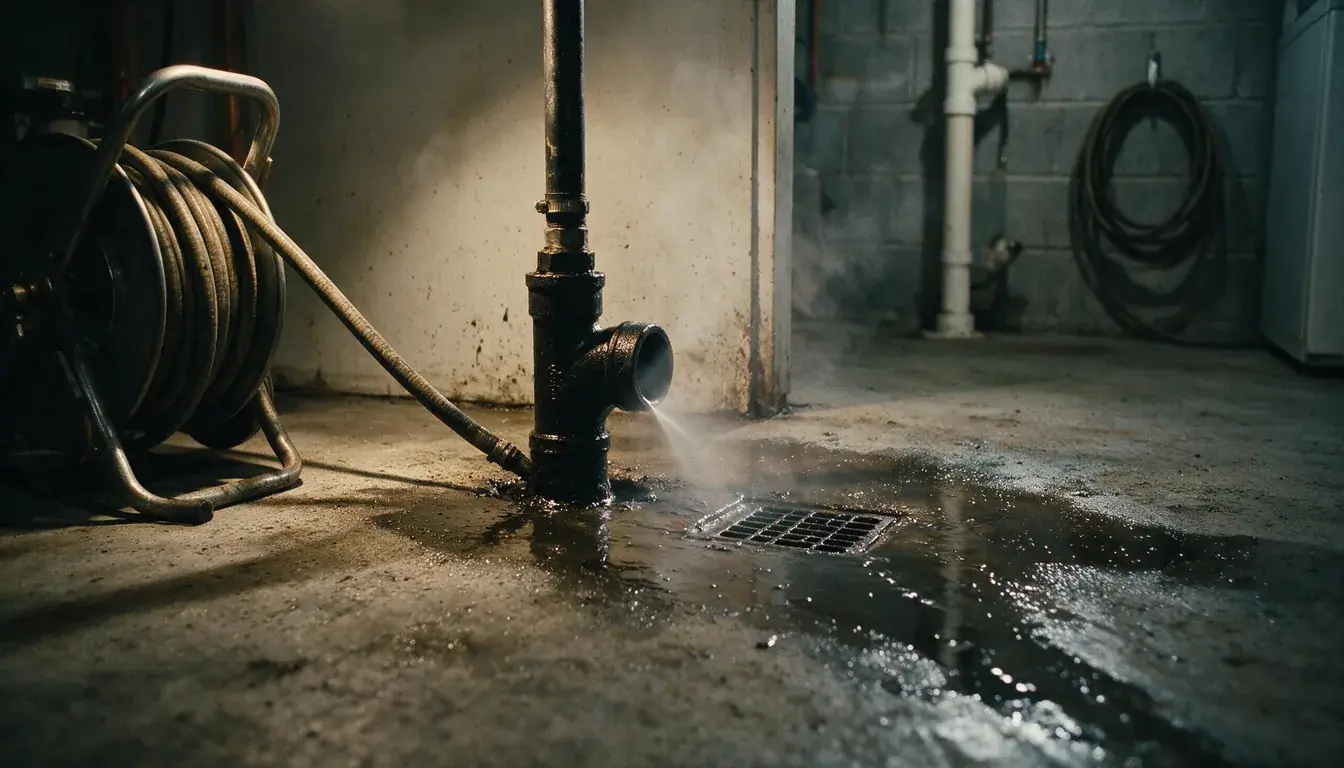
Emergency Hydro Jetting in Mesa, Arizona
Hydro Jetting in Mesa, Arizona is high-pressure water jetting to clear severe clogs and grease in main lines. Local conditions in Mesa: water measured at 17, a 0 frost line and a median home age of 38 years.
Camera first, quote second — know exactly what's wrong in your Mesa home before you approve a dollar.
What does the local plumbing data show for Mesa, AZ?
Seeing these conditions at your place in Mesa? Describe them on the call to a state-licensed local plumber — free, no obligation.
What are the pipe conditions in Mesa, AZ?
Hydro-jetting in Mesa clears what drain snaking leaves behind: scale buildup from hard water, grease layers coating pipe walls, and root tendrils that regrow from fragments left by a cable machine. The process uses 3,000–4,000 PSI water pressure through a rotating nozzle that scrubs the pipe wall — not just punches through the blockage. A camera scope before jetting confirms the pipe can withstand high pressure and identifies any structural defects that jetting would worsen. AlertPlumber connects your call with an independent Arizona-licensed plumber — ask them to scope the line before jetting.
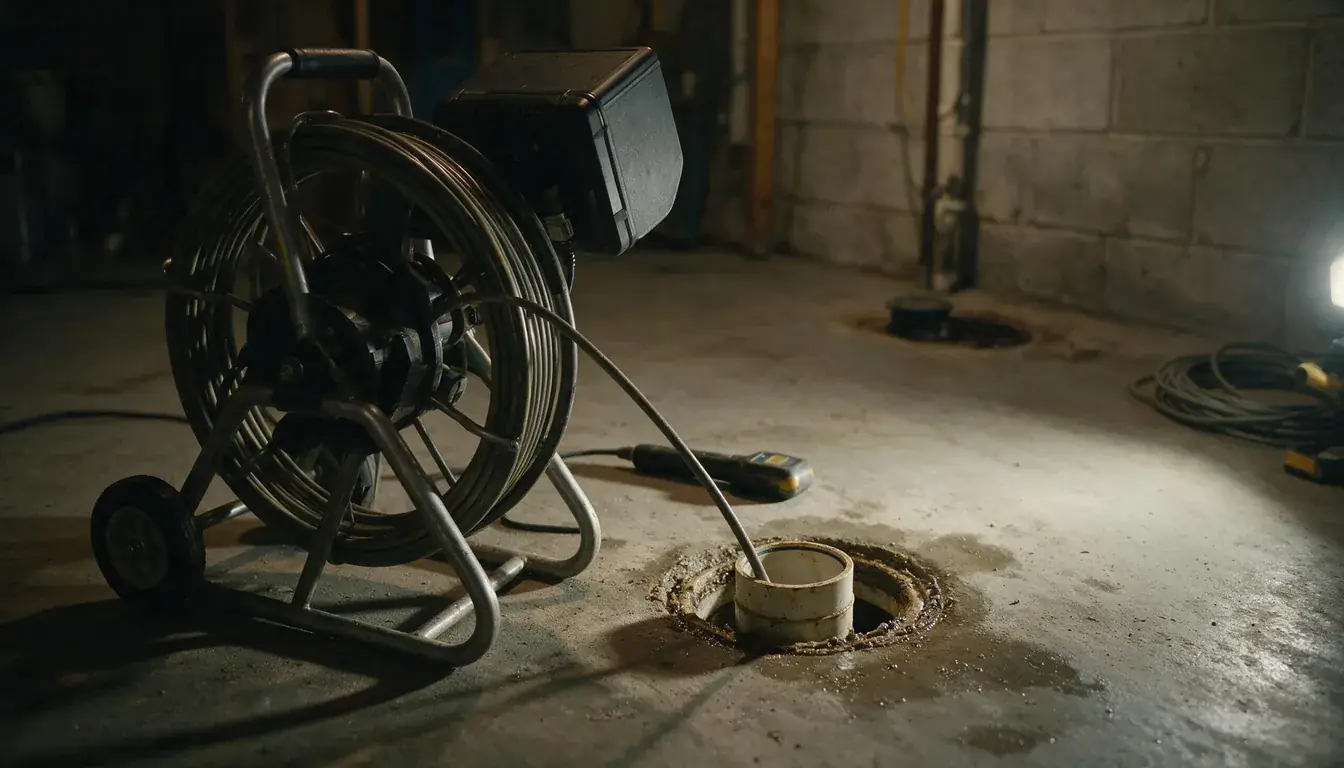
Post-war and modern-era construction in Mesa — median home age 38 years — frequently includes copper supply lines embedded in slab foundations, common in tract construction from the 1960s through the 1980s. Hard water accelerates pinhole corrosion from the exterior of slab-embedded copper; when a leak develops, access requires either epoxy lining through existing penetrations or controlled slab opening for section replacement. Homes of other eras in Mesa may have galvanized pipe, copper pipe or polybutylene supply lines instead; ask the plumber which your home has.
Very hard water in Mesa is a primary driver of accelerated appliance failure: water heater anode rods exhaust in 2–3 years instead of 6–8, scale deposits at fixture connections form within months of installation, and tankless heat exchangers accumulate mineral buildup that can reduce lifespan by half without regular descaling. A softener or whole-house conditioner is strongly recommended alongside any appliance service call.
- Median home age
- 38 yrs
- Water hardness
- 17 gpg
- Frost line
- 0 in.
- Permit
- City fee schedule
Census housing age, Mesa city, Arizona: median year built 1989; 4.5% of homes built before 1960, 29% before 1980. Source: U.S. Census Bureau, ACS 2020–2024 5-year estimates, tables B25034 and B25035, read 2026-09-30.
Mention these conditions when you describe the symptom to the AZ plumber you reach.
What shapes plumbing demand in Mesa, AZ?
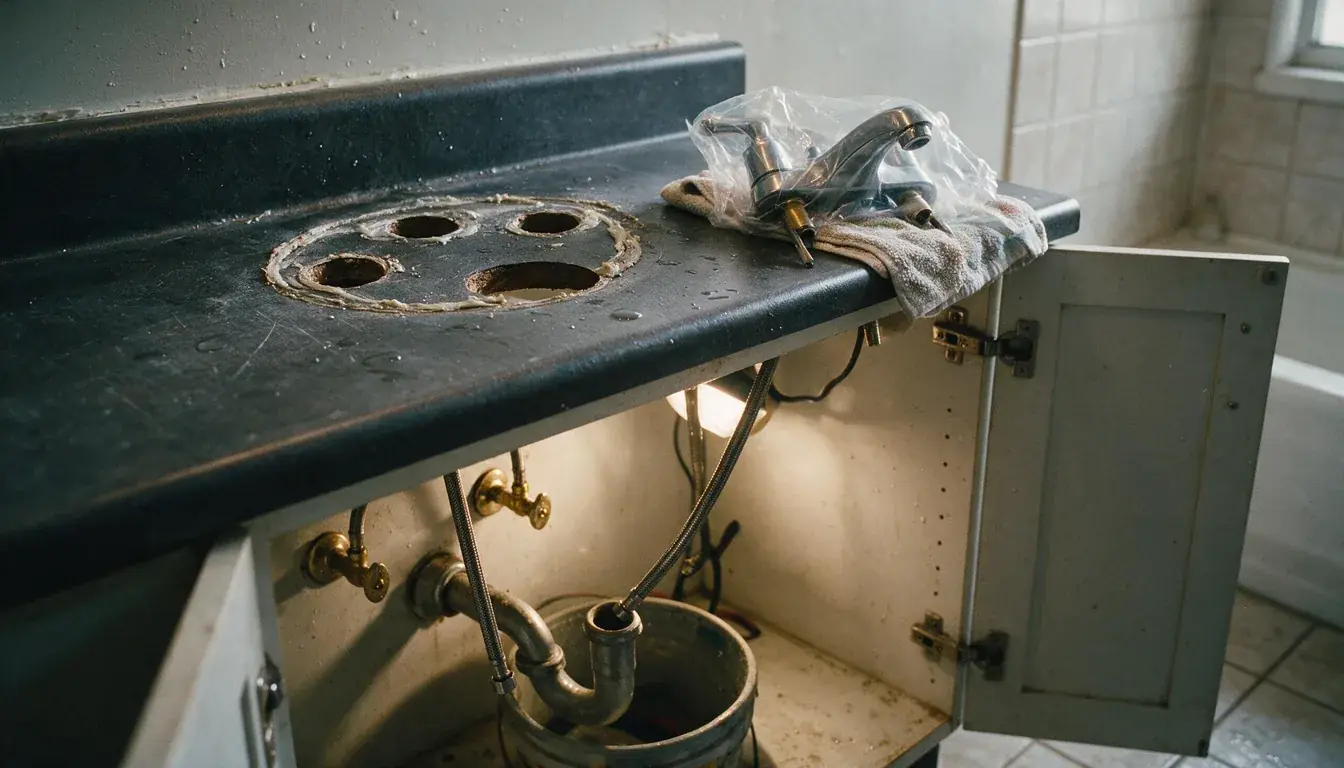
CPVC becomes brittle in the 20–35-year range and snaps under thermal stress or incompatible pipe dopes. Early PEX fittings (pre-2010) may develop chloramine compatibility issues at 15–25 years. The 1980s–1990s housing stock in Mesa is entering its first wave of material-driven service calls — not from neglect, but from normal service-life progression.
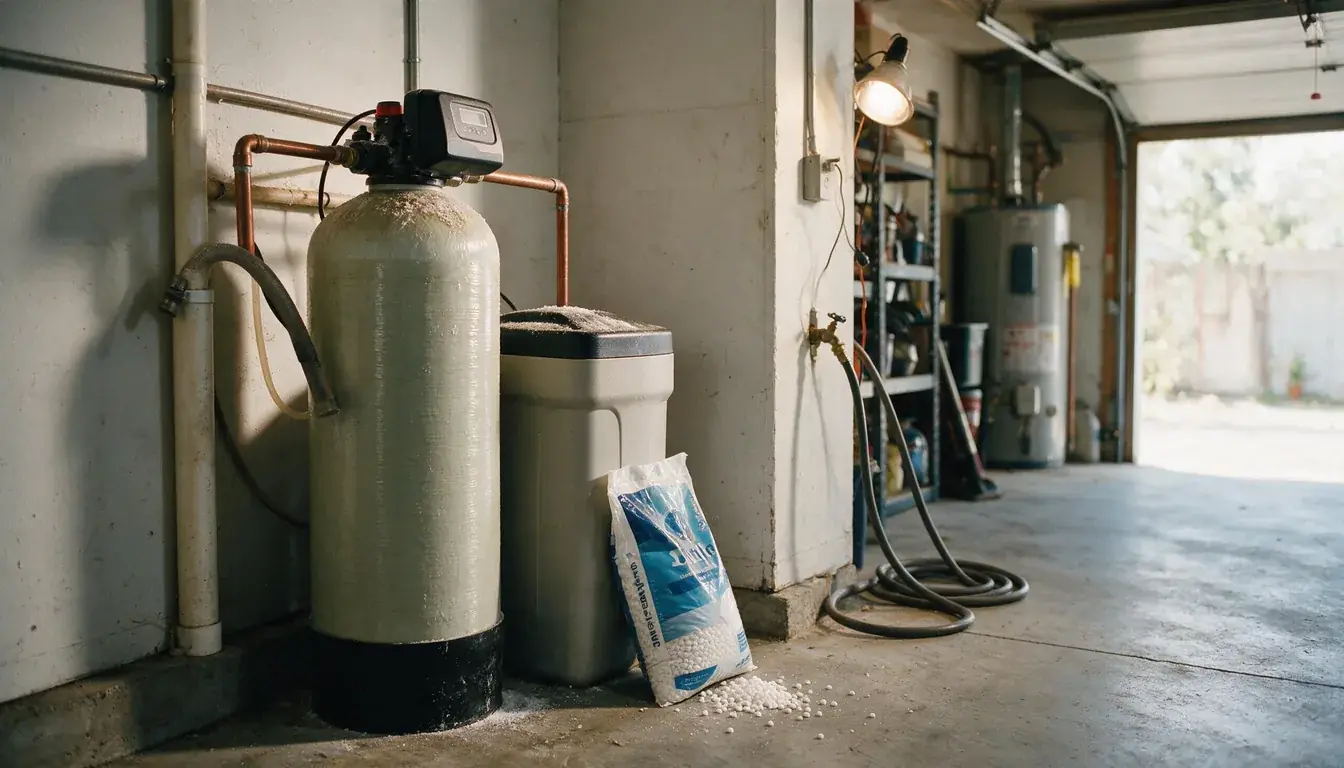
At 15–20+ GPG, calcium scale forces compressed equipment cycles in Mesa: tank heaters average 6–9 years vs. the 10–12-year national benchmark, and tankless units require annual descaling. Anode rods calcify within 12–18 months. Most plumbers here assess heater age against the local scale timeline — not the manufacturer's service life.
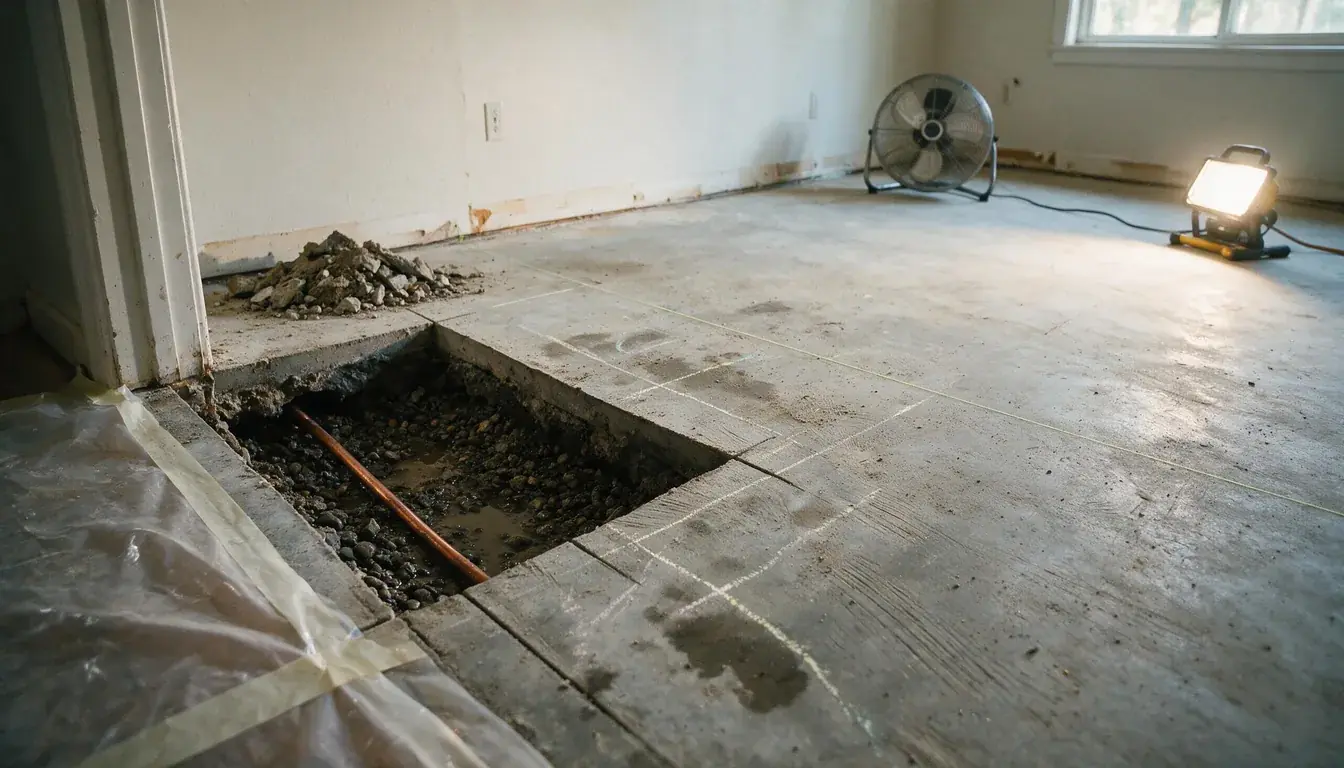
Summer heat above 95–115°F in Mesa keeps sediment in suspension inside tank water heaters — accelerating element failure instead of allowing sediment to settle and flush. Attic-mounted supply lines face diurnal thermal stress year-round. Root intrusion concentrates around irrigated landscaping rather than distributing evenly across the full sewer lateral path.
Why diagnose before repairing in Mesa?
Describe the symptom — not the repair. AlertPlumber routes the call to an independent AZ-licensed plumber in its partner's network — ask whether the site visit will use camera tracing, acoustic detection, or hydrostatic pressure testing matched to the reported failure type.
Ask the plumber for a written diagnostic report: confirmed failure location, available repair methods, and tradeoffs — disruption level, material durability, long-term cost, and whether a Mesa building permit applies to the selected method.
You select the repair path. Ask for a fixed scope and price on the authorized method before the Arizona-licensed plumber proceeds and, where required, who files the permit application to Mesa.
Hydro Jetting cost calculator — Mesa
Pre-filled for hydro jetting in Mesa. Adjust the ZIP for a neighboring area, or change the service to compare. Calculator pulls from the city's scraped permit-fee + state plumber-density data.
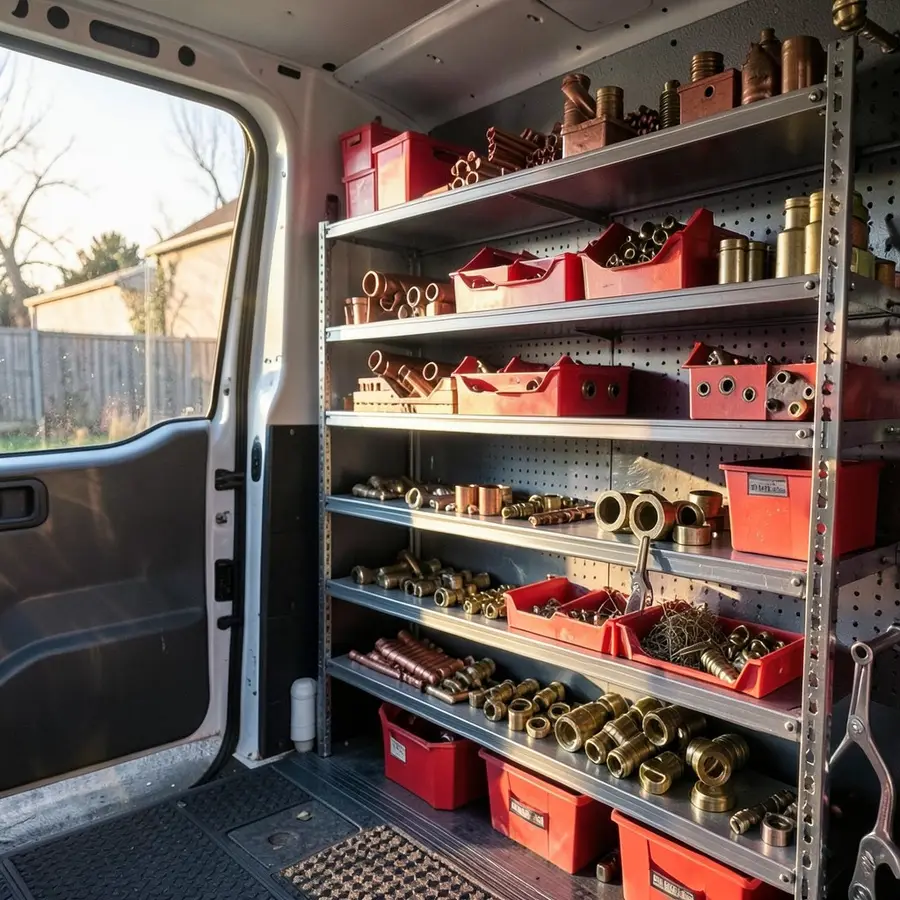
Hydro Jetting in Mesa — the longer it runs, the more it costs.
Slow failures compound: soft pipe walls, root penetration, mineral buildup. Ask the plumber you reach for a scope-first estimate before anything is dug up.
What else do people ask about hydro jetting in Mesa?
How much does hydro jetting cost in Mesa?
A residential hydro-jetting call on a Mesa 4-inch lateral typically runs a scope-based price, with the pre-jet camera scope adding a separate charge. Pricing reflects a trailer-mounted jetter at 3,500–4,000 PSI / 4–8 GPM spending 60–120 minutes on site, plus debris flushing and a verification pass. Heavily descaled cast-iron lines in 1980s Dobson Ranch or Augusta Ranch tracts — where the SRP+CAP blended source water at 17 grains/gallon has built decades of calcium-carbonate ringing — often need a second descaling pass and trend toward the upper end. The Mesa Development Services plumbing repair permit is NOT triggered by jetting alone; per IPC § 707 jetting is classified as maintenance, not construction. Price ranges: hydro jetting cost guide.
What recurring symptoms point to jetting in a Mesa home?
Three Mesa-specific symptom patterns mean a snake-and-go won't hold: (1) multiple drains slow at once with gurgling at the lowest fixture — typical of a partially-occluded main lateral, common in 1980s Dobson Ranch cast-iron stock; (2) sewage smell at floor drains during peak water use, which signals scale or grease has narrowed the line below the trap-arm vent draw; (3) repeated kitchen-line backups within 6–10 weeks of a previous snake call — almost always grease and calcium-carbonate co-deposits in older East Valley laterals. The pre-jet camera scope tells the matched plumber whether the cause is calcium scale (descaler nozzle), grease (flushing nozzle), or grit (penetrator) before the jetter pump turns on.
Why do Mesa homes need hydro jetting more than snaking?
Mesa's 17-grains-per-gallon SRP+CAP blended supply deposits calcium-carbonate scale on the inside of cast-iron and older copper waste lines for decades — by year 30, a 1986-vintage 2-inch branch line in a Dobson Ranch tract can be down to roughly 1 inch of usable diameter. A cable auger bounces off the mineral ring without removing it; the line backs up again within weeks. Hydro jetting at 3,500–4,000 PSI strips calcium scale, grease, and accumulated caliche-bound sand back to bare pipe wall. Newer Las Sendas (1990s+) and Eastmark (2010s+) homes on PVC/ABS laterals see far less scale buildup and are usually one-and-done snake jobs unless grease has moved in from a kitchen disposal.
Root cutting vs scale descaling — what does a Mesa lateral usually need?
Mesa's desert landscaping (palo verde, mesquite, citrus, palms) produces less aggressive root intrusion than wetter cities — palms have fibrous root mats rather than the deep tap-roots of oaks or sweetgums. So while root-cutter nozzle work happens, the dominant Mesa pathology is mineral scale, not roots. A descaler or chain-knocker nozzle is the more common call: carbide-tipped chains spin off the jet stream and grind calcium tuberculation off cast-iron walls, restoring most of the original diameter. Per NASSCO descaling guidelines, descaling is the standard prep before any CIPP lining decision on heavily-tubercled cast iron.
How often should I jet preventatively in Mesa?
Cadence depends on lateral material, neighborhood vintage, and whether the kitchen runs a disposal. For a 1986-median-build Mesa home with original cast-iron drain stack still in service, plan a preventative descaling jet every 36–48 months — calcium-carbonate redeposits steadily at 17 gpg. Dobson Ranch and Augusta Ranch cast-iron stock often run on a 24–36 month cycle once scale rate is documented from the first camera pass. Newer Las Sendas, Eastmark, and Red Mountain Ranch homes on PVC/ABS laterals can stretch to 5–7 years between jets unless grease pushes the interval shorter. Restaurant or food-service properties along the Riverview / Tempe Marketplace corridor run the standard commercial 12–24 month preventative schedule.
Does Arizona homeowners insurance cover Mesa hydro jetting?
Standard Arizona HO-3 policies treat hydro jetting as routine maintenance and do not cover the work itself. What HO-3 may cover — only with a sewer/water-backup endorsement attached — is finished-room damage from a sudden backup that flooded living space. The endorsement typically can add a separate charge on a Mesa policy and is a reasonable add for any home with a 1980s clay or cast-iron lateral. Save the camera footage and post-jet invoice for any future claim — insurers ask for the lateral-condition history when a backup damage claim opens. The jetting service itself comes out of pocket; cleanout-access work, if your 1986-vintage home pre-dates the modern two-way cleanout requirement, can add a separate charge the first time. Price ranges: hydro jetting cost guide.
How long does a Mesa hydro-jet appointment take?
A standard residential Mesa jet call runs 60–120 minutes on site: 15–25 minutes for cleanout access and the pre-jet camera scope, 30–60 minutes for the jetter pass (longer for heavy calcium descaling on Dobson Ranch cast iron), and 15–25 minutes for the post-jet camera verification and cleanup. Heavily-scaled 1980s laterals needing a chain-knocker pass plus a flushing pass can stretch to 150 minutes. Restaurant grease-trap service along the Tempe Marketplace corridor often runs 2–3 hours because commercial laterals are larger diameter and need higher GPM flushing. Mesa's sub-1 annual freeze day means jetting runs year-round — there's no winter scheduling lockout that complicates jet calls in colder metros.
Can a 3,500–4,000 PSI jetter damage 1980s Mesa cast iron?
On structurally intact cast iron, no — 3,500–4,000 PSI sits well within the working-pressure rating of a 1986-vintage cast-iron drain stack. The risk is on pipe the camera shows is already marginal: severely tuberculated cast iron with under 60% wall thickness remaining, paper-thin galvanized branch waste in the rare pre-1980 Mesa property, or clay-lateral joints separated more than 1/4 inch by caliche-bound soil shift. The pre-jet scope identifies which sections take full pressure and which need a reduced-pressure pass at 1,800–2,500 PSI. Per NASSCO best practice the inspection is documented on every job; a contractor wanting to jet without scoping first is the wrong contractor.
Mesa permit, AZ ROC, and cleanout access — what should I expect?
Three documentation items. (1) Permit: the Mesa Development Services plumbing repair permit is NOT triggered by jetting itself per IPC § 707; it kicks in only if the camera reveals damage requiring replacement. (2) AZ ROC: hydro jetting falls under the Arizona Registrar of Contractors C-37 (Plumbing) classification, with 3,247 active AZ ROC C-37 holders statewide per the AZ ROC license database, 2024. (3) Cleanout: 1986-median Mesa homes often pre-date the modern two-way cleanout standard — first-time jet calls sometimes start with locating the cleanout near the foundation perimeter, which adds 15–30 minutes to the visit. Permit fee ranges: permit fee estimator.
When should I scope first and jet later in Mesa?
Always scope first. The pre-jet camera scope at a scope-based price is the diagnostic that determines nozzle selection — descaler, chain knocker, root cutter, penetrator, or flushing — and confirms the lateral can take 3,500–4,000 PSI. In Mesa specifically, the scope rules out four conditions that disqualify jetting until repair: rare Orangeburg lateral remnants in pre-1972 East Mesa parcels, severely-corroded galvanized branch waste, joint-separated clay laterals where caliche soil shift has pulled bell-and-spigot connections apart, and active sewer-line cracks where the jet stream would erode bedding through the breach. AlertPlumber-matched Mesa plumbers from the AZ ROC C-37 pool run the camera before the pump turns on as standard practice — see the sewer line repair guide for what each camera finding routes to next. Price ranges: hydro jetting cost guide.
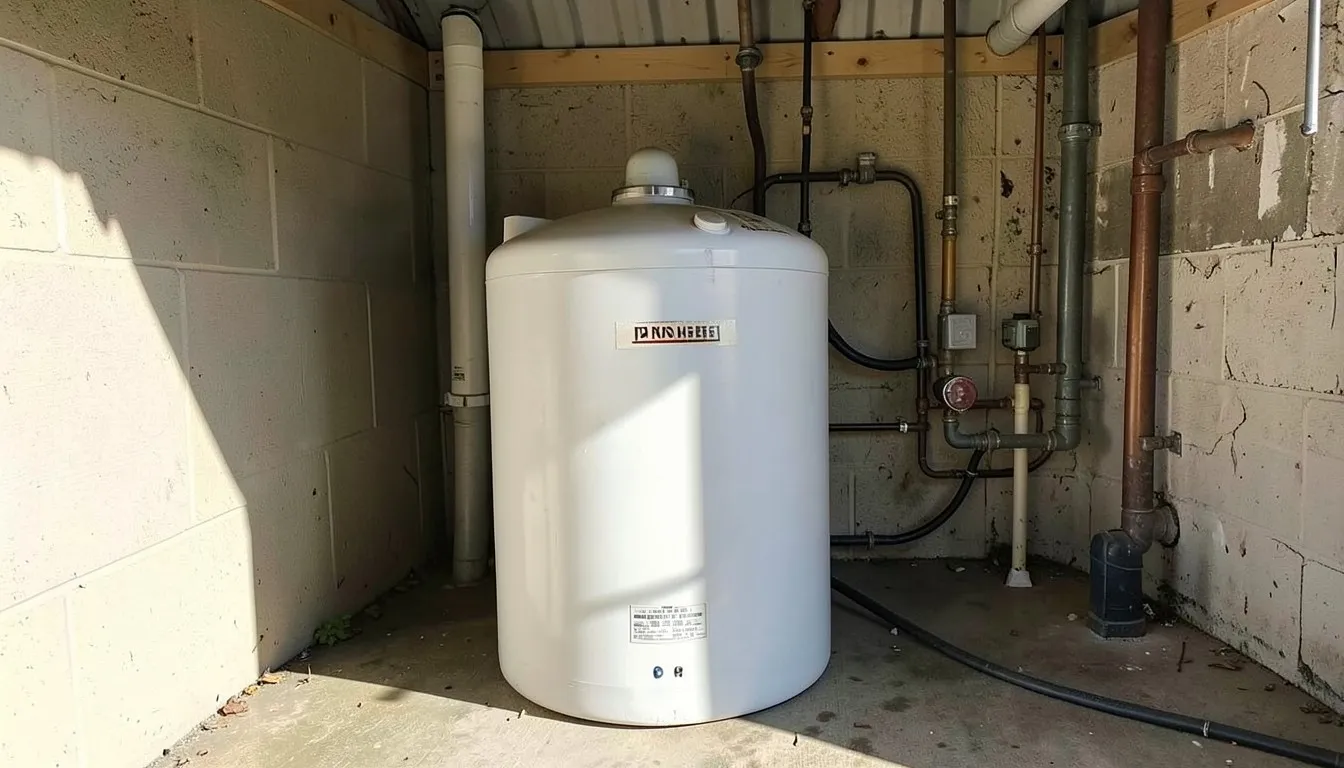
The fix gets cheaper the sooner a plumber sees it.
Degradation problems compound quietly. Call now, or use the form below to reach an independent Arizona plumber, and ask for an estimate for the hydro jetting — you are under no obligation.
Need a hydro jetting callback in Mesa?
In a meeting, with the kids, or just prefer not to call? Drop your ZIP and number below. AlertPlumber sends your request to our routing partner — if a participating plumber serves your area, they may call you back directly. For anything urgent, call the number on this page.
- 1 Submit your info. ZIP, phone, and what kind of work you need.
- 2 AlertPlumber passes it on to our routing partner for your area.
- 3 If a participating plumber serves your area, they may call you back. Ask for a written estimate before work starts.
Hydro Jetting in Mesa — catch it early
Degradation-driven failures worsen over time and cost more to fix the longer they run. Ask the independent AZ plumber you reach in Mesa to diagnose your specific condition and put the scope in writing before any work begins.