
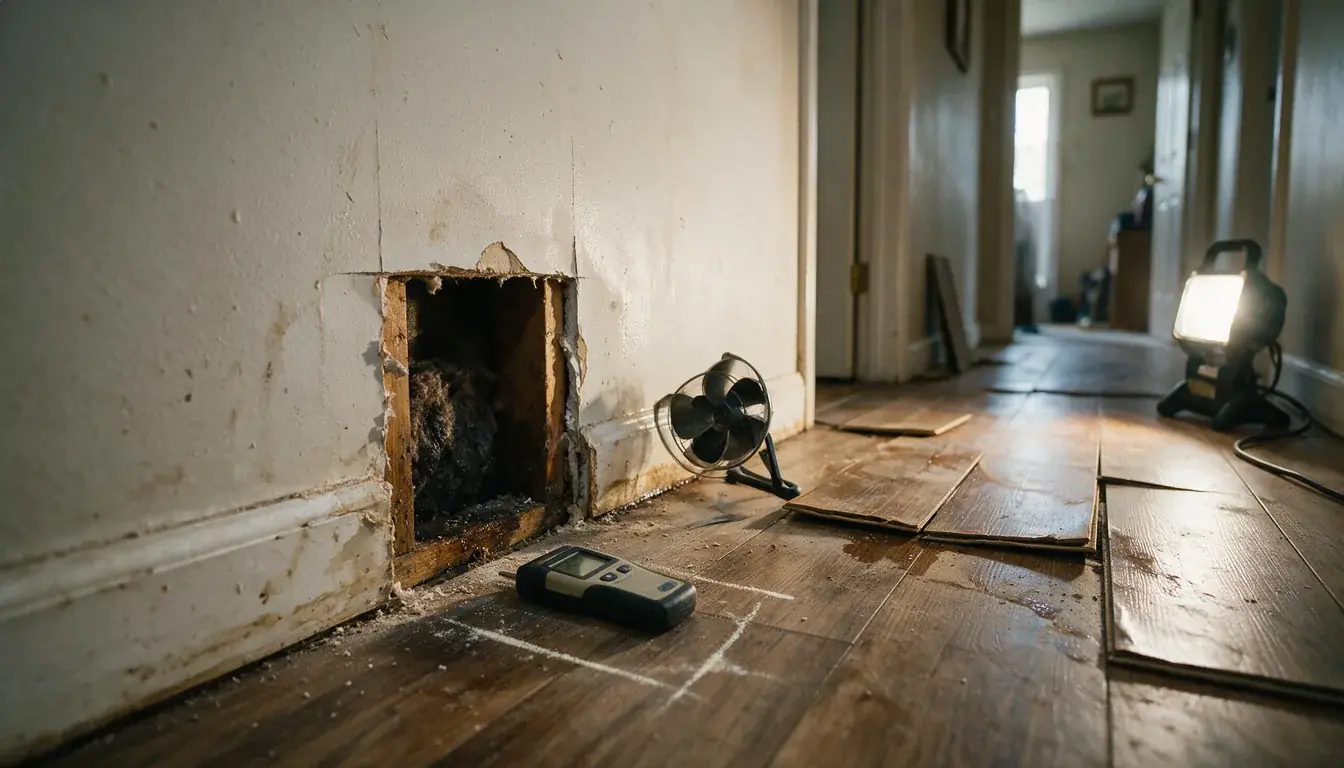
Emergency Leak Detection in Santa Fe, New Mexico
Leak Detection in Santa Fe, New Mexico locates hidden water and gas leaks using acoustic and thermal equipment. Local conditions in Santa Fe: water measured at 12, a 36 frost line and a median home age of 38 years.
Camera first, quote second — know exactly what's wrong in your Santa Fe home before you approve a dollar.
Who do I call for a hidden leak in Santa Fe?
A plumber who offers leak detection. Ask what method they use (acoustic, thermal imaging or a pressure test) and whether finding the leak and repairing it are quoted separately. A hidden leak becomes urgent in a Santa Fe home when water is visible on a ceiling, wall or floor.
What does the local plumbing data show for Santa Fe, NM?
Seeing these conditions at your place in Santa Fe? Describe them on the call to a state-licensed local plumber — free, no obligation.
What are the pipe conditions in Santa Fe, NM?
Non-invasive leak detection uses acoustic amplification, thermal imaging, and pressure isolation to locate water loss in supply lines and drain systems without opening walls or floors. Santa Fe homes with galvanized or older copper supply runs face the highest pinhole leak incidence — a slow leak inside a wall cavity can cause mold and structural damage for months before becoming visible. A professional leak detection prevents unnecessary demolition by confirming the exact break location before any drywall is cut. AlertPlumber connects your call with an independent New Mexico-licensed plumber — ask them to locate first and open second.
Santa Fe's housing stock spans multiple construction eras — median home age 38 years — meaning pipe materials and failure modes vary significantly by neighborhood and building vintage. An inspection-led approach that confirms pipe material before recommending a service path is standard practice for mixed housing profiles. Homes of other eras in Santa Fe may have galvanized pipe, copper pipe or polybutylene supply lines instead; ask the plumber which your home has.
Very hard water in Santa Fe is a primary driver of accelerated appliance failure: water heater anode rods exhaust in 2–3 years instead of 6–8, scale deposits at fixture connections form within months of installation, and tankless heat exchangers accumulate mineral buildup that can reduce lifespan by half without regular descaling. A softener or whole-house conditioner is strongly recommended alongside any appliance service call.
Frost line depth in Santa Fe means supply lines and outdoor plumbing must be installed below the freeze threshold — typically 36 — to prevent pipe burst during cold events. Exterior hose bibs, irrigation shutoffs, and any exposed pipe runs are the most common winterization service points in freeze-risk markets.
- Median home age
- 38 yrs
- Water hardness
- 12 gpg
- Frost line
- 36 in.
- Lead lines
- Active replacement
- Permit
- City fee schedule
Census housing age, Santa Fe city, New Mexico: median year built 1986; 18.9% of homes built before 1960, 39.8% before 1980. Source: U.S. Census Bureau, ACS 2020–2024 5-year estimates, tables B25034 and B25035, read 2026-09-30.
Mention these conditions when you describe the symptom to the NM plumber you reach.
What shapes plumbing demand in Santa Fe, NM?
CPVC becomes brittle in the 20–35-year range and snaps under thermal stress or incompatible pipe dopes. Early PEX fittings (pre-2010) may develop chloramine compatibility issues at 15–25 years. The 1980s–1990s housing stock in Santa Fe is entering its first wave of material-driven service calls — not from neglect, but from normal service-life progression.
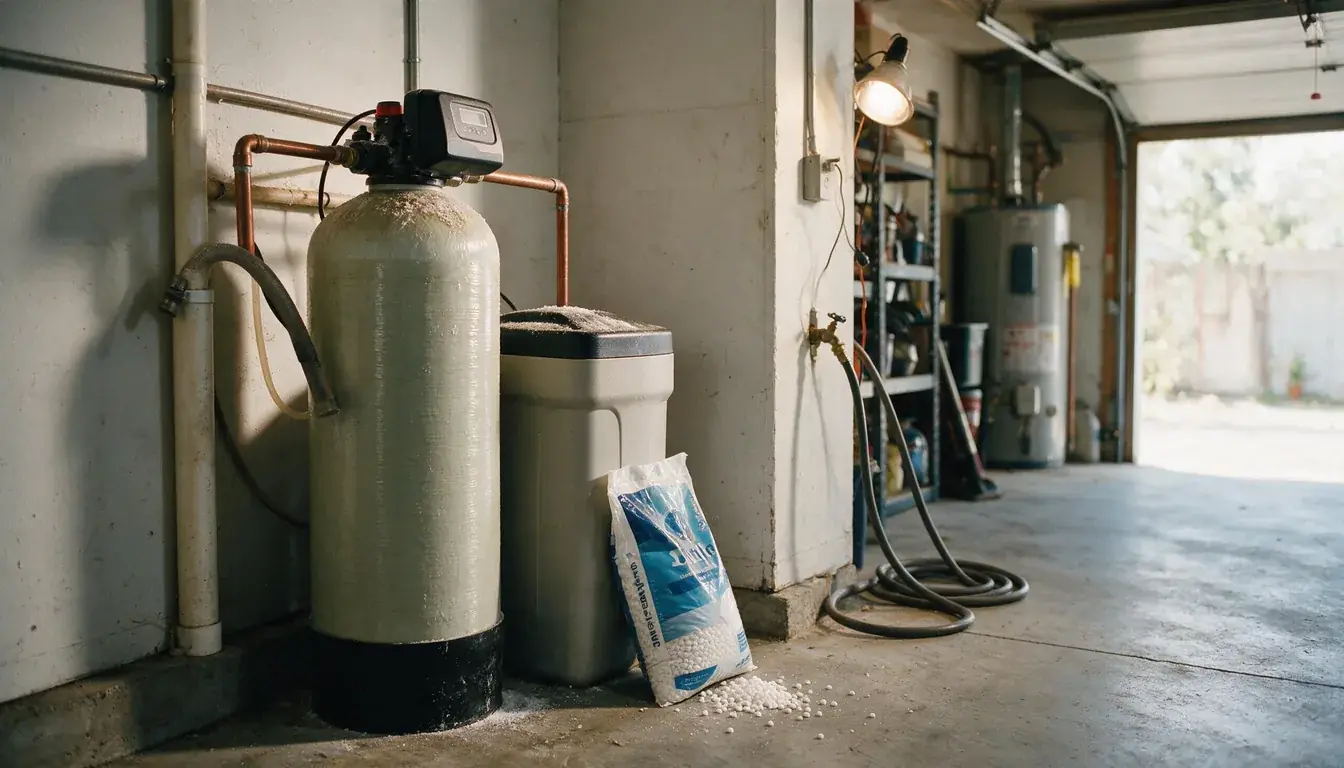
At 15–20+ GPG, calcium scale forces compressed equipment cycles in Santa Fe: tank heaters average 6–9 years vs. the 10–12-year national benchmark, and tankless units require annual descaling. Anode rods calcify within 12–18 months. Most plumbers here assess heater age against the local scale timeline — not the manufacturer's service life.
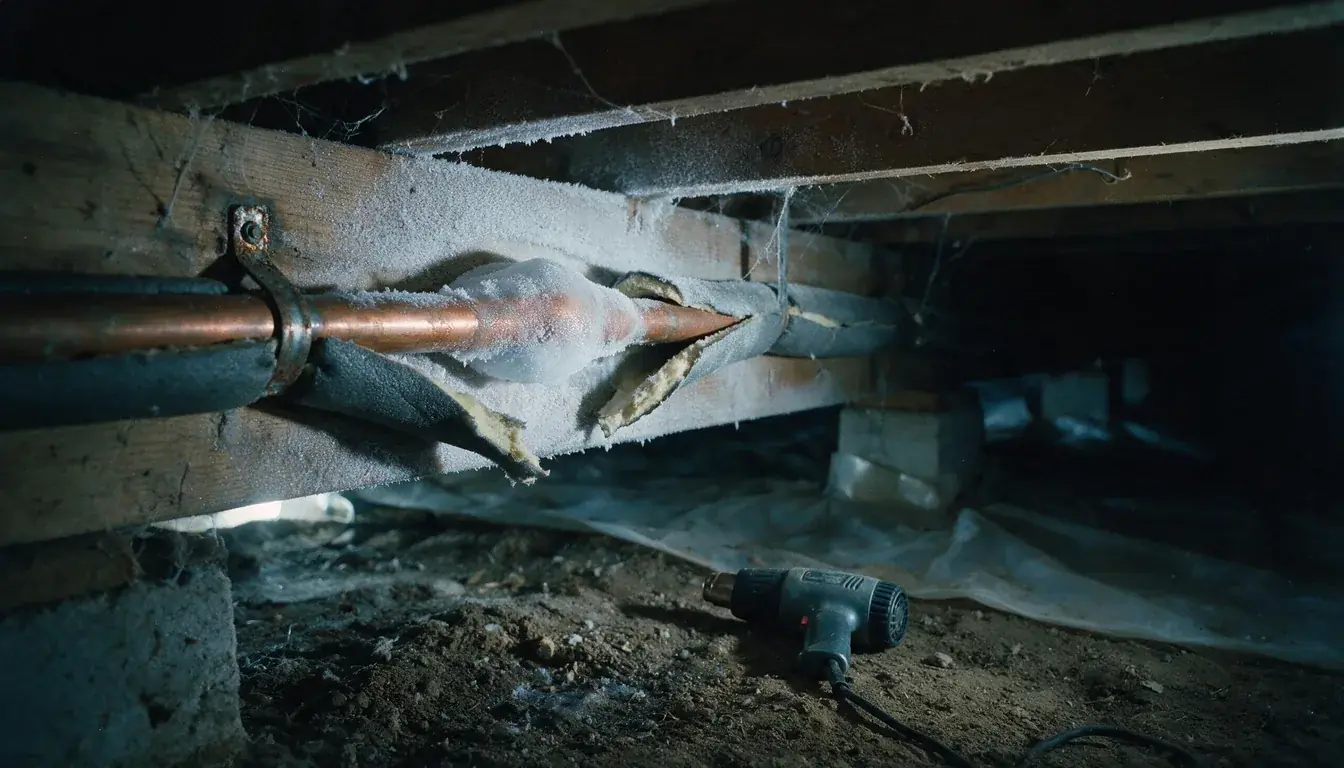
The primary surge in Santa Fe runs January–March, with a secondary wave at the spring thaw — when pipes that held through the freeze rupture as pressure is restored above 32°F. Scheduling competition peaks exactly when emergency calls are highest. Homeowners who wait for visible damage compete for the same limited plumber slots at the worst possible time.
Why diagnose before repairing in Santa Fe?
Describe the symptom — not the repair. AlertPlumber routes the call to an independent NM-licensed plumber in its partner's network — ask whether the site visit will use camera tracing, acoustic detection, or hydrostatic pressure testing matched to the reported failure type.
Ask the plumber for a written diagnostic report: confirmed failure location, available repair methods, and tradeoffs — disruption level, material durability, long-term cost, and whether a Santa Fe building permit applies to the selected method.
You select the repair path. Ask for a fixed scope and price on the authorized method before the New Mexico-licensed plumber proceeds and, where required, who files the permit application to Santa Fe.
Leak Detection cost calculator — Santa Fe
Pre-filled for leak detection in Santa Fe. Adjust the ZIP for a neighboring area, or change the service to compare. Calculator pulls from the city's scraped permit-fee + state plumber-density data.
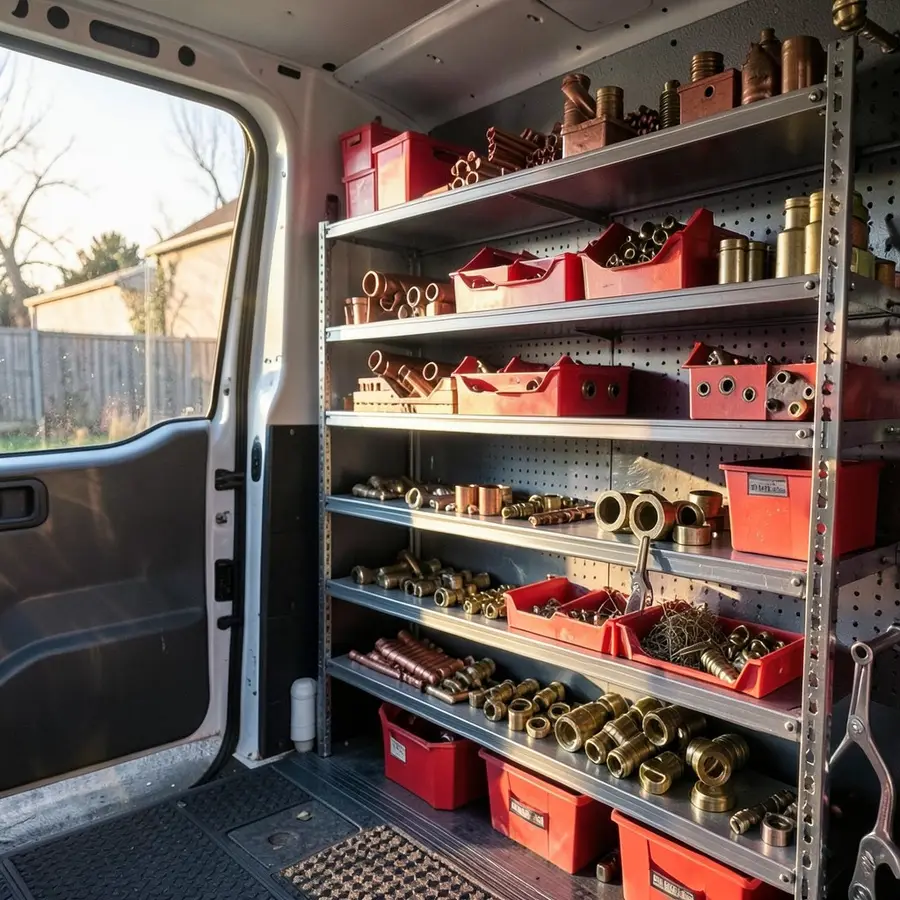
Leak Detection in Santa Fe — the longer it runs, the more it costs.
Slow failures compound: soft pipe walls, root penetration, mineral buildup. Ask the plumber you reach for a scope-first estimate before anything is dug up.
What else do people ask about leak detection in Santa Fe?
How much does leak detection cost in Santa Fe?
Santa Fe leak detection prices reflect equipment selection and access constraints in the oldest US state capital. Standard residential acoustic leak detection on a Casa Solana 1950s-60s Allen Stamm tract slab or South Capitol Territorial bungalow runs a scope-based price. Thermal-imaging-plus-acoustic combined detection on a Plaza Historic District 400-year-old adobe compound runs a scope-based price because mud-plaster wall fabric attenuates acoustic signature and party-wall configurations require correlation between adjacent properties. Eastside 1880s-1920s adobe compound detection on Palace Avenue, Alameda Street, and Cerro Gordo Road runs a scope-based price. Canyon Road art-gallery slab-moisture mapping along Acequia Madre runs a scope-based price. The City of Santa Fe Land Use Department permit fee applies only when the follow-on repair scope crosses into pipe replacement. AlertPlumber routes the call to a verified NM CID J-2 or J-3 Journeyman Plumber who confirms equipment selection on the callback request. Price ranges: leak detection cost guide.
Why is leak detection harder in Plaza Historic District adobe party-wall configurations?
Plaza Historic District properties around the 1610 Plaza are dense Pueblo Revival and Spanish Colonial adobe — 400-year-old fabric, mud-set drain runs, and shared party walls between adjacent properties. That construction profile creates two acoustic complications. First, mud-plaster and adobe-brick walls attenuate the hiss signature of a pressurized leak much more than modern drywall-and-stud, so the acoustic technician has to dwell longer at each correlation point and frequently can't pinpoint within the typical 12-inch acoustic resolution. Second, shared party walls mean a leak signature in one address can correlate-back into a neighbor's wall — false positives are routine without a thorough isolation test sequencing. The matched NM CID-credentialed plumber typically combines ground-microphone acoustic with thermal-imaging IR and tracer-gas (helium-hydrogen) on Plaza adobe compounds. The combined approach takes 3–5 hours versus 90 minutes for a Casa Solana tract slab.
Does the 36-inch frost depth at 7,200 ft affect winter leak detection in Santa Fe?
Yes, materially. Santa Fe sits at 7,200 ft in the Sangre de Cristo foothills with 151 annual freeze days (per NCEI U.S. Climate Normals) and 36-inch frost depth (NWS Albuquerque office). Shallow supply lines buried less than 36 inches — common in Eastside adobe compounds and Canyon Road properties where original 1880s-1920s lines pre-date modern frost-depth code — freeze and burst during the November-through-March cold season, but the burst often presents as a slow seasonal pressure-drop that only manifests when frozen ground thaws in spring. Acoustic detection during active freeze conditions is unreliable because frozen soil dampens leak signature. The matched plumber typically schedules thermal-imaging surveys for early thaw (late March to early May) when frozen ground releases moisture signatures, and pairs with tracer-gas confirmation on confirmed-suspect runs.
How does Acequia Madre slab-moisture complicate Canyon Road leak detection?
Canyon Road pre-1900 adobe art galleries run along Acequia Madre, the historic earthen irrigation ditch that pre-dates Santa Fe statehood. The acequia channel wicks slab-moisture into adjacent foundations and shallow drain runs year-round, and the moisture signature in a thermal-imaging scan mimics a pressurized supply leak — both register as wet zones in the IR field. Distinguishing acequia-driven slab-moisture from an actual pressurized leak requires acoustic correlation (the leak hisses; the acequia wick doesn't) plus tracer-gas confirmation (the leak releases helium-hydrogen; the wick doesn't). Acequia Madre Mayordomo coordination applies for any detection work that requires temporarily lowering ditch flow to isolate signatures. The matched NM CID J-2 or J-3 plumber handles the Mayordomo notification and the seasonal-timing sequencing on the callback.
What equipment do Santa Fe leak detection plumbers actually use?
Standard equipment stack for the matched NM CID-credentialed plumber: ground-microphone acoustic with frequency-filtered headphones for pinpointing pressurized supply-line leaks within 6–18 inches on Casa Solana and South Capitol modern construction; FLIR-grade thermal-imaging cameras for slab-moisture and behind-wall mapping; helium-hydrogen tracer-gas with portable spectrometer detector for confirming small or intermittent leaks; pressure-decay logging with isolation valve sequencing for whole-house quantification; line-locator with sonde for non-metallic line tracing; and moisture meter for finished-surface confirmation. Plaza Historic District and Eastside adobe compounds frequently require the full stack because mud-plaster wall attenuation and party-wall acoustic crosstalk demand correlation. Casa Solana tract slab calls often resolve with acoustic-plus-thermal in 90 minutes. The matched plumber confirms equipment selection on the callback.
Are AlertPlumber-matched plumbers credentialed for leak detection in New Mexico?
The partner network requires every plumber routed through AlertPlumber in Santa Fe to maintain active New Mexico state-credentialed status — typically J-2 or J-3 Journeyman Plumber classification plus MM-1 Mechanical Contractor authority on supervisory roles. NM Regulation and Licensing Department, Construction Industries Division, 2024 lists 3,800 active NM CID-credentialed plumbing professionals statewide. AlertPlumber doesn't independently verify each plumber on a per-call basis — homeowners are encouraged to confirm credentials with NM CID directly via the link above before authorizing detection work. The matched plumber provides their J-2, J-3, or MM-1 number on the callback.
How long does a Santa Fe leak detection appointment take?
Casa Solana 1950s-60s tract slab acoustic-plus-thermal scan: 90 minutes to 2.5 hours. South Capitol Territorial bungalow standard detection: 1.5–3 hours. Plaza Historic District adobe compound combined acoustic-thermal-tracer detection with party-wall correlation: 3–5 hours. Eastside adobe compound detection on Palace, Alameda, or Cerro Gordo: 2.5–4 hours, with additional staging time when narrow-lane and coyote-fence wall access constraints limit truck positioning. Canyon Road art-gallery slab-moisture mapping with acequia-isolation sequencing: 3.5–5.5 hours plus Mayordomo coordination windows. The matched plumber confirms total time on arrival and re-quotes if scope expands. Pre-job phone callback covers expected duration based on construction era and neighborhood.
Will my New Mexico HO-3 homeowners insurance cover Santa Fe leak detection?
Standard New Mexico HO-3 policies typically cover leak detection diagnostic cost only when the underlying leak has caused a covered water-damage event — drywall, hardwood, viga ceiling, adobe-wall mud-plaster damage, mold remediation. The carrier reimburses detection cost when the diagnosis is required to substantiate the damage claim. Routine preventive detection (no active damage) is generally not covered. Plaza Historic District and Eastside adobe compounds carry replacement-cost premium pricing because matching original 400-year-old mud-plaster and viga construction requires specialty restoration trades. Document with the plumber's invoice, the equipment stack used (acoustic, thermal, tracer), the pinpoint findings, and any photo or thermal-image evidence. Submit within 30 days of the underlying damage event. New Mexico carriers (State Farm, Allstate, Farmers, USAA) increasingly require documented diagnostic findings plus repair invoice for claim approval.
What code applies to leak detection and follow-on repair work in Santa Fe?
Leak detection itself is non-permitted diagnostic work. Follow-on repair scope falls under the New Mexico-adopted International Plumbing Code, with local Santa Fe amendments through City of Santa Fe Land Use Department. The permit fee applies when repair crosses into pipe replacement or fixture relocation. The 1,200 annual residential permits issued in 2024 provide a baseline for current Land Use counter throughput. Plaza Historic District and Eastside Historic District properties require historic design-review approval for any visible exterior repair work or excavation in protected fabric — adds 4–12 weeks to the timeline. Canyon Road repair near Acequia Madre requires Mayordomo coordination plus, in some cases, Office of the State Engineer notification for ditch-adjacent work. The matched NM CID J-2 or J-3 plumber sequences permit and review timelines on the post-detection scope quote. Permit fee ranges: permit fee estimator.
What does a Santa Fe leak detection report include?
A complete detection report from the matched NM CID-credentialed plumber documents the equipment stack deployed (acoustic, thermal-imaging, tracer-gas, pressure-decay, moisture-meter), the test sequence, the pinpoint location of any leak found with photo and thermal-image evidence, the estimated daily water loss in gallons if quantifiable, the recommended repair scope with cost range, and any neighborhood-specific access or permit constraints. Plaza Historic District and Eastside Historic District reports flag historic design-review timeline. Canyon Road reports flag Acequia Madre Mayordomo coordination. Casa Solana and South Capitol modern-construction reports flag standard Land Use Department permit pathway. Reports are formatted to satisfy New Mexico HO-3 carrier documentation requirements. The detection findings travel with the homeowner if they choose to schedule follow-on repair with a different plumber — though continuity with the detecting plumber generally produces faster turnaround.
When should I get Santa Fe leak detection rather than just call about the symptom?
Symptoms that warrant detection-first rather than direct repair: unexplained spike in the City of Santa Fe Water Division bill (the/1,000 gallons tier-2 rate makes hidden leaks expensive fast), warm or damp spots on slab in Casa Solana or South Capitol homes, water-meter spin with all fixtures off, sewer-gas or musty smell that doesn't resolve, viga ceiling staining in Plaza Historic District or Eastside adobe properties, mud-plaster wall efflorescence that's growing, or any seasonal pressure-drop that suggests a frozen-and-burst shallow line after the 151 freeze days at 36-inch frost depth. Direct repair without detection makes sense only when the leak is visible — dripping fitting, surface puddle, exposed pipe joint. Hidden leaks behind 400-year-old adobe-wall fabric require detection-first because exploratory demolition in mud-plaster construction is expensive and irreversible. AlertPlumber routes detection calls to the matched plumber who provides scope estimate on the callback. Price ranges: leak detection cost guide.
Are Eastside and Canyon Road adobe compounds harder to leak-detect than Casa Solana tract slab?
Yes — substantially. Eastside 1880s-1920s adobe compounds on Palace Avenue, Alameda Street, and Cerro Gordo Road combine narrow dirt-lane access with coyote-fence walls (service trucks often can't park within 100 feet of the meter), 100+ year-old mud-set drain runs and original galvanized supply, mud-plaster wall fabric that attenuates acoustic signature, and frequent absence of a service-side cleanout or pressure-test port. Canyon Road pre-1900 adobe galleries add Acequia Madre slab-moisture interference that mimics leak signature in thermal-imaging plus Mayordomo coordination requirements. Casa Solana 1950s-60s Allen Stamm tract construction one mile west of the Plaza is far easier — modern slab, accessible service entry, standard cleanout layout, no party-wall acoustic crosstalk. The matched NM CID J-2 or J-3 plumber sequences equipment selection and time estimate to the neighborhood profile on the callback.
The fix gets cheaper the sooner a plumber sees it.
Degradation problems compound quietly. Call now, or use the form below to reach an independent New Mexico plumber, and ask for an estimate for the leak detection — you are under no obligation.
Need a leak detection callback in Santa Fe?
In a meeting, with the kids, or just prefer not to call? Drop your ZIP and number below. AlertPlumber sends your request to our routing partner — if a participating plumber serves your area, they may call you back directly. For anything urgent, call the number on this page.
- 1 Submit your info. ZIP, phone, and what kind of work you need.
- 2 AlertPlumber passes it on to our routing partner for your area.
- 3 If a participating plumber serves your area, they may call you back. Ask for a written estimate before work starts.
Leak Detection in Santa Fe — catch it early
Degradation-driven failures worsen over time and cost more to fix the longer they run. Ask the independent NM plumber you reach in Santa Fe to diagnose your specific condition and put the scope in writing before any work begins.