
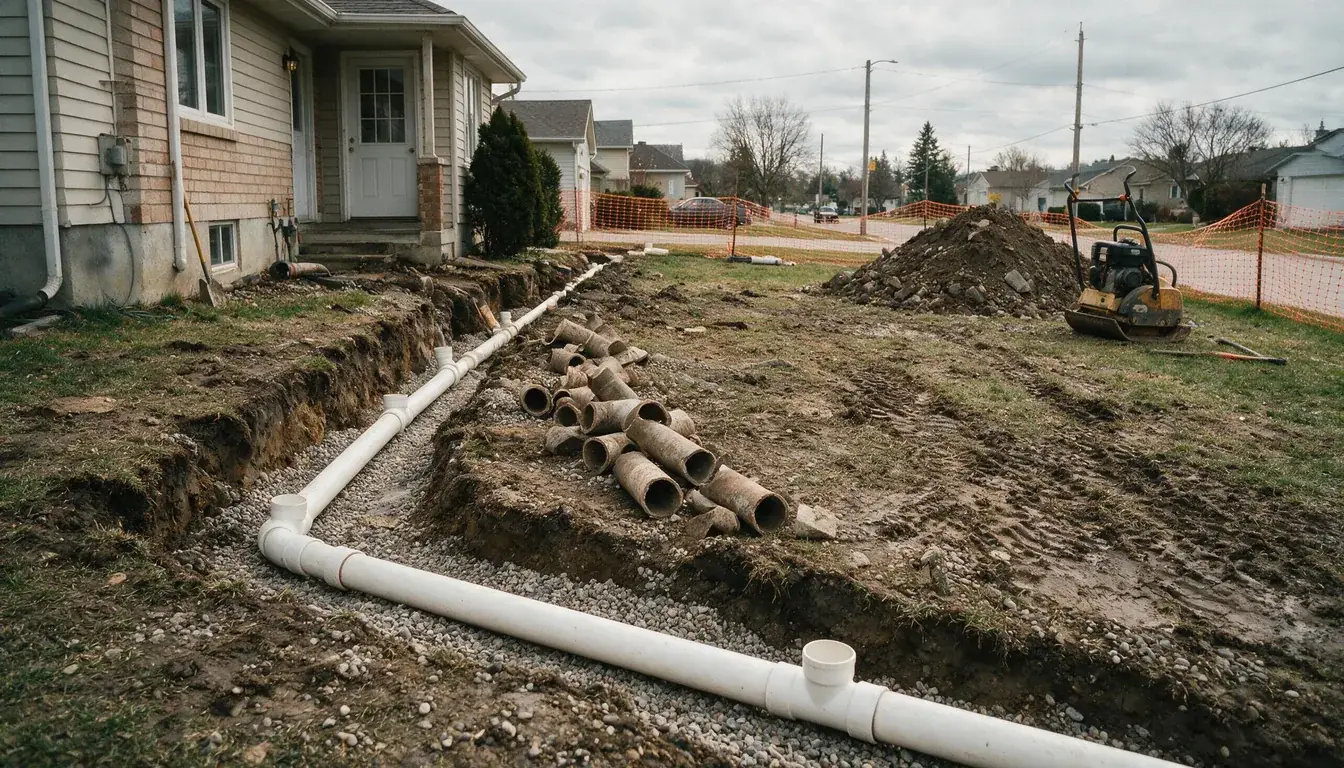
Sewer Line Replacement in Tucson, Arizona
Sewer Line Replacement in Tucson, Arizona is full sewer line replacement (trenched or trenchless pipe bursting). Local conditions in Tucson: water measured at 16, a 4 frost line and a median home age of 47 years.
Permitted, inspected, documented — ask for the permit and the license number before Tucson work starts.
What does the local plumbing data show for Tucson, AZ?
Seeing these conditions at your place in Tucson? Describe them on the call to a state-licensed local plumber — free, no obligation.
What are the pipe conditions in Tucson, AZ?
Full sewer line replacement in Tucson involves a trench or trenchless decision that depends on pipe depth, surface conditions, and access constraints. Traditional open-cut excavation costs less per foot but requires restoration of landscaping, concrete, or asphalt. CIPP (cured-in-place pipe lining) and pipe bursting are trenchless alternatives for pipes 4 inches and larger where the host pipe has sufficient structural integrity to guide the liner. AlertPlumber connects your call with an independent Arizona-licensed plumber — ask them to assess both methods and put the comparison in writing before work begins.
Tucson's housing stock spans multiple construction eras — median home age 47 years — meaning pipe materials and failure modes vary significantly by neighborhood and building vintage. An inspection-led approach that confirms pipe material before recommending a service path is standard practice for mixed housing profiles. Homes of other eras in Tucson may have galvanized pipe, copper pipe or polybutylene supply lines instead; ask the plumber which your home has.
Very hard water in Tucson is a primary driver of accelerated appliance failure: water heater anode rods exhaust in 2–3 years instead of 6–8, scale deposits at fixture connections form within months of installation, and tankless heat exchangers accumulate mineral buildup that can reduce lifespan by half without regular descaling. A softener or whole-house conditioner is strongly recommended alongside any appliance service call.
- Median home age
- 47 yrs
- Water hardness
- 16 gpg
- Frost line
- 4 in.
- Permit
- City fee schedule
Census housing age, Tucson city, Arizona: median year built 1979; 21.6% of homes built before 1960, 52.5% before 1980. Source: U.S. Census Bureau, ACS 2020–2024 5-year estimates, tables B25034 and B25035, read 2026-09-30.
Mention these conditions when you describe the symptom to the AZ plumber you reach.
What shapes plumbing demand in Tucson, AZ?
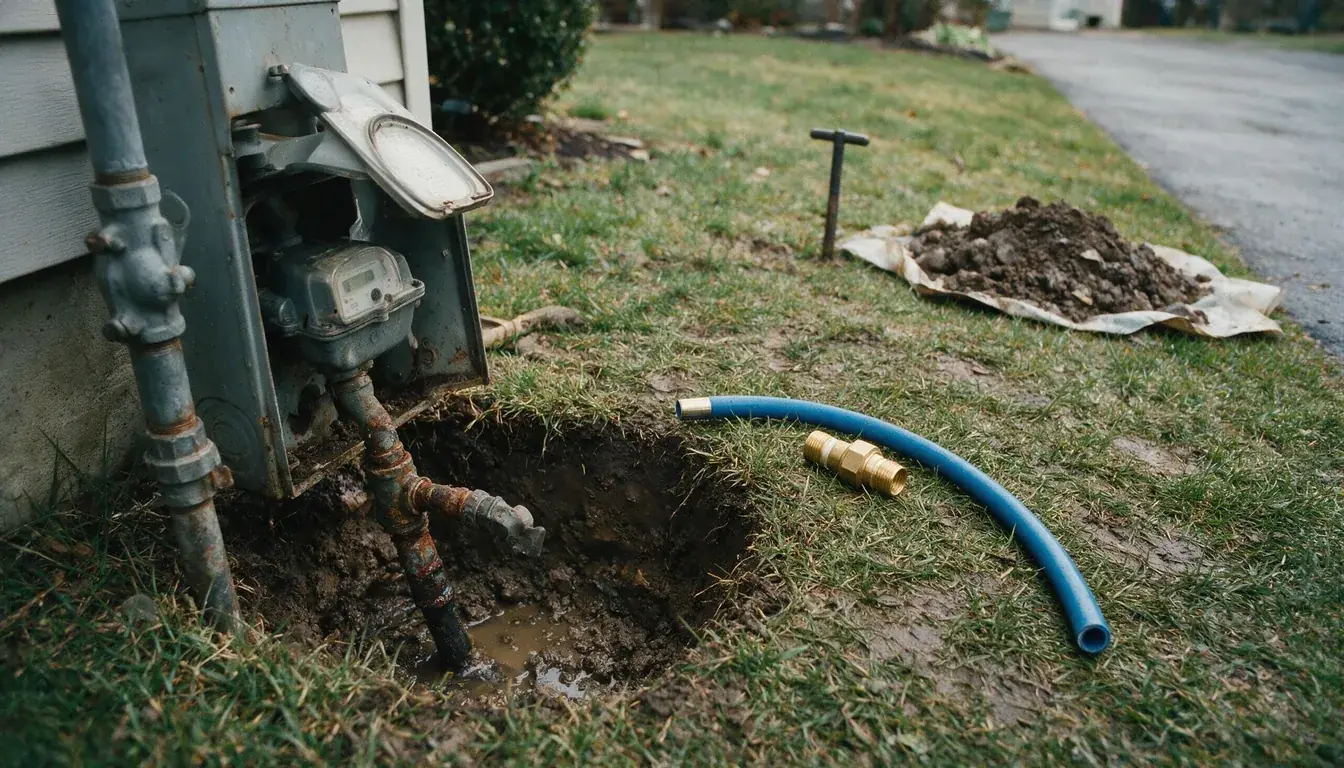
1950s–70s copper supply is now 50–70 years into its service cycle in Tucson. Thermal fatigue at fittings and slab-on-grade access complexity — common in Sun Belt construction — make repair vs. replacement a live decision on most jobs. This housing cohort is the active primary replacement wave in this market.
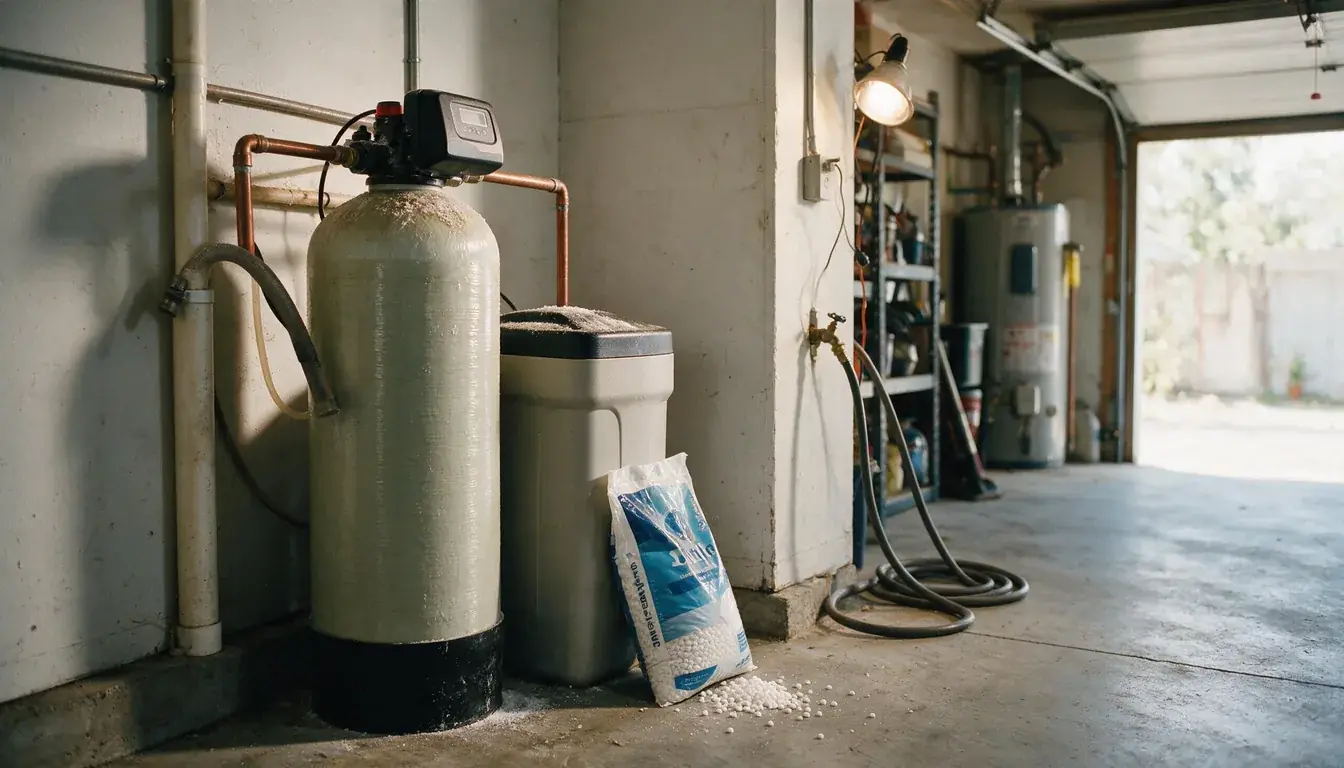
At 15–20+ GPG, calcium scale forces compressed equipment cycles in Tucson: tank heaters average 6–9 years vs. the 10–12-year national benchmark, and tankless units require annual descaling. Anode rods calcify within 12–18 months. Most plumbers here assess heater age against the local scale timeline — not the manufacturer's service life.
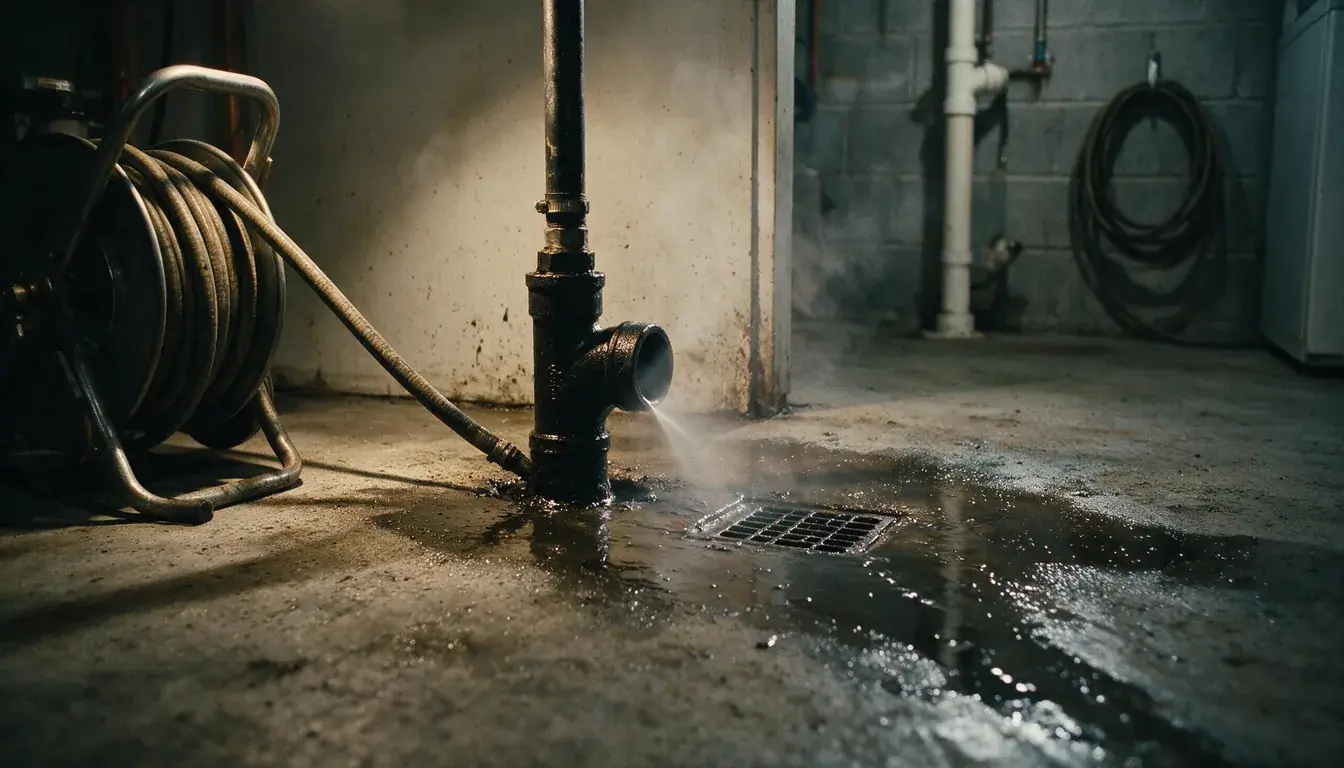
Without a hard freeze season, demand in Tucson distributes evenly through the year. Maintenance-driven categories dominate: end-of-life water heater replacement, root intrusion clearing, and fixture repair. Deferred maintenance surfaces gradually as partial failures rather than acute winter emergencies — which means issues compound silently until they become a larger job.
How does permit-required work run in Tucson, application through certificate?
The Arizona contractor prepares the permit application — drawings, specifications, contractor license number (ask for it) — and submits it to the Tucson building department. Issuance typically takes 3–10 business days. No construction begins until the permit is in hand.
Once Tucson issues the permit, the contractor notifies affected utilities — gas, water, electrical — as required by the permit scope. Work follows the approved drawings; any scope change requires an amended permit before that portion starts.
The contractor schedules the final inspection with the Tucson building department inspector. After sign-off, a certificate of completion is issued. All permit documentation is filed with the city; you receive copies for home records and future property disclosure.
Sewer Line Replacement cost calculator — Tucson
Pre-filled for sewer line replacement in Tucson. Adjust the ZIP for a neighboring area, or change the service to compare. Calculator pulls from the city's scraped permit-fee + state plumber-density data.
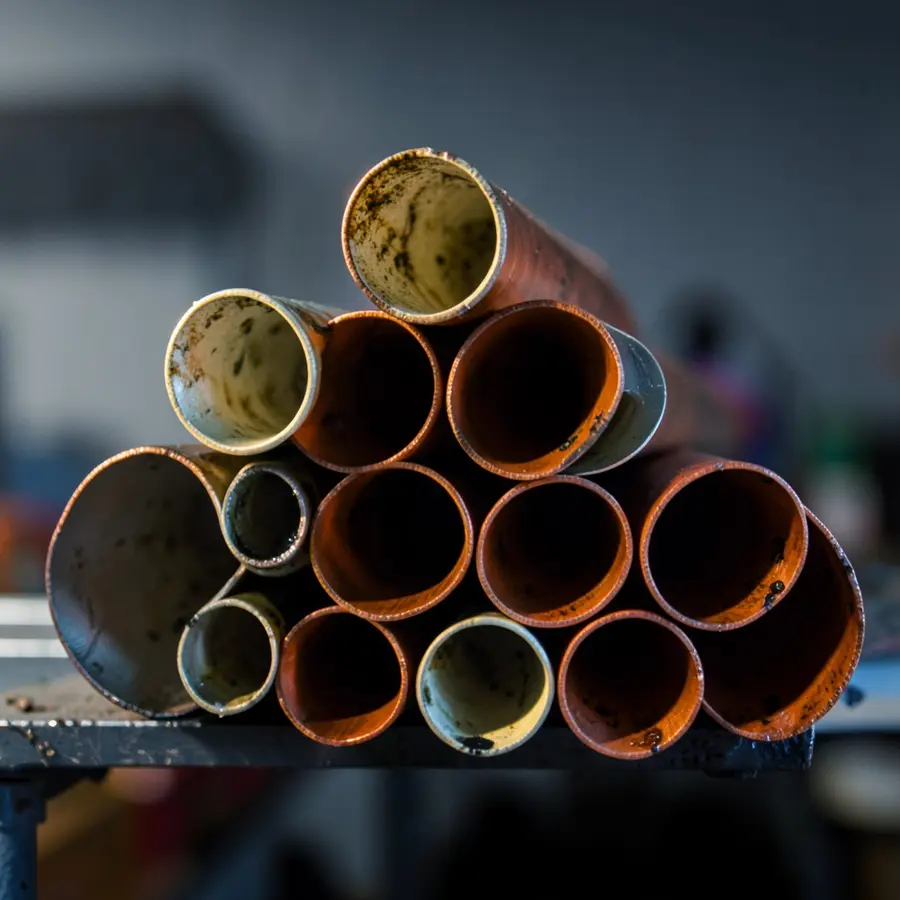
Sewer Line Replacement in Tucson — permitted work protects your home’s value.
Unpermitted plumbing affects insurance claims and resale disclosures in Arizona. Ask the Arizona plumber you reach which permits your address needs.
What else do people ask about sewer line replacement in Tucson?
How much does sewer line replacement cost in Tucson, AZ?
Sewer line replacement in Tucson runs roughly 8% below the national average for trenched work and roughly 15–25% more for trenchless pipe bursting. The Tucson plumbing permit minimum is set by the local fee schedule (AZ ROC). Final cost varies with lateral length, depth, and whether the run goes under driveways or mature landscaping. Price ranges: sewer line replacement cost guide.
Trenchless or trenched in Tucson — which method is right?
Tucson's caliche desert soil makes excavation expensive, so trenchless pipe bursting is the dominant method — especially under driveways, mature trees, and hardscape. Trenchless pulls a new HDPE liner through the existing pipe footprint with minimal yard disruption. The independent plumber runs a camera inspection first to confirm method.
Do I need a permit for sewer line replacement in Tucson?
Yes — any work on the sewer lateral requires an AZ ROC plumbing permit (minimum in Tucson) plus a city sewer-tap inspection. The connection at the property line typically requires a separate utility permit. The matched plumber pulls both permits and coordinates the inspection schedule so the trench isn't reopened. Permit fee ranges: permit fee estimator.
How much of my Tucson sewer problem is root intrusion?
Tucson's caliche desert soil is less root-prone than clay regions, but root intrusion still happens at lateral joints where the pipe meets the city main. A camera inspection identifies whether you have offsets, root mass, or a full collapse — that determines spot repair vs full replacement.
How long does sewer replacement take in Tucson?
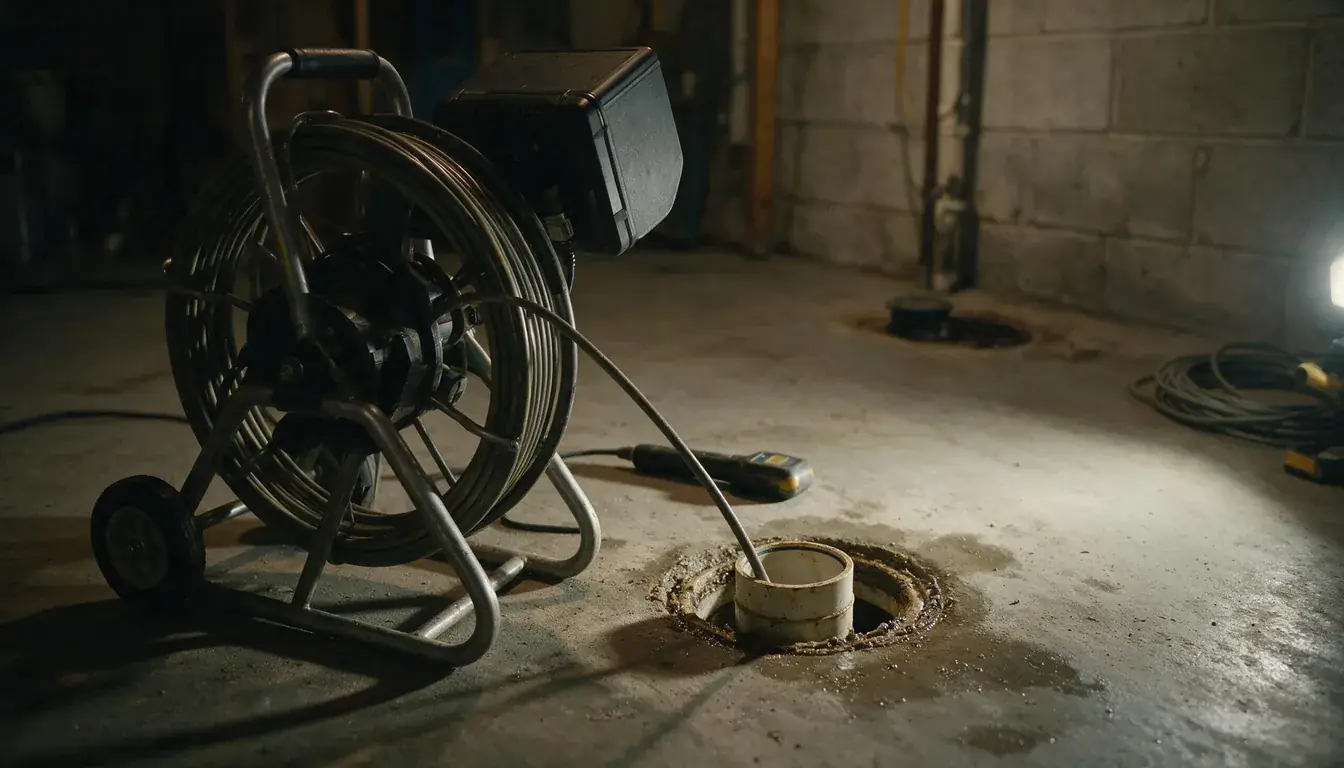
Trenchless pipe bursting typically wraps in one day for a residential lateral (40–80 ft). Traditional trenched replacement takes 2–3 days including backfill, permit inspection, and surface restoration. Tucson's shallow frost makes year-round scheduling easy. Surface restoration (concrete, landscaping) can add another 1–2 weeks.
What's underground at my Tucson home — clay, Orangeburg, or PVC?
Tucson's median home age is 44 years, so most laterals are 1970s-80s ABS/PVC. Newer Tucson stock typically has ABS or PVC, which lasts 50+ years but can still fail at joints or under settling soil. The camera inspection identifies the material on sight.
When should I replace vs repair my Tucson sewer line?
Replace if the camera shows: multiple offset joints, more than 30% pipe wall loss, a belly that holds standing water, or Orangeburg material. Spot repair works for: a single root intrusion at one joint, or a localized crack in otherwise sound pipe. The independent Arizona plumber walks you through the camera footage before you commit either way.
Will my Tucson homeowners insurance cover sewer line replacement?
Standard Arizona homeowners policies typically do NOT cover sewer-lateral replacement unless you've added a service-line endorsement. They may cover water damage from a sewer-backup event, subject to your deductible and a separate sewer-backup endorsement. Confirm with your carrier before assuming coverage — the matched plumber can document the failure for the claim. Price ranges: sewer line replacement cost guide.
Is Tucson on combined or separate sewers — does it matter for my lateral?
Tucson runs a separate sewer system — your sanitary lateral is independent from storm drainage. Replacement work only touches the sanitary side and doesn't trigger storm-drain inspection. Permit scope is simpler than combined-sewer cities.
How do I check the license of sewer contractors in AZ?
AlertPlumber does not vet plumbers: for Tucson sewer-replacement work, ask for the AZ ROC license number and check it with the state board. Sewer-replacement plumbers in the network also carry the supplemental excavation/utility-locator certifications required to legally cut into the public right-of-way and tie back to the city main.
Asking for a written quote costs you nothing. Guessing costs you the job.
The form below takes under a minute — it goes to an independent Arizona plumber in our partner's network; ask them to scope the sewer line replacement and put the quote in writing.
Need a sewer line replacement callback in Tucson?
In a meeting, with the kids, or just prefer not to call? Drop your ZIP and number below. AlertPlumber sends your request to our routing partner — if a participating plumber serves your area, they may call you back directly. For anything urgent, call the number on this page.
- 1 Submit your info. ZIP, phone, and what kind of work you need.
- 2 AlertPlumber passes it on to our routing partner for your area.
- 3 If a participating plumber serves your area, they may call you back. Ask for a written estimate before work starts.
Sewer Line Replacement in Tucson — compliant installation
Permitted sewer line replacement protects your home's resale value and keeps insurance claims defensible in Arizona. Ask your licensed plumber for their license number, who pulls the required permits, and a written scope before work starts.