
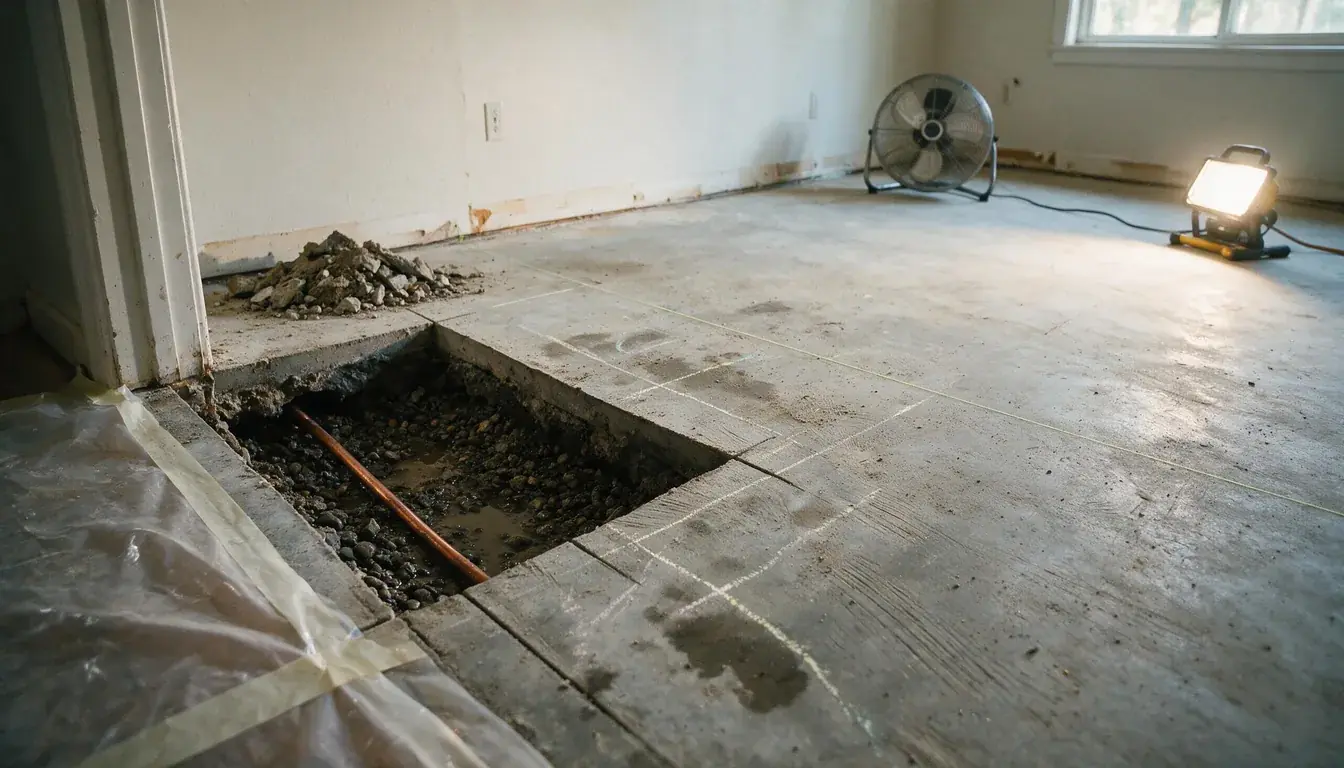
Emergency Slab Leak Repair in Austin, Texas
Slab Leak Repair in Austin, Texas detects and repairs leaks in pipes beneath the concrete slab foundation. Local conditions in Austin: water measured at 12, a 4 frost line and a median home age of 30 years.
Camera first, quote second — know exactly what's wrong in your Austin home before you approve a dollar.
Is slab leak repair in Austin, TX the right job?
- Burst Pipe Repair in Austin
- Water is spraying or leaking from a visibly split pipe, and the damaged section needs repair.
- Frozen Pipe Repair in Austin
- A tap has stopped flowing in freezing weather, and a frozen pipe needs to be checked and thawed.
- Water Line Repair in Austin
- Low pressure or water pooling between the meter and the house may point to an incoming water line that needs repair.
- Leak Detection in Austin
- Water is disappearing, a meter keeps moving with taps off, or damp spots keep returning, and the leak's location is unclear.
Who do I call for a slab leak in Austin?
A plumber who does leak detection and slab leak repair. In Austin, as anywhere, ask whether they locate the leak with detection equipment before any concrete is opened. It is urgent when water is coming up through the floor or the leak is near electrical outlets or appliances.
What does the local plumbing data show for Austin, TX?
Seeing these conditions at your place in Austin? Describe them on the call to a state-licensed local plumber — free, no obligation.
What are the pipe conditions in Austin, TX?
Slab leaks form when copper supply lines embedded in the concrete foundation develop pinholes from electrochemical corrosion, high-velocity water erosion, or slab movement. Austin homes built during the 1960s–1980s on post-tensioned slabs face the highest slab-leak risk — copper installed at original construction is approaching or past the 50-year corrosion window. Early signs include warm or wet spots on the floor, unexplained water bill spikes, and the sound of running water when all fixtures are closed. AlertPlumber routes your call to an independent Texas-licensed plumber — ask for acoustic leak location before any slab cutting begins. Persistent marine moisture and seasonal dampness drive above-average demand for leak detection and sump pump service in this region.
Austin's housing stock spans multiple construction eras — median home age 30 years — meaning pipe materials and failure modes vary significantly by neighborhood and building vintage. An inspection-led approach that confirms pipe material before recommending a service path is standard practice for mixed housing profiles. Homes of other eras in Austin may have galvanized pipe, copper pipe or polybutylene supply lines instead; ask the plumber which your home has.
Very hard water in Austin is a primary driver of accelerated appliance failure: water heater anode rods exhaust in 2–3 years instead of 6–8, scale deposits at fixture connections form within months of installation, and tankless heat exchangers accumulate mineral buildup that can reduce lifespan by half without regular descaling. A softener or whole-house conditioner is strongly recommended alongside any appliance service call.
- Median home age
- 30 yrs
- Water hardness
- 12 gpg
- Frost line
- 4 in.
- Permit
- City fee schedule
Census housing age, Austin city, Texas: median year built 1994; 8.1% of homes built before 1960, 28.3% before 1980. Source: U.S. Census Bureau, ACS 2020–2024 5-year estimates, tables B25034 and B25035, read 2026-09-30.
Mention these conditions when you describe the symptom to the TX plumber you reach.
What local infrastructure shapes Slab Leak Repair in Austin?
Austin rapid residential expansion through the 1990s produced large volumes of copper-in-slab supply configurations in tracts across the northwest, southwest, and Round Rock-adjacent corridors. At 30 years median housing age, the 1990s construction cohort has reached the early phase of the documented pinhole corrosion window — earlier than comparable homes in softer-water markets because of the water chemistry here.
At 12 grains per gallon, Austin Colorado River-sourced supply registers in the very-hard category. Hard water accelerates the interior copper pitting timeline by reducing the buffering distance between the active mineral scale and the pipe wall beneath. In a 30-year copper-slab installation at 12 GPG, first pinhole failures typically emerge 5 to 10 years earlier than in comparable homes with soft or moderately hard supply, placing the high-growth 1990s tracts in the early-failure zone now.
The permit covers investigation and repair scope. Austin reports 27,810 licensed plumbing contractors statewide. Detection work pinpoints the failure location before any slab access; above-slab rerouting is the standard recommendation at this water hardness to end the corrosion mechanism for the replaced line. Permit fee ranges: permit fee estimator.
What shapes plumbing demand in Austin, TX?
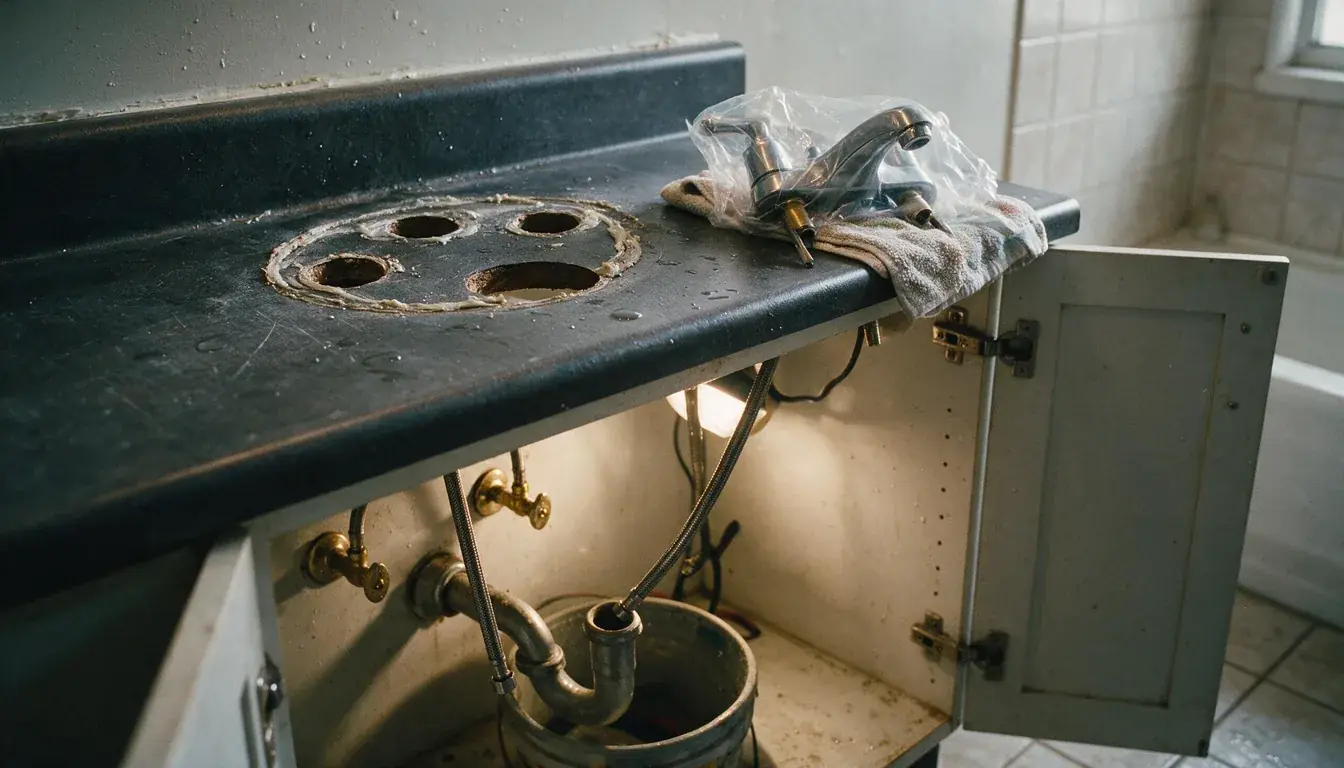
CPVC becomes brittle in the 20–35-year range and snaps under thermal stress or incompatible pipe dopes. Early PEX fittings (pre-2010) may develop chloramine compatibility issues at 15–25 years. The 1980s–1990s housing stock in Austin is entering its first wave of material-driven service calls — not from neglect, but from normal service-life progression.
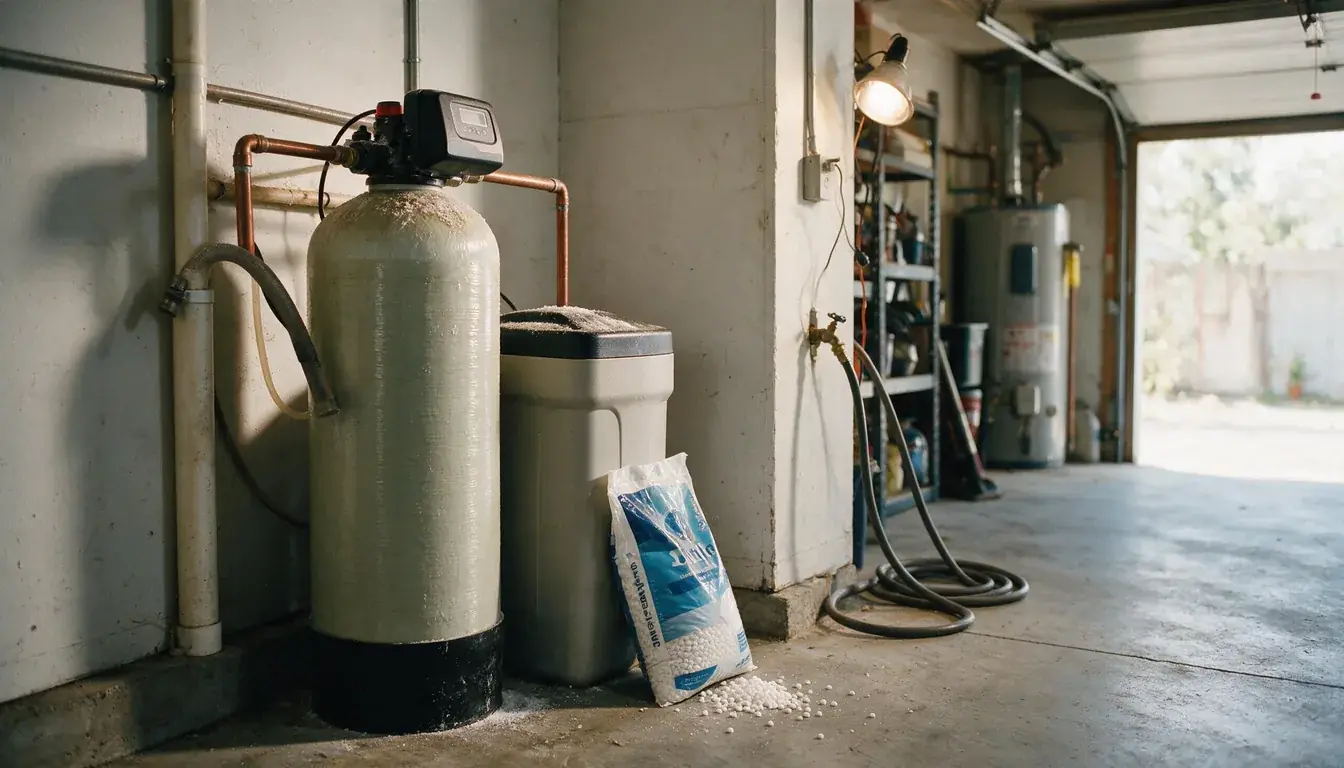
At 15–20+ GPG, calcium scale forces compressed equipment cycles in Austin: tank heaters average 6–9 years vs. the 10–12-year national benchmark, and tankless units require annual descaling. Anode rods calcify within 12–18 months. Most plumbers here assess heater age against the local scale timeline — not the manufacturer's service life.
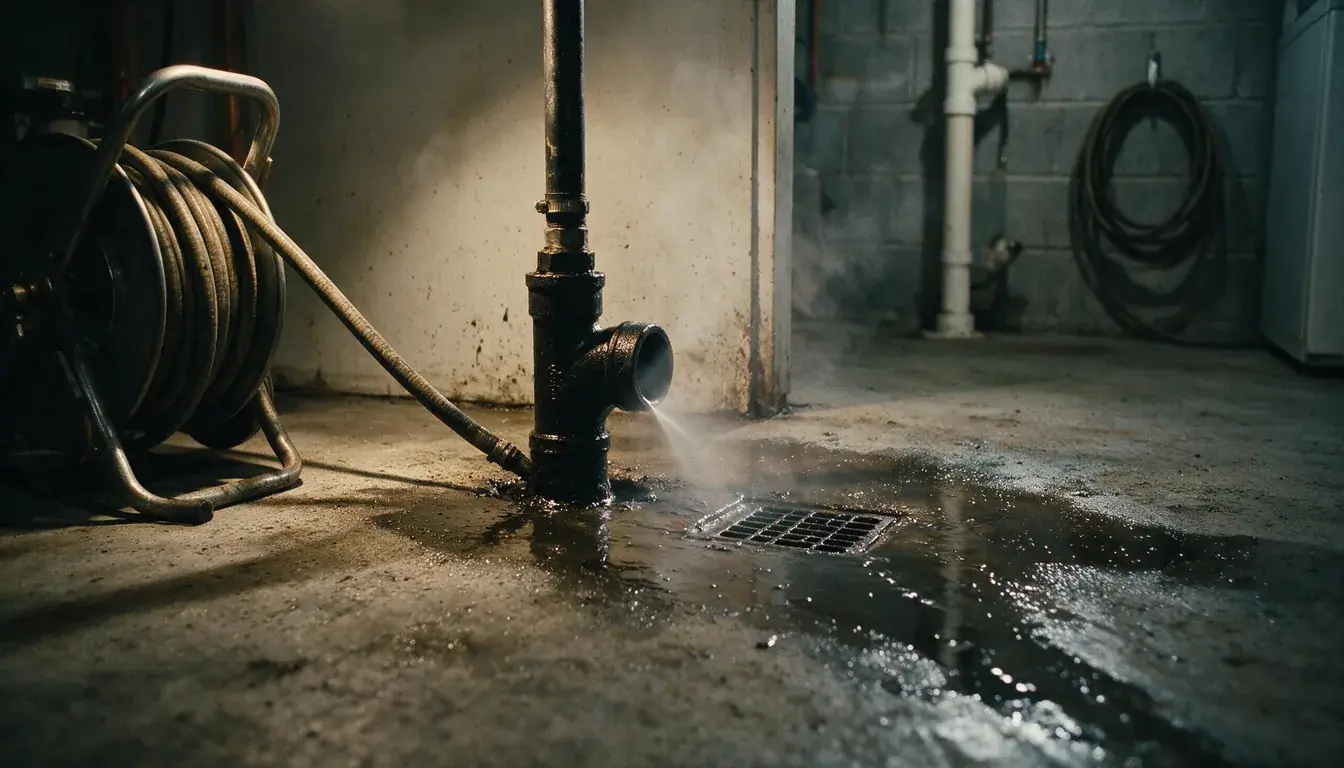
Without a hard freeze season, demand in Austin distributes evenly through the year. Maintenance-driven categories dominate: end-of-life water heater replacement, root intrusion clearing, and fixture repair. Deferred maintenance surfaces gradually as partial failures rather than acute winter emergencies — which means issues compound silently until they become a larger job.
Why diagnose before repairing in Austin?
Describe the symptom — not the repair. AlertPlumber routes the call to an independent TX-licensed plumber in its partner's network — ask whether the site visit will use camera tracing, acoustic detection, or hydrostatic pressure testing matched to the reported failure type.
Ask the plumber for a written diagnostic report: confirmed failure location, available repair methods, and tradeoffs — disruption level, material durability, long-term cost, and whether an Austin building permit applies to the selected method.
You select the repair path. Ask for a fixed scope and price on the authorized method before the Texas-licensed plumber proceeds and, where required, who files the permit application to Austin.
Slab Leak Repair cost calculator — Austin
Pre-filled for slab leak repair in Austin. Adjust the ZIP for a neighboring area, or change the service to compare. Calculator pulls from the city's scraped permit-fee + state plumber-density data.
Slab Leak Repair emergency in Austin?
Every hour without a repair increases structural risk and remediation cost. Calls connect to independent local plumbers in our partner's network — ask for an arrival time and a written estimate.
What else do people ask about slab leak repair in Austin?
How much does slab leak repair cost in Austin?
Travis County pricing in 2025 reads differently than legacy Sun Belt slab markets because Austin's median home age of 30 years (1994 build) means most of the housing stock left the builder with PEX-A or copper run overhead — not copper-in-slab — so the underlying repair population is smaller and the per-job pricing reflects that scarcity. A localized cut-and-splice on the limited pre-1990s pocket in South Austin around Zilker, Travis Heights, or Hyde Park runs a scope-based price when the failure is a clean pinhole. A perimeter reroute through interior walls into the attic on a 1980s tract home off MoPac or 183 runs a scope-based price — frequently the better call because Austin single-story tract construction makes overhead PEX-A routing easy. A whole-home PEX-A changeout on a 2,200 sq ft Austin ranch lands at a scope-based price. The Austin Development Services Department permit is set by the local fee schedule with a separate post-cover inspection. The 27,810-strong TX TSBPE roster operating statewide keeps detection-equipment rates competitive in the Capital Metro market. Price ranges: slab leak repair cost guide.
How do I know if I have a slab leak in my Austin home?
Two distinct symptom patterns surface in Austin, depending on housing era. Pre-1990s South Austin homes (Zilker, Travis Heights, Hyde Park, Allandale) carry Type M copper-in-slab and produce the classic warm-patch pattern on tile from hot-water pinholes — at 12 gpg from the Austin Water Hill Country limestone aquifer + Trinity well blend, hot-side internal corrosion still drives most failures in that pocket. Westlake Hills luxury hillside homes built 1985-2005 over post-tension slabs carry a different signature: subtle cracks radiating from a cable anchor, a hairline pressure drop the meter catches before any visible water surfaces, and the high-end finishes that make the wrong cut catastrophically expensive. Austin Water bill spikes of a scope-based price per cycle with no usage change confirm an active leak in either pattern; the meter low-flow indicator moving with all fixtures off is the cleanest single diagnostic. Price ranges: slab leak repair cost guide.
Why are slab leaks less common in Austin than in legacy Sun Belt markets?
Austin's housing stock is genuinely younger than the rest of the Sun Belt slab-leak map, and that single fact dominates everything else about this market. The 1990s-2010s tech-boom tract growth — Round Rock, Cedar Park spillover, Mueller infill, the entire I-35 corridor north — overlapped almost exactly with the residential transition from in-slab Type M copper to PEX-A run through walls and attic. Most Austin slab homes from 1995 forward left the builder with PEX-A as the supply system, which is a fundamentally different long-term failure curve than the Phoenix or San Antonio 1980s copper-in-slab population. Hill Country limestone aquifer + Trinity well blend at 12 gpg is hard enough to chew through water heaters and tankless coils on an 8-12 year cycle, but the supply-line population it can attack is much smaller. Per the Copper Development Association, the 30-50 year pinhole-failure window for Type M copper applies — but in Austin it applies to a fraction of the homes it would in a legacy 1960s-80s tract market. The slab-leak inventory clusters in pre-1990s South Austin and in the post-tension Westlake Hills luxury stock.
What detection workflow does an Austin plumber use on a Hill Country slab?
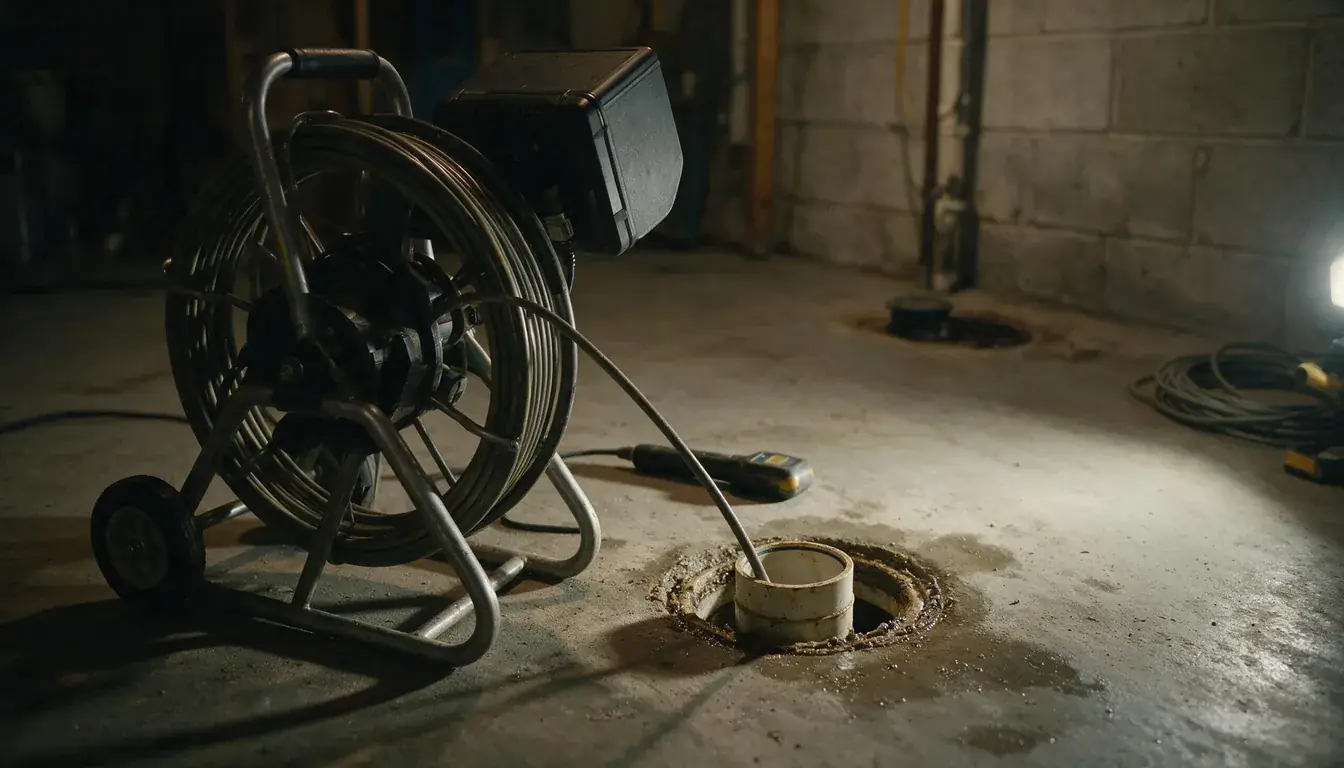
The Austin sequence on a pre-1990s South Austin home with copper-in-slab is the standard four-step workup: static pressure-isolation on the supply manifold to confirm a leak and split hot from cold side, FLIR thermal imaging across the floor surface to localize the warm anomaly (hot-side leaks at 12 gpg from the Austin Water Hill Country limestone aquifer + Trinity well blend produce a clean thermal signature through tile or thin engineered hardwood), acoustic ground-microphone listening to triangulate within 12-18 inches, and electronic line-tracing to map the route before any concrete is opened. The Westlake Hills post-tension variant adds one critical step: ground-penetrating radar (GPR) before any cut to locate the high-tension cables embedded in the slab, because severing one is a structural event rather than a plumbing event. The GPR pass can add a separate charge to the detection workup on post-tension stock and belongs as its own quote line item rather than tucked into labor. Price ranges: slab leak repair cost guide.
Spot repair, reroute, or full PEX — what fits an Austin home?
For a first-ever pinhole in a 1980s Allandale or Hyde Park ranch with otherwise sound copper, a clean cut-and-splice at a scope-based price is the right call and buys two to four years before another failure surfaces somewhere else on the same system. Once the second leak shows up anywhere on the home in any rolling 24-month window, the Austin answer pivots to a perimeter reroute through walls and attic at a scope-based price — single-story tract construction across most of Austin makes overhead PEX-A routing easy, and pulling the failed leg out of the slab outperforms repeated spot work. The whole-home PEX-A changeout at a scope-based price is the right call when a third leak surfaces, when 35+ years on original Type M copper crosses the failure threshold per Copper Development Association field data, or when the home is on the post-tension stock where each cut is structurally consequential. Price ranges: slab leak repair cost guide.
How does Texas insurance handle Austin slab leaks after Feb 2021?
The February 2021 winter storm reset Texas HO-3 underwriting for water claims across the entire state, and Austin sits inside that reset just as fully as Dallas-Fort Worth or San Antonio. Carriers that previously paid sudden-discovery slab leaks without scrutiny now require thorough documentation that the failure was not freeze-burst — handled under a different peril with different deductibles in many Texas forms. State Farm, USAA, Farmers, and most Texas-domiciled carriers reimburse Austin detection invoices when paired with moisture-mapping and a written failure-mode statement from the credentialed plumber identifying the leak as corrosion, mechanical, or freeze-related. Two prior water-damage claims at the same Austin address commonly triggers non-renewal in 2025; the surplus-lines and Texas FAIR Plan options are the fallback but carry materially worse coverage on water damage. Get the failure-mode language right at first invoice, not at appeal.
How do I check the license of plumbers in Travis County?
The partner network routes every plumber reached through AlertPlumber for Austin slab leak work against active Texas state-credentialed status. TX TSBPE, 2024 shows 27,810 active credential-holders statewide and the Capital Metro market draws a competitive subset of those into Travis, Williamson, and Hays counties. Slab work demands both the plumbing credential and demonstrated specialty experience in concrete cutting plus supply-line repipe — confirm any specific plumber's credentials with the state board before authorizing work. The Austin Development Services Department permit + inspection is non-negotiable on any slab-cut or supply-line repipe; an unpermitted slab cut surfaces during Travis County title clearance and creates resale friction that costs more retroactively than to pull originally. Ask whether the plumber will pull the permit and quote the fee as a separate line item rather than burying it in labor. Permit fee ranges: permit fee estimator.
How long does the actual Austin slab leak repair take?
Single-visit completion is realistic for a single localized leak in a 1980s South Austin ranch with no post-tension complication: morning detection workup, midday slab cut, afternoon splice and concrete patch poured before the crew leaves. Total water-off window typically runs 4-6 hours. Perimeter reroutes through interior walls into the attic on Austin tract homes usually run a single working day plus a return visit the next morning to close drywall and verify pressure. Whole-home PEX-A changeouts on a 2,200 sq ft Austin single-story run three to five working days plus inspection. Add a half-day to a full day for any Westlake Hills post-tension job because GPR mapping of the high-tension cables and the slower, more careful cut path consume real time. Concrete cure on patches: 24-48 hours before tile or hardwood finish work can resume.
Does the Westlake Hills post-tension slab change the repair approach?
Materially, and this is the single largest divergence between Austin and the Phoenix or San Antonio repair playbook. Post-tension slabs — common in Westlake Hills, parts of Lakeway, Spanish Oaks, and the higher-end 1985-2005 Hill Country builds — carry steel cables tensioned to roughly 33,000 psi, anchored at the slab perimeter, that hold the floor in compression. A spot repair that drills through one is a structural event and a serious safety hazard during the cut. The Austin protocol on any suspected post-tension home is GPR mapping of the cable layout before any concrete work, perimeter reroute through walls and attic by default rather than slab-cut spot repair, and a written confirmation of cable clearance on every cut path that does proceed through the slab. The credentialed plumber on Westlake Hills work coordinates with the homeowner's structural engineer when the cable layout forces a non-standard cut. The cost premium (over a non-post-tension job) is dwarfed by the cost of severing a tensioned cable. Price ranges: slab leak repair cost guide.
When does a whole-home PEX changeout pencil out for an Austin home?
The Austin math runs differently than legacy Sun Belt markets because so much of the stock is already on PEX-A from the builder — full repipe is genuinely rare in Capital Metro compared to Phoenix or San Antonio. Three triggers force the math when it does apply. Two confirmed leaks in any rolling 24-month window inside a pre-1990s South Austin home tells you the underlying Type M copper system has crossed the failure threshold and is not going back. Thirty-five-plus years on original Type M copper on Austin Water 12 gpg supply, regardless of leak count, puts the home far enough into the copper failure window per Copper Development Association field data that proactive replacement saves money over reactive cuts. And any Westlake Hills post-tension home with a confirmed slab leak is a strong proactive case for repipe because each subsequent cut carries cable-strike risk; pulling the supply system out of the slab eliminates that loading entirely. The PEX Association rates PEX-A at 25-year manufacturer warranty when installed to spec, and most Austin repipe jobs route the new lines overhead through walls and attic — never back through the slab.
One call puts your problem in front of a local plumber.
Call the number, or put your number in the form below — the request goes to an independent Texas plumber in our partner's network; ask about the slab leak repair and for a written estimate.

Need a slab leak repair callback in Austin?
In a meeting, with the kids, or just prefer not to call? Drop your ZIP and number below. AlertPlumber sends your request to our routing partner — if a participating plumber serves your area, they may call you back directly. For anything urgent, call the number on this page.
- 1 Submit your info. ZIP, phone, and what kind of work you need.
- 2 AlertPlumber passes it on to our routing partner for your area.
- 3 If a participating plumber serves your area, they may call you back. Ask for a written estimate before work starts.
Slab Leak Repair in Austin — when to call
Acute plumbing failures cannot wait. AlertPlumber routes calls about slab leak repair in Austin to independent Texas plumbers in our partner's network — call now or submit the form above for a callback.