
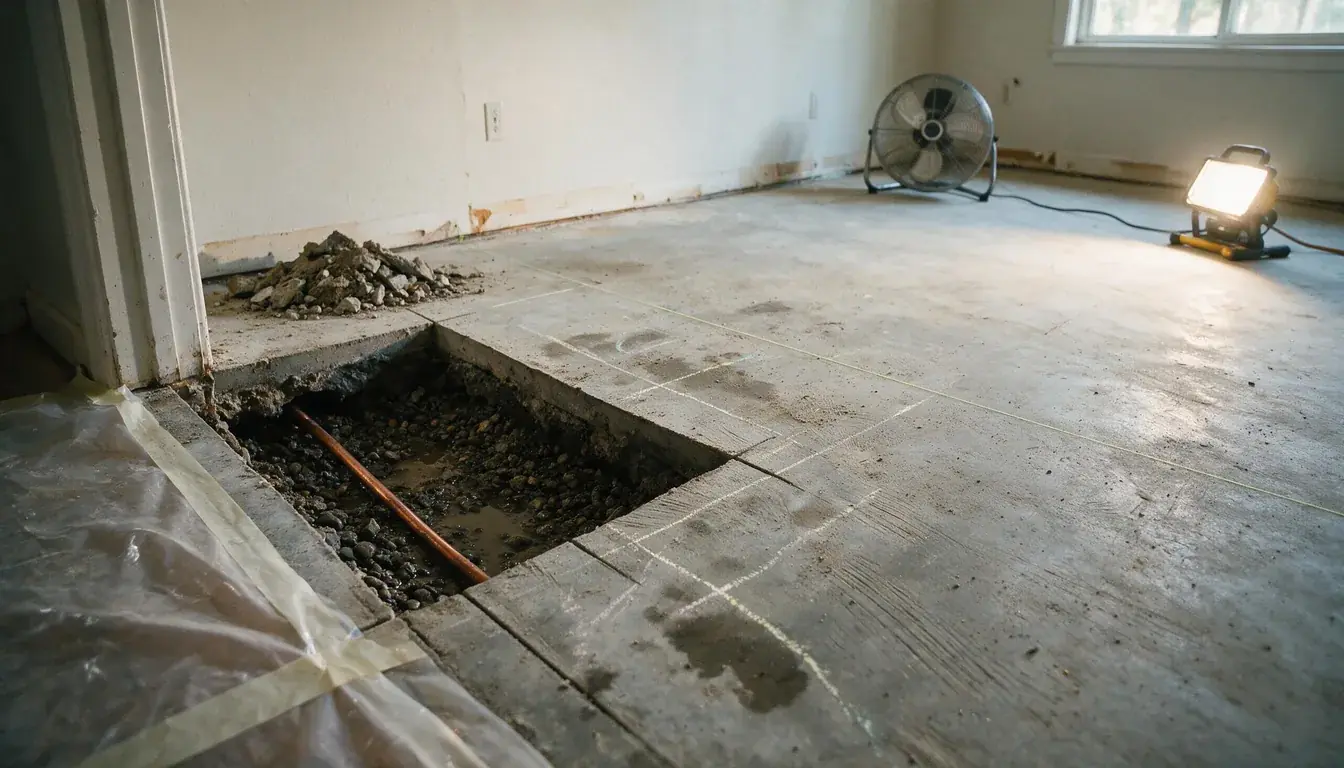
Emergency Slab Leak Repair in Charlotte, North Carolina
Slab Leak Repair in Charlotte, North Carolina detects and repairs leaks in pipes beneath the concrete slab foundation. Local conditions in Charlotte: water measured at 1.5, a 10 frost line and a median home age of 31 years.
Camera first, quote second — know exactly what's wrong in your Charlotte home before you approve a dollar.
Is slab leak repair in Charlotte, NC the right job?
- Burst Pipe Repair in Charlotte
- Water is spraying or leaking from a visibly split pipe, and the damaged section needs repair.
- Frozen Pipe Repair in Charlotte
- A tap has stopped flowing in freezing weather, and a frozen pipe needs to be checked and thawed.
- Water Line Repair in Charlotte
- Low pressure or water pooling between the meter and the house may point to an incoming water line that needs repair.
- Leak Detection in Charlotte
- Water is disappearing, a meter keeps moving with taps off, or damp spots keep returning, and the leak's location is unclear.
Who do I call for a slab leak in Charlotte?
A plumber who does leak detection and slab leak repair. In Charlotte, as anywhere, ask whether they locate the leak with detection equipment before any concrete is opened. It is urgent when water is coming up through the floor or the leak is near electrical outlets or appliances.
What does the local plumbing data show for Charlotte, NC?
Seeing these conditions at your place in Charlotte? Describe them on the call to a state-licensed local plumber — free, no obligation.
What are the pipe conditions in Charlotte, NC?
Slab leaks form when copper supply lines embedded in the concrete foundation develop pinholes from electrochemical corrosion, high-velocity water erosion, or slab movement. Charlotte homes built during the 1960s–1980s on post-tensioned slabs face the highest slab-leak risk — copper installed at original construction is approaching or past the 50-year corrosion window. Early signs include warm or wet spots on the floor, unexplained water bill spikes, and the sound of running water when all fixtures are closed. AlertPlumber routes your call to an independent North Carolina-licensed plumber — ask for acoustic leak location before any slab cutting begins.
Homes built in Charlotte between 1978 and 1995 — median age 31 years — may carry polybutylene supply lines, a grey plastic material that stopped being installed after a 1990s class-action settlement over failures linked to chlorinated municipal water. Polybutylene fails at fittings and mid-run stress points; ask a licensed plumber to identify the material by pipe color and fitting type and advise on repipe timing. Homes of other eras in Charlotte may have galvanized pipe or copper pipe supply lines instead; ask the plumber which your home has.
Frost line depth in Charlotte means supply lines and outdoor plumbing must be installed below the freeze threshold — typically 10 — to prevent pipe burst during cold events. Exterior hose bibs, irrigation shutoffs, and any exposed pipe runs are the most common winterization service points in freeze-risk markets.
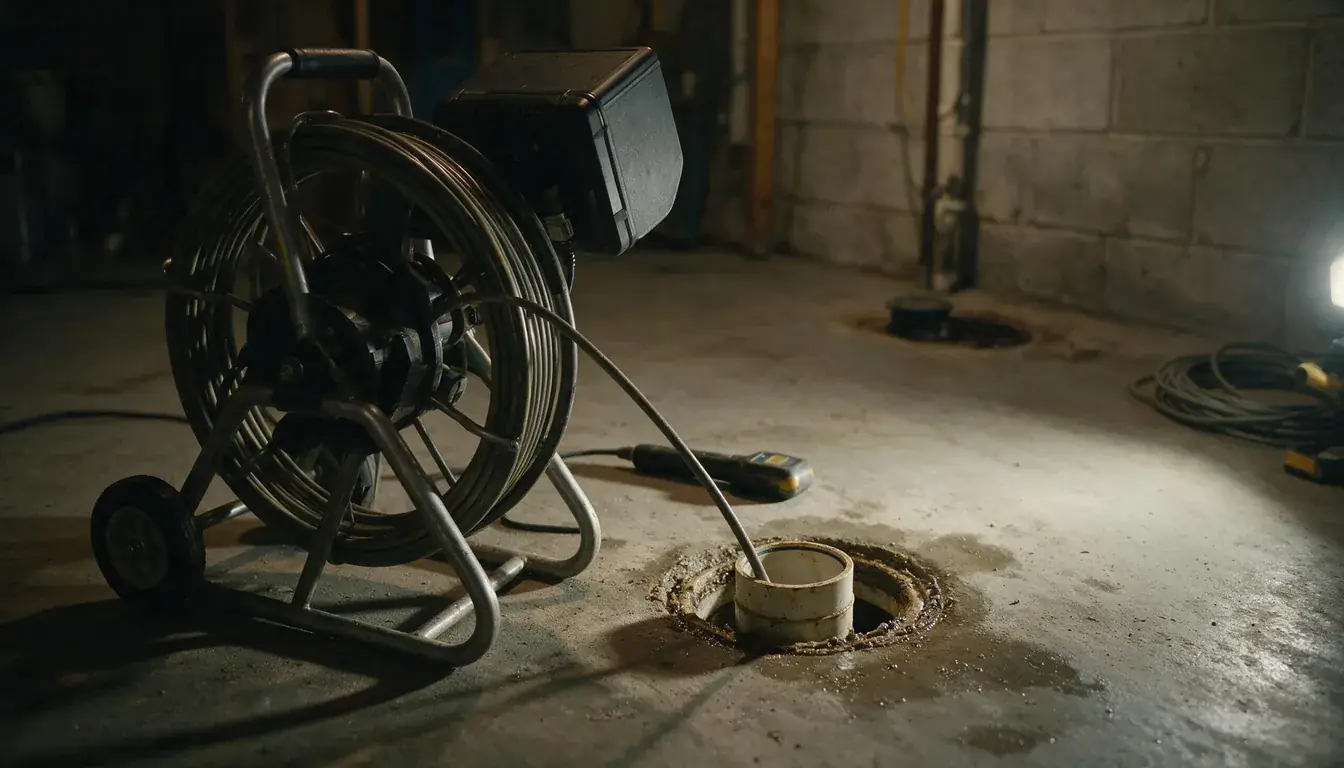
- Median home age
- 31 yrs
- Water hardness
- 1.5 gpg
- Frost line
- 10 in.
- Permit
- City fee schedule
Census housing age, Charlotte city, North Carolina: median year built 1995; 10.4% of homes built before 1960, 27.9% before 1980. Source: U.S. Census Bureau, ACS 2020–2024 5-year estimates, tables B25034 and B25035, read 2026-09-30.
Mention these conditions when you describe the symptom to the NC plumber you reach.
What local infrastructure shapes Slab Leak Repair in Charlotte?
Charlotte modern residential construction through the 1990s and 2000s produced slab-on-grade supply configurations across fast-growth Mecklenburg County corridors — Steele Creek, University City, and the Ballantyne and Mint Hill areas represent the primary cohort where copper and early cross-linked polyethylene runs beneath slabs at 31 years median age. The North Carolina Piedmont mixed-soil profile introduces low-amplitude seasonal movement in clay-heavy subgrade zones, and the 10-inch partial frost line produces minor annual thermal cycling in the slab mass across typical Charlotte winters.
Charlotte-Mecklenburg Utilities delivers approximately 1.5 grains per gallon from Lake Norman and Mountain Island Lake — soft supply at the lower boundary of the moderate range. At 1.5 GPG, mineral scale deposits are minimal, meaning copper supply lines in 31-year Charlotte slab installations contact the water column without the passivation layer that harder-water markets develop. Soft water carries a direct-corrosion mechanism that operates without the visible scale deposits that alert homeowners in hard-water markets — failures can emerge without early warning signs like pressure reduction or discoloration.
The permit covers investigation and repair scope in Mecklenburg County. Electronic leak detection locates the failure before concrete access. Soft-water environments favor above-slab rerouting with non-metallic materials that eliminate the direct-corrosion mechanism for the replaced supply segment. Permit fee ranges: permit fee estimator.
What shapes plumbing demand in Charlotte, NC?
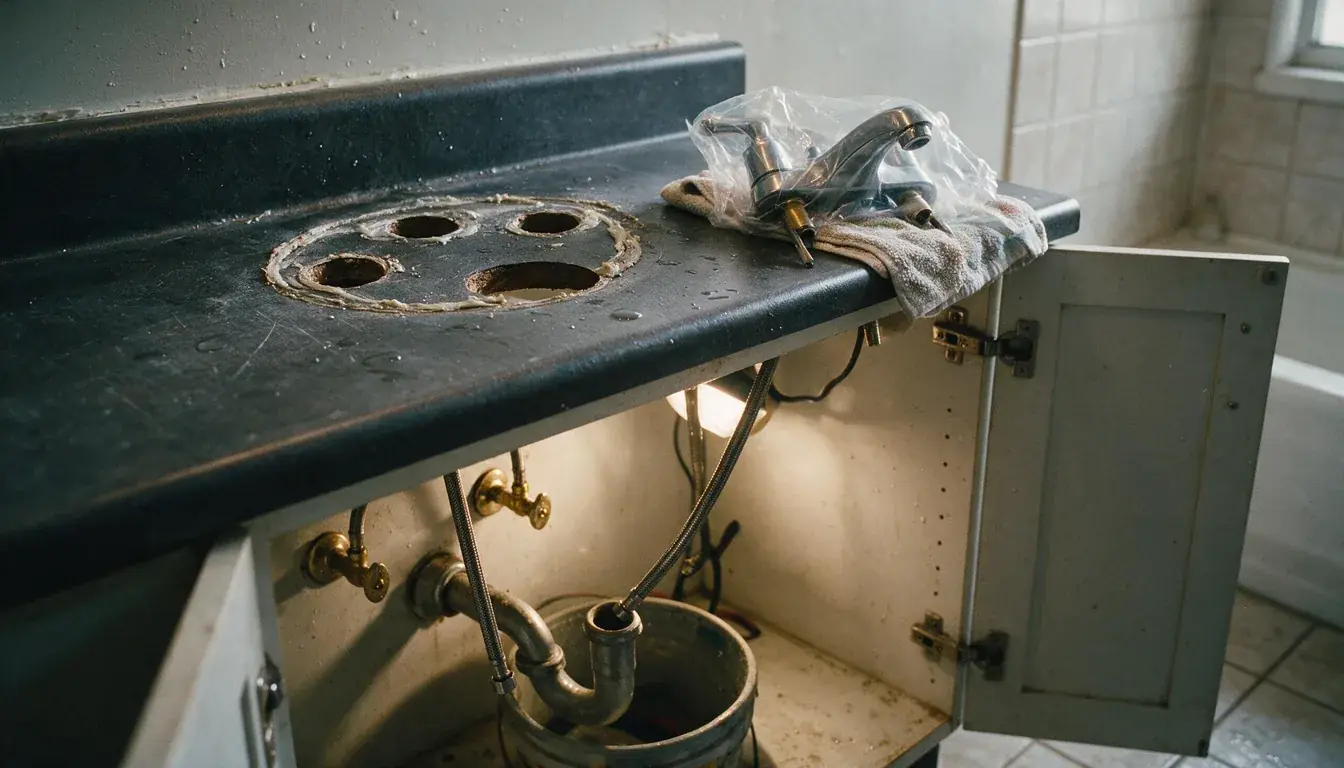
CPVC becomes brittle in the 20–35-year range and snaps under thermal stress or incompatible pipe dopes. Early PEX fittings (pre-2010) may develop chloramine compatibility issues at 15–25 years. The 1980s–1990s housing stock in Charlotte is entering its first wave of material-driven service calls — not from neglect, but from normal service-life progression.
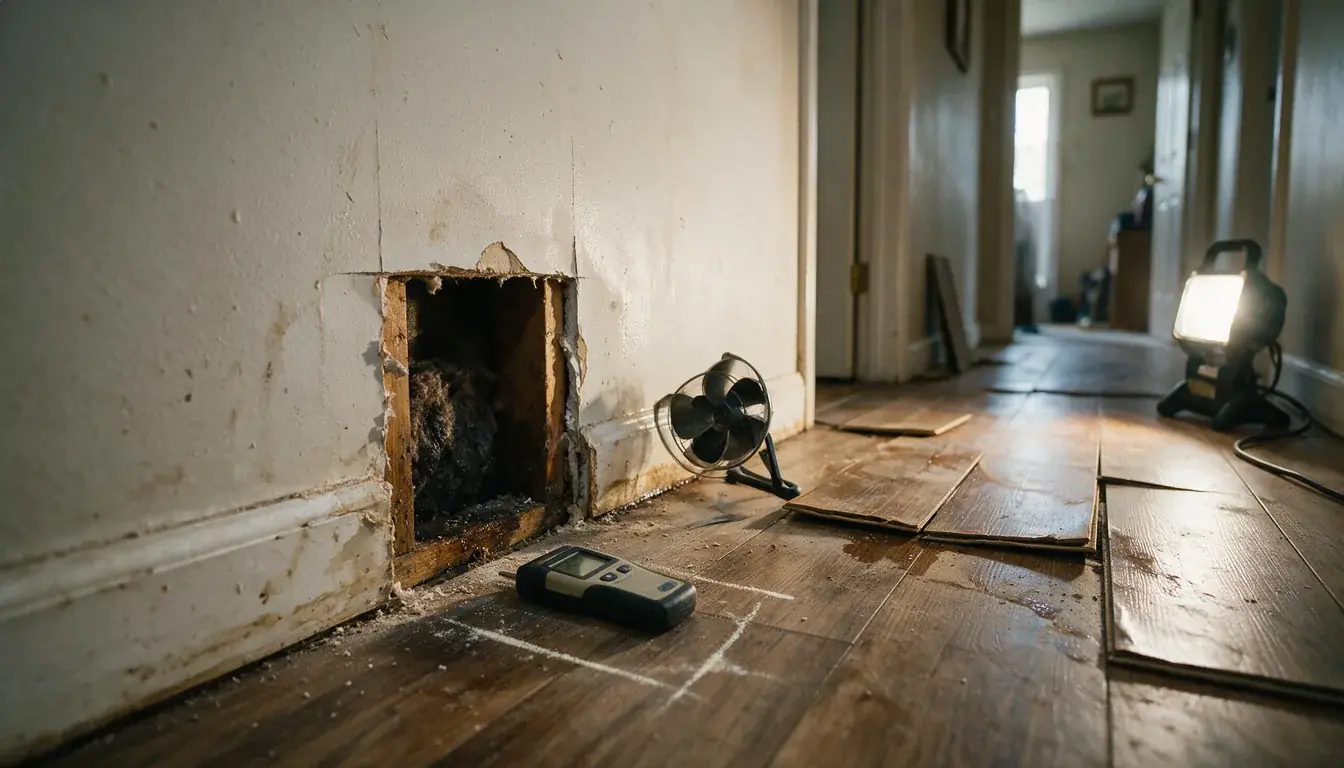
Soft, slightly acidic water in Charlotte is corrosive to copper pipe and solder joints — the opposite failure pattern from hard-water markets. Pinhole failure at fittings and elbows is the dominant non-emergency repair category. Anode rods also deplete faster in soft water, shortening effective tank life without timely replacement.
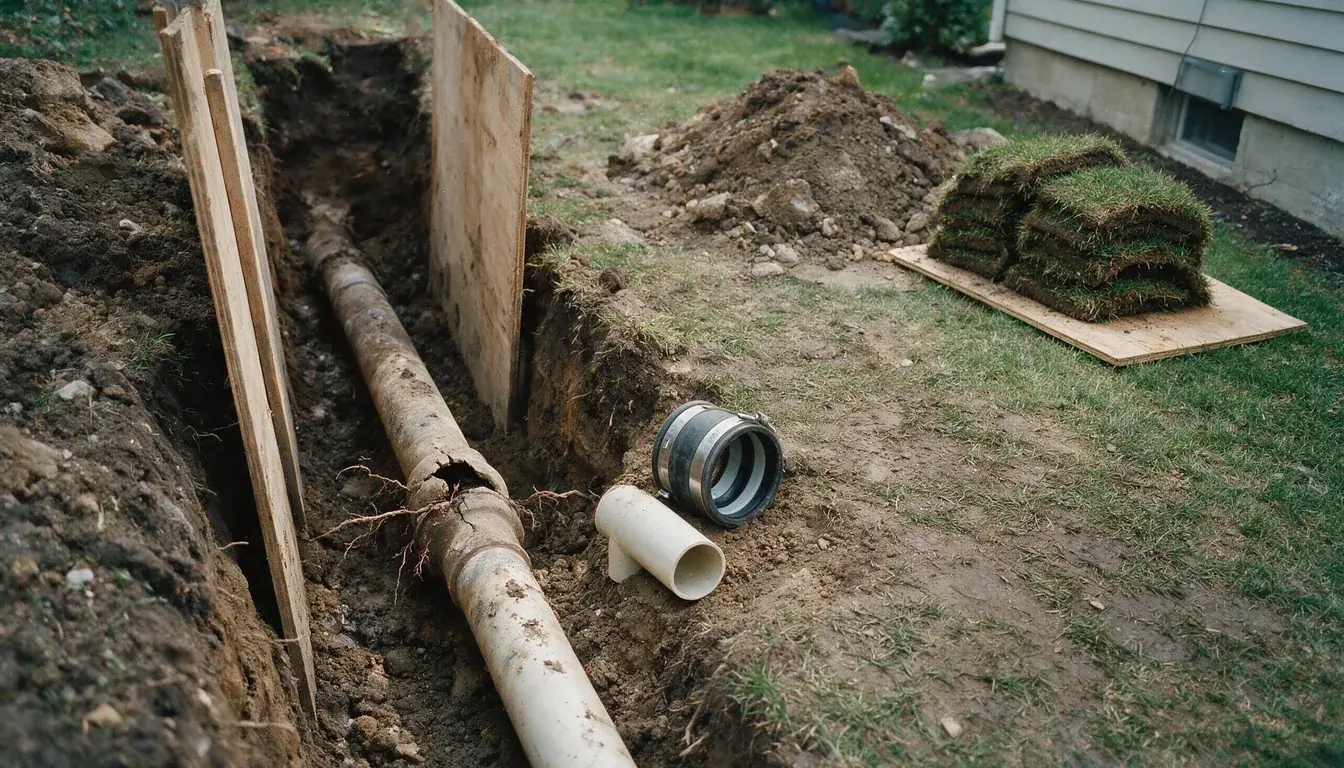
Drain and sewer line health drives the primary maintenance workload in Charlotte: high groundwater tables stress lateral joints and root intrusion accelerates in warm soil. AC condensate drainage adds a recurring summer category. Drain slowdowns that homeowners defer tend to surface as full blockages during the wet season when groundwater pressure compounds the obstruction.
Why diagnose before repairing in Charlotte?
Describe the symptom — not the repair. AlertPlumber routes the call to an independent NC-licensed plumber in its partner's network — ask whether the site visit will use camera tracing, acoustic detection, or hydrostatic pressure testing matched to the reported failure type.
Ask the plumber for a written diagnostic report: confirmed failure location, available repair methods, and tradeoffs — disruption level, material durability, long-term cost, and whether a Charlotte building permit applies to the selected method.
You select the repair path. Ask for a fixed scope and price on the authorized method before the North Carolina-licensed plumber proceeds and, where required, who files the permit application to Charlotte.
Slab Leak Repair cost calculator — Charlotte
Pre-filled for slab leak repair in Charlotte. Adjust the ZIP for a neighboring area, or change the service to compare. Calculator pulls from the city's scraped permit-fee + state plumber-density data.
Slab Leak Repair emergency in Charlotte?
Every hour without a repair increases structural risk and remediation cost. Calls connect to independent local plumbers in our partner's network — ask for an arrival time and a written estimate.
What else do people ask about slab leak repair in Charlotte?
How much does slab leak repair cost in Charlotte?
Charlotte slab leak pricing tracks the housing-stock split between Dilworth/Myers Park/Eastover 1910s-30s mansions on basement + crawlspace and Ballantyne/SouthPark 1990s-2010s tract slab-on-grade. Single spot repair (saw-cut the slab, splice copper or transition to PEX-A) runs a scope-based price in Ballantyne and SouthPark tract; reroute through walls or attic when a single branch line has failed; full PEX-A repipe — the durable answer when more than one pinhole has surfaced on Catawba River-fed supply at 3-5 gpg moderate-soft. The Charlotte-Mecklenburg permit fee applies to any pressurized supply-line work; the NC State Board-credentialed P-I or P-II plumber pulls the permit through Charlotte-Mecklenburg Utilities Department and lists the fee on the written quote. Banking-corridor Uptown and South End infill work pencils higher — multi-story access, BOA/Wells Fargo tenant-finish coordination, and after-hours scheduling push the spot-repair line to a scope-based price. Callback requests from AlertPlumber-matched independent plumbers cover scope walkthroughs before any concrete is opened. Price ranges: slab leak repair cost guide.
How do I know if I have a slab leak in my Charlotte home?
Charlotte slab leak diagnostic signs, ordered by frequency on Catawba River + Mountain Island Lake-fed supply at 3-5 gpg moderate-soft hardness:
- Warm patch on the slab in Ballantyne/SouthPark tract or NoDa/South End infill — hot-side pinhole, the dominant failure mode at moderate-soft chemistry
- Charlotte Water bill jumping a scope-based price with no usage change (CMUD billing flags unexplained 24-hour continuous flow)
- Meter low-flow triangle creeping with every fixture closed
- Faint 2 a.m. hiss near the water heater closet or laundry wall
- Hairline tile or grout cracks tracking a hot-water branch line
- Mildew odor in a Plaza Midwood/NoDa 1920s-40s craftsman slab addition
- Pine + oak + dogwood root mat lifting near a slab edge that's gone soft
Why are slab leaks common in Charlotte homes built between 1990 and 2005?
Three Charlotte-specific drivers stack on the 1990–2005 housing stock — the era when Ballantyne, SouthPark, University City, and North Charlotte tract subdivisions rolled out slab-on-grade construction with Type M copper supply embedded in concrete. Driver one: Catawba River + Mountain Island Lake source water enters Charlotte-Mecklenburg Utilities Department at 3-5 gpg moderate-soft hardness per USGS — soft enough that internal copper pinhole corrosion runs slow but steady, with hot-side branches reaching the 30–50 year failure window per Copper Development Association. Driver two: NC red clay subsoil under most Mecklenburg County tract neighborhoods has mild shrink-swell — far less extreme than DFW expansive clay or Atlanta red-clay shear, but sufficient to flex Type M copper at slab penetrations across 30 years of seasonal cycling. Driver three: 60 freeze days of mild Piedmont winter (per NOAA NWS Greer) catch unwrapped exterior bibs and shallow slab-edge runs that homeowners never bothered to insulate in a "warm South" climate. The 1996 Charlotte median build year sits squarely inside this window.
Spot repair, reroute, or full repipe — which fits my Charlotte home?
Spot repair: right call for a first-time single pinhole on a Ballantyne or SouthPark 1990s-2010s tract slab where the rest of the Type M copper run still tests sound on a static pressure-isolation hold. Reroute: right call when failure is isolated to one branch (kitchen island feed, primary-bath hot run) and an NC State Board-credentialed plumber can pull PEX-A overhead through attic or walls without disturbing finished interiors in a Plaza Midwood craftsman or NoDa bungalow. Full PEX-A repipe: right call when two or more pinholes have surfaced in 24 months, when 3-5 gpg moderate-soft Catawba water has reached a Dilworth/Myers Park/Eastover mansion's 30+ year copper at end-of-life, or when South End/Uptown 2000s+ infill needs commercial-grade redundancy for banking-corridor tenant work. Per Copper Development Association, the two-pinhole-in-24-months pattern is the field signal that the entire copper supply system has reached end-of-life and a piecemeal approach will lose money over the next five years. Price ranges: slab leak repair cost guide.
Does North Carolina homeowners insurance cover Charlotte slab leak detection?
Most North Carolina HO-3 policies written for Mecklenburg County homes cover the DETECTION fee and the tear-out cost (saw-cut concrete, drywall removal, restoration access) when the underlying slab leak qualifies as "sudden and accidental" — not long-term gradual seepage that a reasonable homeowner should have noticed on the Charlotte Water bill. Policies typically EXCLUDE the cost of repairing the failed copper pipe itself, treating that as wear-and-tear on a 30-year-old supply system at 3-5 gpg moderate-soft hardness. State Farm, Nationwide, NC Farm Bureau, USAA, and Allstate all reimburse Charlotte-area detection invoices when the claim packet includes a moisture-mapping report, FLIR thermal images, and the NC State Board-credentialed plumber's written diagnosis on letterhead. Verbal diagnosis at the door gets denied. Banking-corridor Uptown condos and South End mid-rises sometimes carry HO-6 walls-in policies with stricter sub-slab exclusions — pull the policy declarations page before authorizing work, and confirm the deductible against the detection cost. Price ranges: slab leak repair cost guide.
How long does Charlotte slab leak repair take?
Charlotte timing on the typical NC State Board-credentialed plumber callout: detection workup with pressure-isolation + FLIR + acoustic ground-mic on a Ballantyne or SouthPark slab-on-grade home runs 75–135 minutes. Spot repair (saw-cut, splice, concrete patch with Charlotte-Mecklenburg permit pulled through Charlotte-Mecklenburg Utilities Department) closes in 5–7 hours in one visit. Reroute through attic or walls in a Plaza Midwood craftsman or NoDa bungalow runs 1–2 days depending on access. Full PEX-A repipe of a typical Charlotte 3-bath Dilworth/Myers Park/Eastover mansion or 4-bath SouthPark tract home runs 2.5–4 days, with 24–48 hours of concrete cure before tile or LVP finish work resumes. Banking-corridor Uptown and South End infill schedules add commercial-coordination overhead — BOA and Wells Fargo East Coast tenant work is often pushed to evenings and weekends, extending calendar time without increasing labor hours. The matched independent plumber commits to a firm timeline on the callback request once the routing and access map is built. Permit fee ranges: permit fee estimator.
How does slab leak repair work in Dilworth, Myers Park, and Eastover mansions?
Dilworth, Myers Park, and Eastover 1910s-30s mansion district mostly runs basement + crawlspace, NOT slab-on-grade — so the "slab leak" framing usually translates to a sub-floor copper failure or a slab pocket where a 1960s-80s addition was tacked onto the original house. The NC State Board-credentialed P-I plumber starts by mapping which rooms sit on the original raised foundation versus which sit on a later slab pour. Original mansion supply runs in copper through joist bays — accessible from the crawlspace, no concrete cutting, reroute typical. Later slab additions on these properties carry the standard 30+ year Type M copper failure profile against 3-5 gpg moderate-soft Catawba River water — those run spot repair or PEX-A repipe of just the addition. Pine + oak + dogwood canopy and historic-district preservation rules in Dilworth and Myers Park add documentation requirements: the plumber documents access, finish-restoration responsibility, and any tree-protection zone before any concrete is touched. Independent plumbers routed through AlertPlumber build the preservation handoff into the written quote. Price ranges: slab leak repair cost guide.
What's different about Ballantyne and SouthPark tract slab-on-grade?
Ballantyne, SouthPark, University City, and North Charlotte 1990s-2010s tract subdivisions are where Charlotte slab leak repair volume actually lives. Construction profile: monolithic slab-on-grade pour over compacted NC red clay subsoil (mild shrink-swell, not the DFW or Atlanta extreme), Type M copper supply embedded in the slab, post-tension cable in some 2000s+ pours, and tract-builder routing that runs hot and cold lines parallel for 40+ feet under finished living space. Failure mode at 3-5 gpg moderate-soft Catawba water is slow hot-side pinhole — exactly the 30–50 year window per Copper Development Association — surfacing right around the 1996 median build year. Detection on post-tension slabs requires ground-penetrating radar before any saw-cut to locate cables; the NC State Board-credentialed plumber confirms cable positions on the original builder drawings or with field GPR. Spot repair runs a scope-based price; PEX-A reroute overhead through attic runs a scope-based price and is often the better value because it keeps the failed copper run in place as backup and avoids re-cutting the same slab in five years. Price ranges: slab leak repair cost guide.
What permits and credentials apply to Charlotte slab leak work?
Charlotte slab leak repair requires a Charlotte-Mecklenburg supply-line permit pulled through Charlotte-Mecklenburg Utilities Department for any pressurized pipe replacement, splice, or repipe — this includes spot repairs that splice in a single coupling. The plumber pulling the permit must hold an active NC State Board of Examiners of Plumbing, Heating and Fire Sprinkler Contractors P-I (residential, single-family up to limits) or P-II (full plumbing classification, no value cap) credential. AlertPlumber does not verify credentials; ask any plumber you reach for their active NC State Board P-I or P-II status, with credentials confirmed against the state board roster before any Charlotte job is sent. Banking-corridor Uptown and South End commercial work — BOA HQ tenant spaces, Wells Fargo East Coast operations, hotel and condo tower mechanical rooms — typically requires P-II classification plus commercial bond filing with Charlotte-Mecklenburg Utilities Department. Confirm any specific plumber's credentials directly with the NC State Board before authorizing work; the callback request through AlertPlumber includes credential verification on the front end. Permit fee ranges: permit fee estimator.
When does PEX-A repipe pencil out in Charlotte?
Full PEX-A repipe is the durable Charlotte answer when any of these three conditions holds: (1) two or more slab leaks have surfaced in 24 months on the same Type M copper system at 3-5 gpg moderate-soft Catawba River + Mountain Island Lake-fed supply, (2) the home is past 30 years on original copper — covering Dilworth/Myers Park/Eastover mansion additions, Plaza Midwood/NoDa craftsman retrofits, and the leading edge of Ballantyne/SouthPark/University City 1990s tract — and the system-wide pressure-isolation test reveals additional weak branches, OR (3) the homeowner is doing a major renovation and the labor cost of opening walls is already sunk, making the PEX-A run nearly free in marginal terms. PEX-A is run overhead through attic and interior walls, NEVER routed back through the slab,, and ask whether they carry a 25-year manufacturer warranty per PEX Association when installed to spec. South End and Uptown 2000s+ infill was largely built with PEX-A from day one and rarely needs repipe — those buildings sit outside the failure window. AlertPlumber-matched independent plumbers walk the cost-benefit on the scope visit before any commitment.
One call puts your problem in front of a local plumber.
Call the number, or put your number in the form below — the request goes to an independent North Carolina plumber in our partner's network; ask about the slab leak repair and for a written estimate.

Need a slab leak repair callback in Charlotte?
In a meeting, with the kids, or just prefer not to call? Drop your ZIP and number below. AlertPlumber sends your request to our routing partner — if a participating plumber serves your area, they may call you back directly. For anything urgent, call the number on this page.
- 1 Submit your info. ZIP, phone, and what kind of work you need.
- 2 AlertPlumber passes it on to our routing partner for your area.
- 3 If a participating plumber serves your area, they may call you back. Ask for a written estimate before work starts.
Slab Leak Repair in Charlotte — when to call
Acute plumbing failures cannot wait. AlertPlumber routes calls about slab leak repair in Charlotte to independent North Carolina plumbers in our partner's network — call now or submit the form above for a callback.