
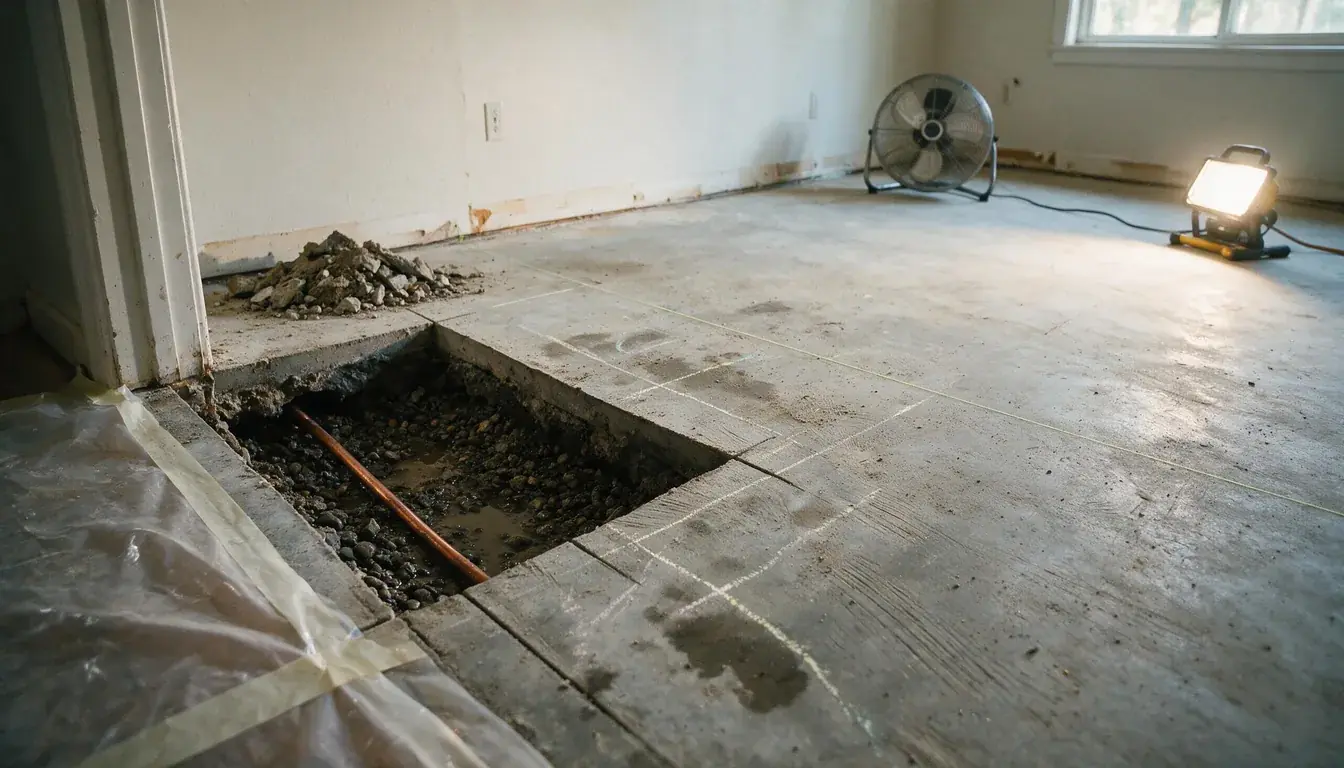
Emergency Slab Leak Repair in Fort Worth, Texas
Slab Leak Repair in Fort Worth, Texas detects and repairs leaks in pipes beneath the concrete slab foundation. Local conditions in Fort Worth: water measured at 11, a 6 frost line and a median home age of 35 years.
Camera first, quote second — know exactly what's wrong in your Fort Worth home before you approve a dollar.
Is slab leak repair in Fort Worth, TX the right job?
- Burst Pipe Repair in Fort Worth
- Water is spraying or leaking from a visibly split pipe, and the damaged section needs repair.
- Frozen Pipe Repair in Fort Worth
- A tap has stopped flowing in freezing weather, and a frozen pipe needs to be checked and thawed.
- Water Line Repair in Fort Worth
- Low pressure or water pooling between the meter and the house may point to an incoming water line that needs repair.
- Leak Detection in Fort Worth
- Water is disappearing, a meter keeps moving with taps off, or damp spots keep returning, and the leak's location is unclear.
Who do I call for a slab leak in Fort Worth?
A plumber who does leak detection and slab leak repair. In Fort Worth, as anywhere, ask whether they locate the leak with detection equipment before any concrete is opened. It is urgent when water is coming up through the floor or the leak is near electrical outlets or appliances.
What does the local plumbing data show for Fort Worth, TX?
Seeing these conditions at your place in Fort Worth? Describe them on the call to a state-licensed local plumber — free, no obligation.
What are the pipe conditions in Fort Worth, TX?
Slab leaks form when copper supply lines embedded in the concrete foundation develop pinholes from electrochemical corrosion, high-velocity water erosion, or slab movement. Fort Worth homes built during the 1960s–1980s on post-tensioned slabs face the highest slab-leak risk — copper installed at original construction is approaching or past the 50-year corrosion window. Early signs include warm or wet spots on the floor, unexplained water bill spikes, and the sound of running water when all fixtures are closed. AlertPlumber routes your call to an independent Texas-licensed plumber — ask for acoustic leak location before any slab cutting begins.
Homes built in Fort Worth between 1978 and 1995 — median age 35 years — may carry polybutylene supply lines, a grey plastic material that stopped being installed after a 1990s class-action settlement over failures linked to chlorinated municipal water. Polybutylene fails at fittings and mid-run stress points; ask a licensed plumber to identify the material by pipe color and fitting type and advise on repipe timing. Homes of other eras in Fort Worth may have galvanized pipe or copper pipe supply lines instead; ask the plumber which your home has.
Hard water in Fort Worth accelerates scale buildup inside water heater tanks, on heating elements, and at fixture connections. Sediment accumulation in tank heaters reduces efficiency and shortens element life; visible deposits at aerators and showerheads are an early indicator. Ask a licensed plumber to assess whether a water softener or conditioner is appropriate for the home's service configuration.
Frost line depth in Fort Worth means supply lines and outdoor plumbing must be installed below the freeze threshold — typically 6 — to prevent pipe burst during cold events. Exterior hose bibs, irrigation shutoffs, and any exposed pipe runs are the most common winterization service points in freeze-risk markets.
- Median home age
- 35 yrs
- Water hardness
- 11 gpg
- Frost line
- 6 in.
- Permit
- City fee schedule
Census housing age, Fort Worth city, Texas: median year built 1994; 18.9% of homes built before 1960, 33.7% before 1980. Source: U.S. Census Bureau, ACS 2020–2024 5-year estimates, tables B25034 and B25035, read 2026-09-30.
Mention these conditions when you describe the symptom to the TX plumber you reach.
What local infrastructure shapes Slab Leak Repair in Fort Worth?
Fort Worth receives municipal supply through the Tarrant Regional Water District at approximately 11 grains per gallon. The slab-leak mechanism here is driven by a compound stress: 11 GPG scale accumulates inside copper supply lines over decades, while the Blackland Prairie expansive-clay soil beneath Fort Worth foundations undergoes seasonal shrink-swell cycles — contracting in drought conditions and expanding with moisture. This repeated slab movement stresses solder joints of buried copper lines, and scale on the interior of the pipe reduces the mechanical flexibility that would otherwise absorb that movement.
Fort Worth's 35-year median housing age reflects the 1985-2000 suburban expansion across the Westside, Saginaw, and Keller corridors. Copper supply lines installed in-slab during that era are now 25-40 years into service in a moderately hard-water environment. The February 2021 Uri freeze event stressed slab joints across the DFW Metroplex — Fort Worth experienced 32 or more below-freezing days that month, and copper joints compromised by years of 11 GPG scale showed higher acute failure rates than were typical in normal winter seasons.
The permit covers slab-leak repair inspection. Texas plumbing contractors must hold a current license through the Texas State Board of Plumbing Examiners (TSBPE). Unlike Sun Belt markets concentrated in a single construction era, Fort Worth's slab-leak repair demand spans from the 1960s Ridgmar and Wedgwood neighborhoods to the 1990s Fossil Creek and Alliance Gateway corridors — two distinct copper-in-slab cohorts separated by roughly 25 years. Permit fee ranges: permit fee estimator.
What shapes plumbing demand in Fort Worth, TX?
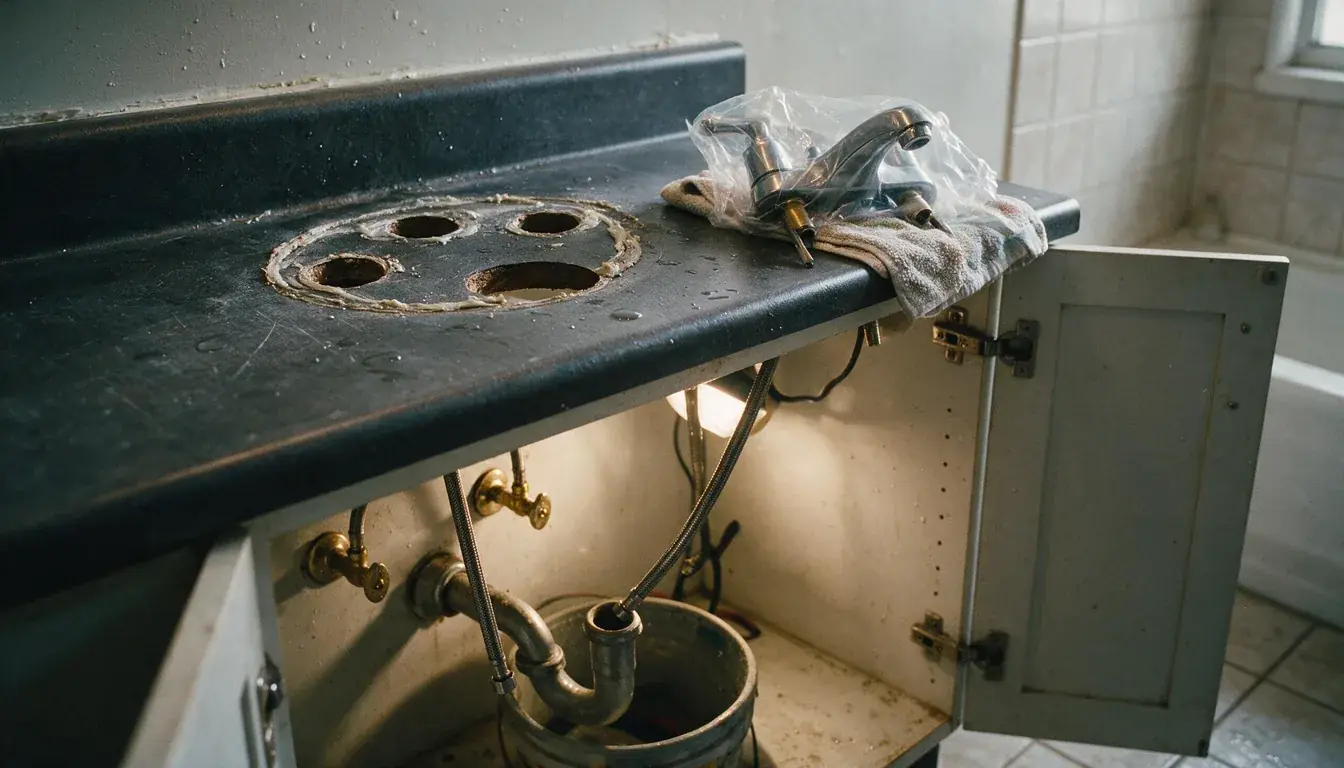
CPVC becomes brittle in the 20–35-year range and snaps under thermal stress or incompatible pipe dopes. Early PEX fittings (pre-2010) may develop chloramine compatibility issues at 15–25 years. The 1980s–1990s housing stock in Fort Worth is entering its first wave of material-driven service calls — not from neglect, but from normal service-life progression.
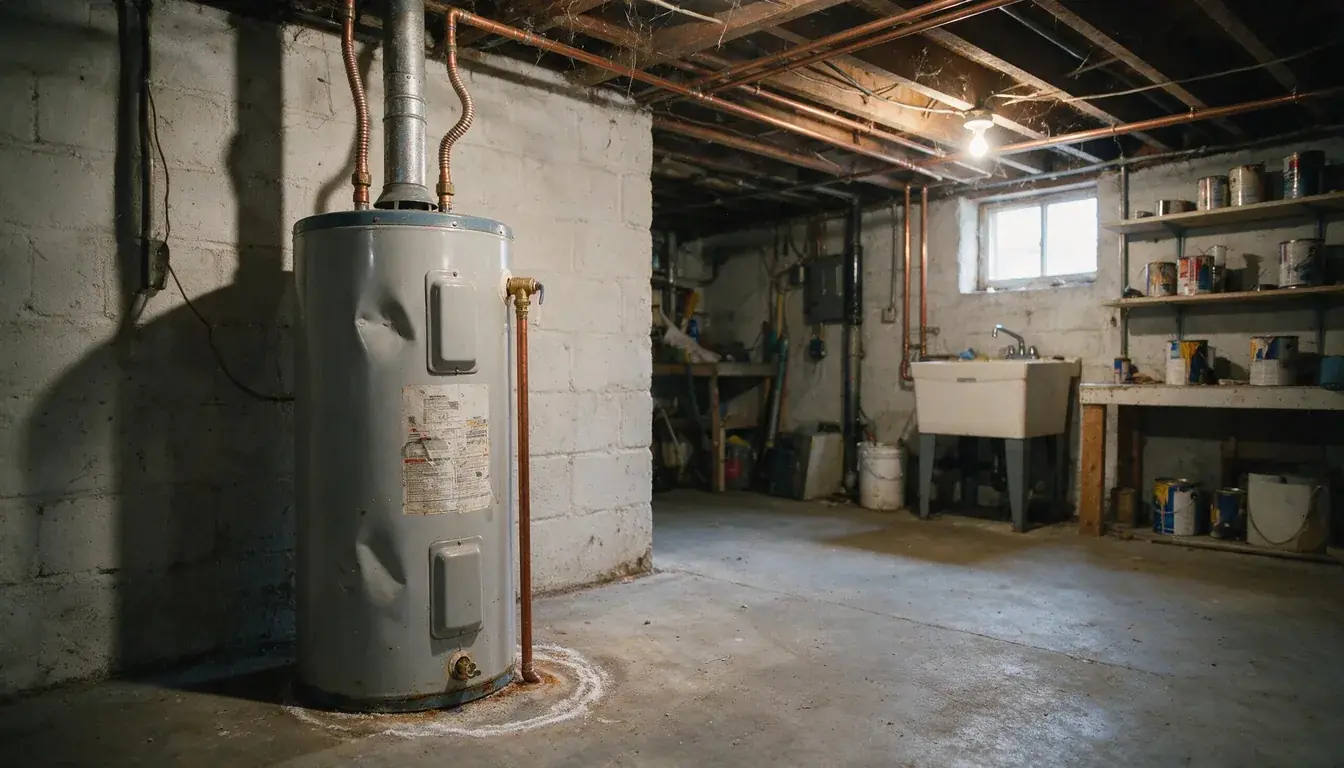
8–14 GPG shortens water heater service life to 8–11 years in Fort Worth and drives rolling maintenance demand at aerators, shower cartridges, and heat exchanger ports. Annual flushing prevents premature failure; skipped maintenance cycles push units toward early replacement. Scale-related calls represent a significant share of the annual service workload here.
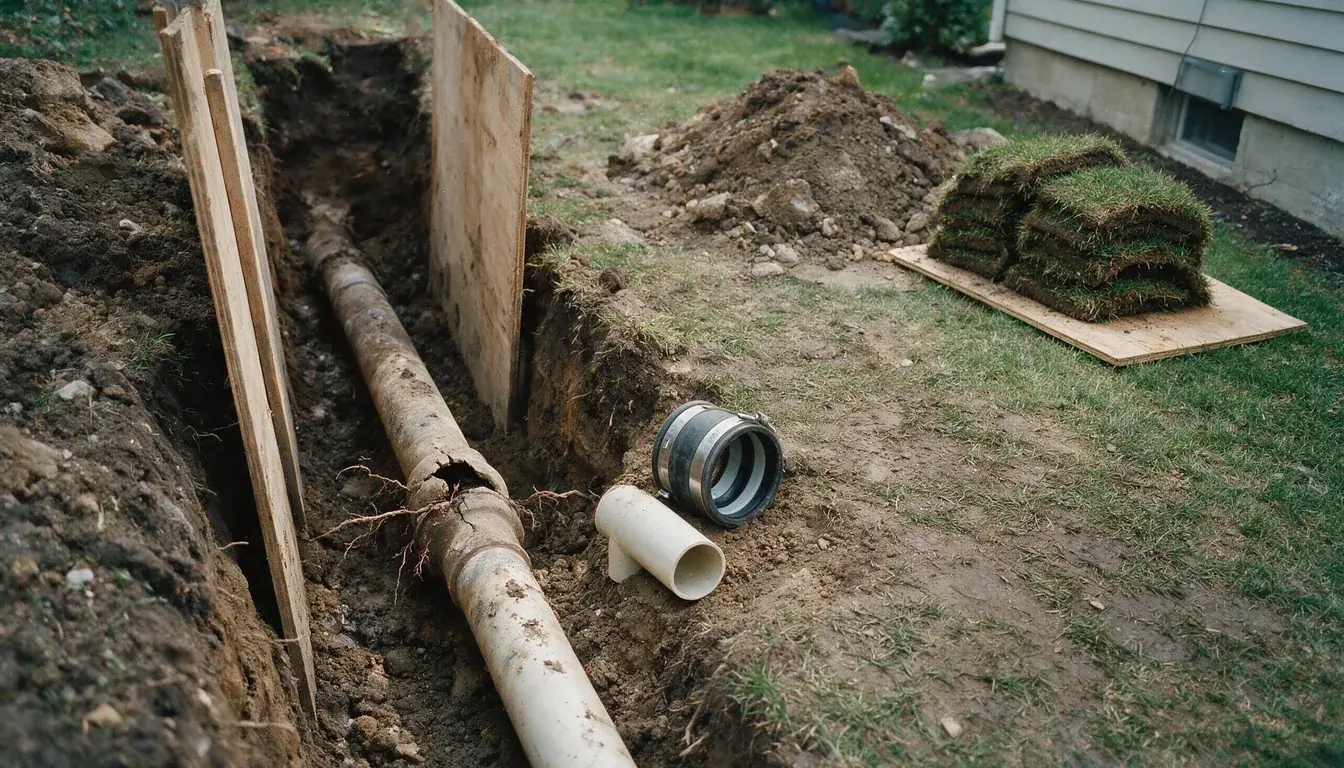
Drain and sewer line health drives the primary maintenance workload in Fort Worth: high groundwater tables stress lateral joints and root intrusion accelerates in warm soil. AC condensate drainage adds a recurring summer category. Drain slowdowns that homeowners defer tend to surface as full blockages during the wet season when groundwater pressure compounds the obstruction.
Why diagnose before repairing in Fort Worth?
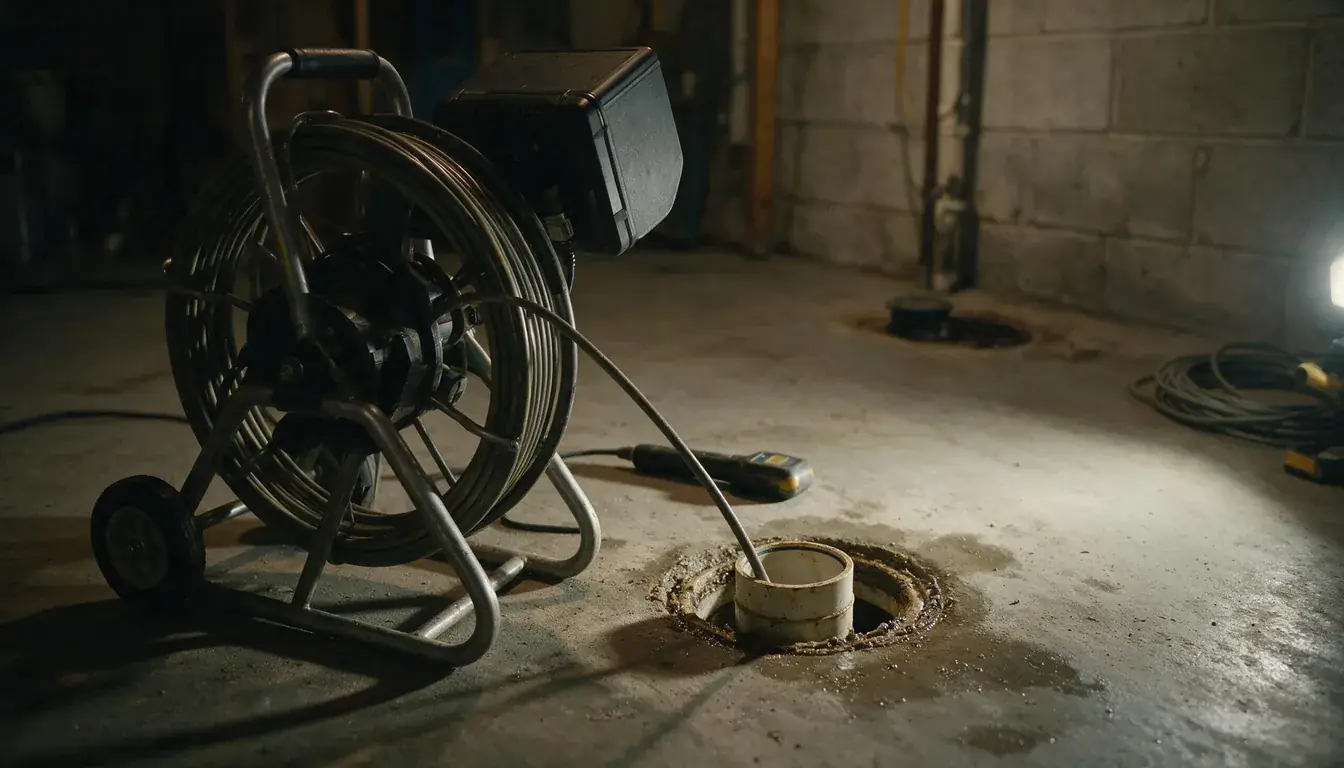
Describe the symptom — not the repair. AlertPlumber routes the call to an independent TX-licensed plumber in its partner's network — ask whether the site visit will use camera tracing, acoustic detection, or hydrostatic pressure testing matched to the reported failure type.
Ask the plumber for a written diagnostic report: confirmed failure location, available repair methods, and tradeoffs — disruption level, material durability, long-term cost, and whether a Fort Worth building permit applies to the selected method.
You select the repair path. Ask for a fixed scope and price on the authorized method before the Texas-licensed plumber proceeds and, where required, who files the permit application to Fort Worth.
Slab Leak Repair cost calculator — Fort Worth
Pre-filled for slab leak repair in Fort Worth. Adjust the ZIP for a neighboring area, or change the service to compare. Calculator pulls from the city's scraped permit-fee + state plumber-density data.
Slab Leak Repair emergency in Fort Worth?
Every hour without a repair increases structural risk and remediation cost. Calls connect to independent local plumbers in our partner's network — ask for an arrival time and a written estimate.
What else do people ask about slab leak repair in Fort Worth?
How much does slab leak repair cost in Fort Worth, and what drives the spread between TCU/Fairmount craftsman and Alliance Town Center tract pricing?
Fort Worth slab leak repair runs a scope-based price for a single spot repair (saw-cut the slab, splice in Type L copper or PEX-A), a scope-based price for a branch reroute through walls or the attic, and a scope-based price for a full PEX-A repipe. Fort Worth Water Department charges a city plumbing permit on any supply-line work pulled inside city limits, and the state-credentialed plumber rolls that line item into the written quote up front. Pricing diverges sharply by submarket. TCU / Fairmount craftsman bungalows and tudors from the 1900s–1930s carry pier-and-beam-converted-to-slab additions where the original Type M copper meets newer post-tension concrete — that splice band is where most spot repairs land, and access through the original cypress subfloor is non-trivial. Westover Hills luxury 1950s–70s ranches push toward the upper end because the slab footprint is larger (3,500–6,000 sq ft) and lath-and-plaster wall reroutes need a finish-carpenter follow-up. Alliance Town Center and Far North Fort Worth tract slabs from the 1990s–2010s were already PEX-A from the start, so a "slab leak" out there is almost always a fitting failure at a manifold or a stub-up — narrower scope, lower number. Stock Yards historic-district properties get a separate quote because of preservation overlays. Price ranges: slab leak repair cost guide.
How do I know if I have a slab leak in my Fort Worth home — what symptoms split a TCU bungalow from a Westover Hills ranch from an Alliance tract slab?
Symptom triage in Fort Worth shifts by housing era.
- TCU / Fairmount 1900s–30s craftsman + tudor: warm-spot drift on the original-fir or oak floor near a converted-bath addition, faint hissing under the kitchen pier-to-slab transition, mineral-stain bloom on the slab edge where the pier wall meets concrete
- West 7th / Cultural District 1920s–40s mixed: water-bill creep of a scope-based price a month, hot-water recovery slowing because hot-side copper is bleeding into clay backfill
- Westover Hills luxury 1950s–70s ranch: hairline cracks radiating from a single tile in the master bath, warm zones in the den slab where the original Type M trunk runs, irrigation meter spinning at 2 a.m. with the controller off
- Alliance Town Center / Far North FW 1990s–2010s tract: PEX-A almost never pinholes — instead look for fitting drips at manifolds, slab edges damp at the foundation form, or pressure-regulator failure feeding 90+ psi into the home
- Stock Yards historic: any moisture migration onto cedar-plank flooring is an urgent call
Why are slab leaks common in Fort Worth homes — how do oil-boom 1900s stock, DFW expansive clay, 11-gpg Fort Worth Water, and 1990s+ tract slab combine?
Fort Worth has four overlapping failure drivers that don't show up together anywhere else in DFW. (1) Oil-and-gas-industry housing patterns: the 1900s–1920s Texas oil-discovery boom seeded TCU/Fairmount and the near-Stock-Yards neighborhoods with a deep historic-stock layer that was retrofitted onto slab additions through the 1950s–70s — Type M copper splice bands run through those additions on hot-side trunks. (2) DFW expansive-clay shrink-swell: the Trinity River and West Fork floodplain soils swell after a wet spring and shrink hard during a 100°F+ summer drought, putting shear stress on supply lines bedded in the slab. Per USGS regional soil mapping, the same Eagle Ford / Woodbine clays that affect Arlington and Dallas underlie Fort Worth — the pathology is shared but the historic-stock mix is older. (3) 11-gpg hard water from Fort Worth Water Department (Trinity River + West Fork blend) accelerates internal copper pinholing on the hot-water side per Copper Development Association. (4) Far North Fort Worth / Alliance 1990s+ tract slab-on-grade was PEX-A from the start — those homes leak at fittings, not pipe walls. The 1976 median build year puts a large share of the supply stock past the 30–50 year copper-failure window.
Spot repair, reroute, or full repipe — which fits my Fort Worth home given oil-boom historic stock, Westover Hills luxury, and Alliance tract PEX-A?
Decision framework keyed to Fort Worth submarket. Spot repair: right call for a first-time pinhole on an Alliance Town Center or Far North FW tract home where the rest of the PEX-A manifold is sound, OR for a single splice-band failure in a TCU/Fairmount addition where the broader pier-and-beam original is untouched. Branch reroute: right call for West 7th / Cultural District or Westover Hills homes with a single failed branch (kitchen trunk, master-bath group) where attic or wall access is feasible without breaching plaster ceilings — the matched plumber routes PEX-A overhead and abandons the slab line in place. Full PEX-A repipe: right call for any pre-1980 Fort Worth home with two or more slab leaks inside 24 months, especially TCU/Fairmount craftsman and Westover Hills ranches still on Type M copper at 11 gpg. Per Copper Development Association field data, that recurrence pattern means the entire trunk has reached end-of-life. Stock Yards historic properties almost always go to overhead reroute because slab-cut permitting through the preservation overlay adds weeks. Price ranges: slab leak repair cost guide.
Does Texas HO-3 cover Fort Worth slab leak detection — and how does the post-Feb-2021 underwriting reset affect a claim?
Most Texas HO-3 policies cover the slab leak detection invoice when the failure is "sudden and accidental" and the policyholder files within the carrier's notice window. Texas carriers typically pay tear-out and access (saw-cut, slab patch, drywall opening) but exclude the failed pipe itself as wear-and-tear. The post-February-2021 underwriting reset matters for Fort Worth specifically: after Winter Storm Uri produced 70–120 hours below freezing across DFW per NOAA NWS Dallas/Fort Worth, Texas carriers tightened slab leak language — many added freeze-burst sub-limits, shortened the discovery window to 14 or 30 days, and now require photographic documentation of the leak source before approving access costs. State Farm, Farmers, USAA, and Texas Farm Bureau all routinely reimburse Fort Worth detection workups when the file includes a moisture-mapping report, a thermal scan, and the state-credentialed plumber's written diagnosis. Verbal diagnoses get denied. Submit the report inside the policy notice window — running past it is the most common Fort Worth-area denial reason.
How long does a Fort Worth slab leak repair take — from detection through concrete cure?
Realistic Fort Worth timeline. Detection workup: 70–140 minutes for pressure-isolation, FLIR thermal pass across the floor, acoustic ground-microphone triangulation, and electronic line-trace before any cut. Spot repair: 4–7 hours including saw-cut, splice, hydrostatic re-test, and concrete patch — longer on TCU/Fairmount homes where the addition slab meets pier-and-beam at an unusual elevation. Branch reroute through walls/attic: 1–2 working days for a typical West 7th or Westover Hills layout, longer if lath-and-plaster repair is in scope. Full PEX-A repipe of a 3-bath Fort Worth home: 2–3 days for trunk-and-branch overhead, plus drywall and texture follow-up. Concrete cure on patches: 24–48 hours before tile, hardwood, or finish work can resume on the patched zone. Stock Yards historic-overlay homes add 1–3 weeks for preservation review before any saw-cut. Far North FW / Alliance tract spot repairs at fitting-level usually wrap inside a single day.
How does a Fort Worth plumber handle slab leak repair on TCU / Fairmount craftsman or tudor stock from the 1900s–30s?
TCU and Fairmount sit in two of Fort Worth's oldest residential cores, with 1900s–1930s craftsman bungalows and tudor revivals that were originally pier-and-beam and saw 1950s–80s slab additions for kitchens, baths, and family rooms. The state-credentialed plumber starts with a layout review — original cypress or fir subfloor still carries the cold-water trunk, while the slab addition carries the hot-side feed where most pinholes show up. Concrete cutting follows the Fort Worth amendment to the Uniform Plumbing Code and uses ground-penetrating radar to clear post-tension cables on any addition slab from 1980+. Reroute through the original attic is usually preferred over slab cuts in these neighborhoods because Fairmount carries a National-Register-eligible historic-district designation in parts and homeowners want to minimize visible patches. PEX-A overhead is run with insulated sleeves through the unconditioned attic to handle the 32 freeze days per year that the NOAA NWS Dallas/Fort Worth office reports for Tarrant County. Original fixtures and clawfoot connections get adapter fittings rather than replacement.
What's different about slab leak work on Stock Yards historic-district properties or Westover Hills luxury ranches?
Two Fort Worth submarkets that don't behave like the rest of the city. Fort Worth Stock Yards historic district: the National Historic Landmark overlay covers a defined boundary north of downtown and any plumbing work that requires a slab cut, exterior wall penetration, or visible patch goes through Fort Worth Historic Preservation review before a permit is issued. The state-credentialed plumber pulls the standard city permit and adds a preservation review packet — typical lead time is 1–3 weeks. Reroute through interior walls or overhead is strongly preferred. Westover Hills luxury 1950s–70s ranch: Westover Hills is a separate municipality inside Fort Worth's footprint with its own permitting desk and code enforcement. Slabs are larger (3,500–6,000 sq ft) and were poured with heavier rebar than tract construction, so saw-cuts take longer. The original Type M copper trunks run hot-side along the long axis of the home, which is exactly where 11-gpg Fort Worth Water has pinholed pipes after 50+ years per Copper Development Association. Full PEX-A repipe overhead is the dominant pattern out there now. Permit fee ranges: permit fee estimator.
What does the Fort Worth permit + Texas TSBPE credential check actually cover for slab leak work?
Fort Worth Water Department issues the residential plumbing permit through the city development-services counter, with a base fee for supply-line work that includes a slab cut, splice, reroute, or repipe. The permit ties to the property and follows the home through resale disclosure. The plumber doing the work must hold an active Texas state plumbing credential issued by the Texas State Board of Plumbing Examiners — TSBPE lists 27,810 active credentials statewide as of 2024. Slab leak repair specifically requires a Master Plumber or a Journeyman working under one, plus practical experience with concrete cutting, post-tension awareness, and supply-line splicing per EPA Safe Drinking Water Act material standards (lead-free brass, NSF/ANSI 61 fittings). The partner network routes AlertPlumber requests only to TSBPE-credentialed contractors. Homeowners can verify any specific plumber on the TSBPE public roster before authorizing work — credential lookup is free and takes under a minute. Far North FW / Alliance and Stock Yards both fall under the same city permit. Permit fee ranges: permit fee estimator.
When does a full PEX-A repipe pencil out in Fort Worth — across TCU/Fairmount, Westover Hills, and Alliance Town Center?
Three repipe-trigger conditions for Fort Worth specifically. (1) Two or more slab leaks inside 24 months on any pre-1995 home — TCU/Fairmount, West 7th, Westover Hills, or near-Stock-Yards stock. Per Copper Development Association data, a second pinhole inside 36 months at 11 gpg means the rest of the trunk is on the same failure curve. (2) Type M copper still in service past 50 years on the hot-water side at Fort Worth Water Department's 11-gpg blend from the Trinity River + West Fork source — common in 1900s–70s historic stock. (3) Detection finds multiple at-risk branches during a system-wide pressure-isolation workup. PEX-A run overhead through the attic — never back through the slab — is the standard Fort Worth repipe method, with insulated sleeves through unconditioned attic space because Tarrant County averages 32 freeze days per year. Per PEX Association, PEX-A in 2026 carries a 25-year manufacturer warranty installed per spec. Alliance Town Center / Far North FW homes from the 1990s–2010s rarely need a full repipe — they were PEX-A from day one and only need fitting replacement.
One call puts your problem in front of a local plumber.
Call the number, or put your number in the form below — the request goes to an independent Texas plumber in our partner's network; ask about the slab leak repair and for a written estimate.
Need a slab leak repair callback in Fort Worth?
In a meeting, with the kids, or just prefer not to call? Drop your ZIP and number below. AlertPlumber sends your request to our routing partner — if a participating plumber serves your area, they may call you back directly. For anything urgent, call the number on this page.
- 1 Submit your info. ZIP, phone, and what kind of work you need.
- 2 AlertPlumber passes it on to our routing partner for your area.
- 3 If a participating plumber serves your area, they may call you back. Ask for a written estimate before work starts.
Slab Leak Repair in Fort Worth — when to call
Acute plumbing failures cannot wait. AlertPlumber routes calls about slab leak repair in Fort Worth to independent Texas plumbers in our partner's network — call now or submit the form above for a callback.