
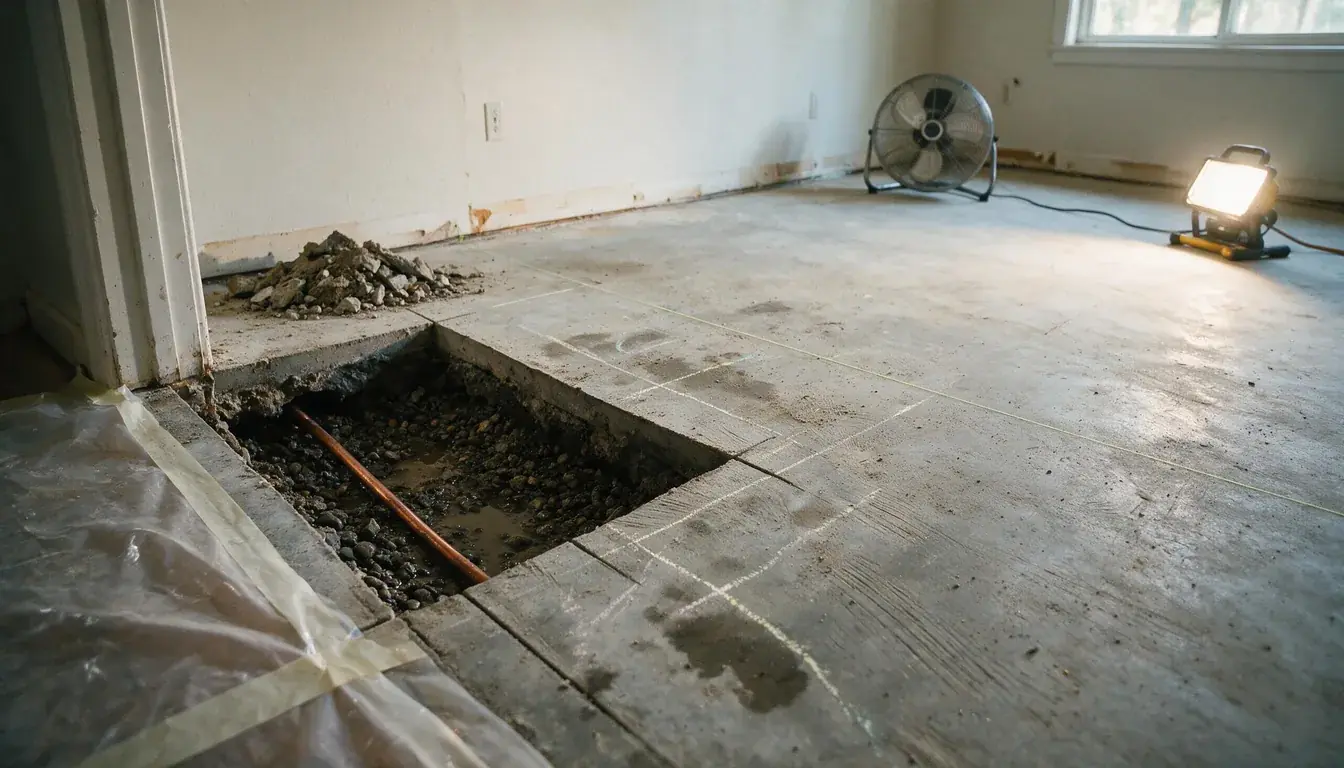
Emergency Slab Leak Repair in Houston, Texas
Slab Leak Repair in Houston, Texas detects and repairs leaks in pipes beneath the concrete slab foundation. Local conditions in Houston: water measured at 9, a 4 frost line and a median home age of 47 years.
Camera first, quote second — know exactly what's wrong in your Houston home before you approve a dollar.
Is slab leak repair in Houston, TX the right job?
- Burst Pipe Repair in Houston
- Water is spraying or leaking from a visibly split pipe, and the damaged section needs repair.
- Frozen Pipe Repair in Houston
- A tap has stopped flowing in freezing weather, and a frozen pipe needs to be checked and thawed.
- Water Line Repair in Houston
- Low pressure or water pooling between the meter and the house may point to an incoming water line that needs repair.
- Leak Detection in Houston
- Water is disappearing, a meter keeps moving with taps off, or damp spots keep returning, and the leak's location is unclear.
Who do I call for a slab leak in Houston?
A plumber who does leak detection and slab leak repair. In Houston, as anywhere, ask whether they locate the leak with detection equipment before any concrete is opened. It is urgent when water is coming up through the floor or the leak is near electrical outlets or appliances.
What does the local plumbing data show for Houston, TX?
Seeing these conditions at your place in Houston? Describe them on the call to a state-licensed local plumber — free, no obligation.
What are the pipe conditions in Houston, TX?
Slab leaks form when copper supply lines embedded in the concrete foundation develop pinholes from electrochemical corrosion, high-velocity water erosion, or slab movement. Houston homes built during the 1960s–1980s on post-tensioned slabs face the highest slab-leak risk — copper installed at original construction is approaching or past the 50-year corrosion window. Early signs include warm or wet spots on the floor, unexplained water bill spikes, and the sound of running water when all fixtures are closed. AlertPlumber routes your call to an independent Texas-licensed plumber — ask for acoustic leak location before any slab cutting begins. Persistent marine moisture and seasonal dampness drive above-average demand for leak detection and sump pump service in this region.
Houston's housing stock spans multiple construction eras — median home age 47 years — meaning pipe materials and failure modes vary significantly by neighborhood and building vintage. An inspection-led approach that confirms pipe material before recommending a service path is standard practice for mixed housing profiles. Homes of other eras in Houston may have galvanized pipe, copper pipe or polybutylene supply lines instead; ask the plumber which your home has.
Hard water in Houston accelerates scale buildup inside water heater tanks, on heating elements, and at fixture connections. Sediment accumulation in tank heaters reduces efficiency and shortens element life; visible deposits at aerators and showerheads are an early indicator. Ask a licensed plumber to assess whether a water softener or conditioner is appropriate for the home's service configuration.
- Median home age
- 47 yrs
- Water hardness
- 9 gpg
- Frost line
- 4 in.
- Permit
- City fee schedule
Census housing age, Houston city, Texas: median year built 1982; 16.7% of homes built before 1960, 47% before 1980. Source: U.S. Census Bureau, ACS 2020–2024 5-year estimates, tables B25034 and B25035, read 2026-09-30.
Mention these conditions when you describe the symptom to the TX plumber you reach.
What local infrastructure shapes Slab Leak Repair in Houston?
Houston sits on expansive Beaumont clay, which swells when saturated and contracts during dry periods. Slab-on-grade foundations in areas with shallow clay profiles experience seasonal vertical movement in the one-to-three-inch range — enough to stress pipe joints and fittings even before the copper has corroded to failure. The mechanical movement is independent of water chemistry and affects both copper and polybutylene lines embedded in the slab.
At 47 years median housing age and 9 grains per gallon hardness, Houston post-war copper-in-slab supply lines are within the window where mineral-contact corrosion and cumulative joint stress from clay movement combine to produce failures. The two mechanisms are additive — a pipe weakened by interior pitting fails sooner when slab movement applies cyclic stress to the same section across seasonal cycles.
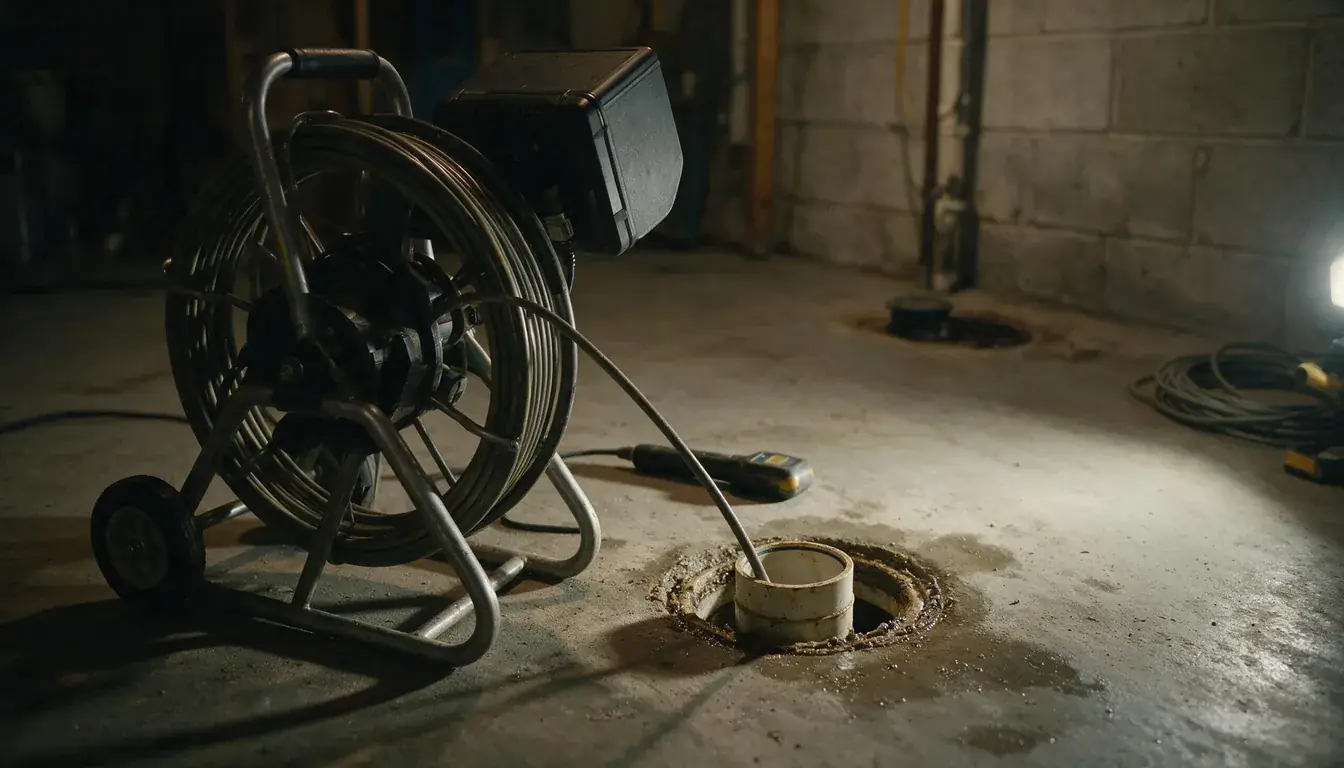
Detection involves pressure isolation to identify the active leg, then acoustic scanning to pinpoint the failure location. The permit covers the investigation and repair scope. Houston reports 27,810 licensed plumbing contractors statewide, supporting shorter scheduling lead times than in smaller markets. Permit fee ranges: permit fee estimator.
What shapes plumbing demand in Houston, TX?
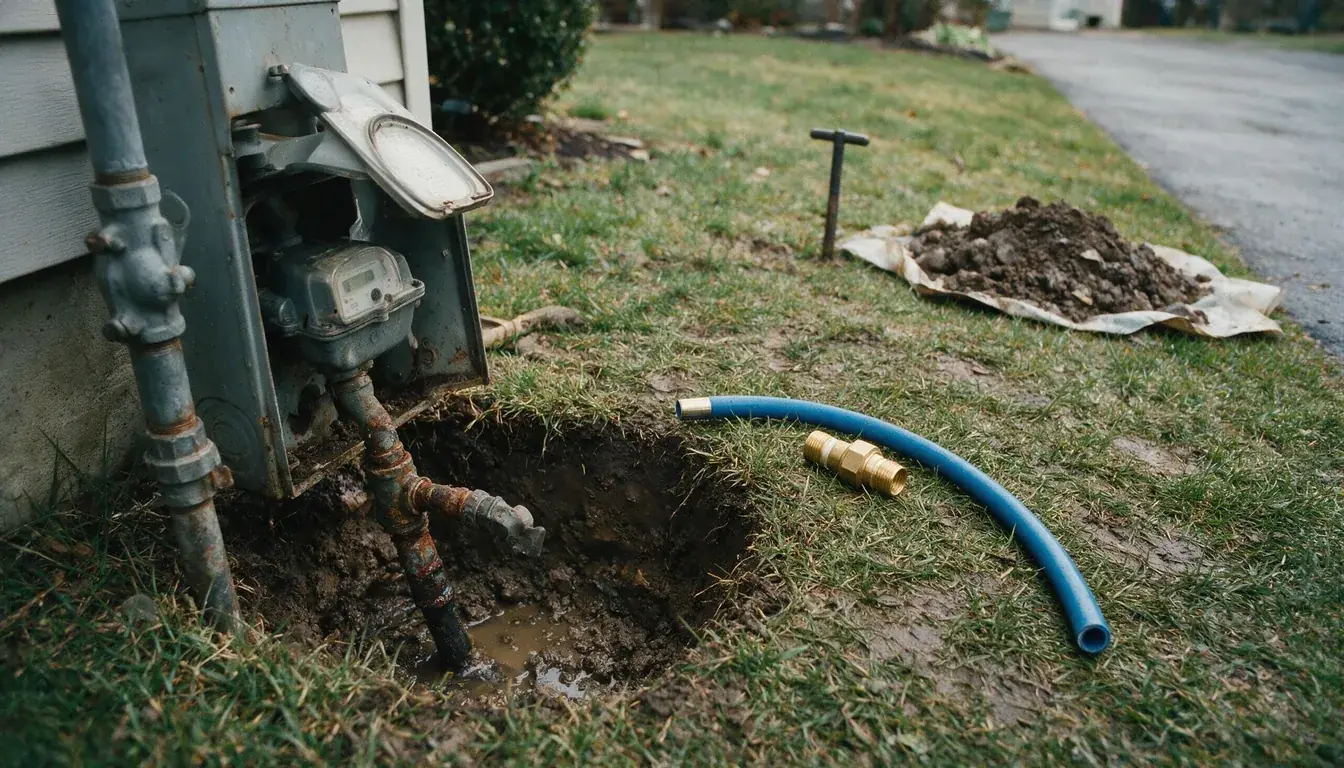
1950s–70s copper supply is now 50–70 years into its service cycle in Houston. Thermal fatigue at fittings and slab-on-grade access complexity — common in Sun Belt construction — make repair vs. replacement a live decision on most jobs. This housing cohort is the active primary replacement wave in this market.
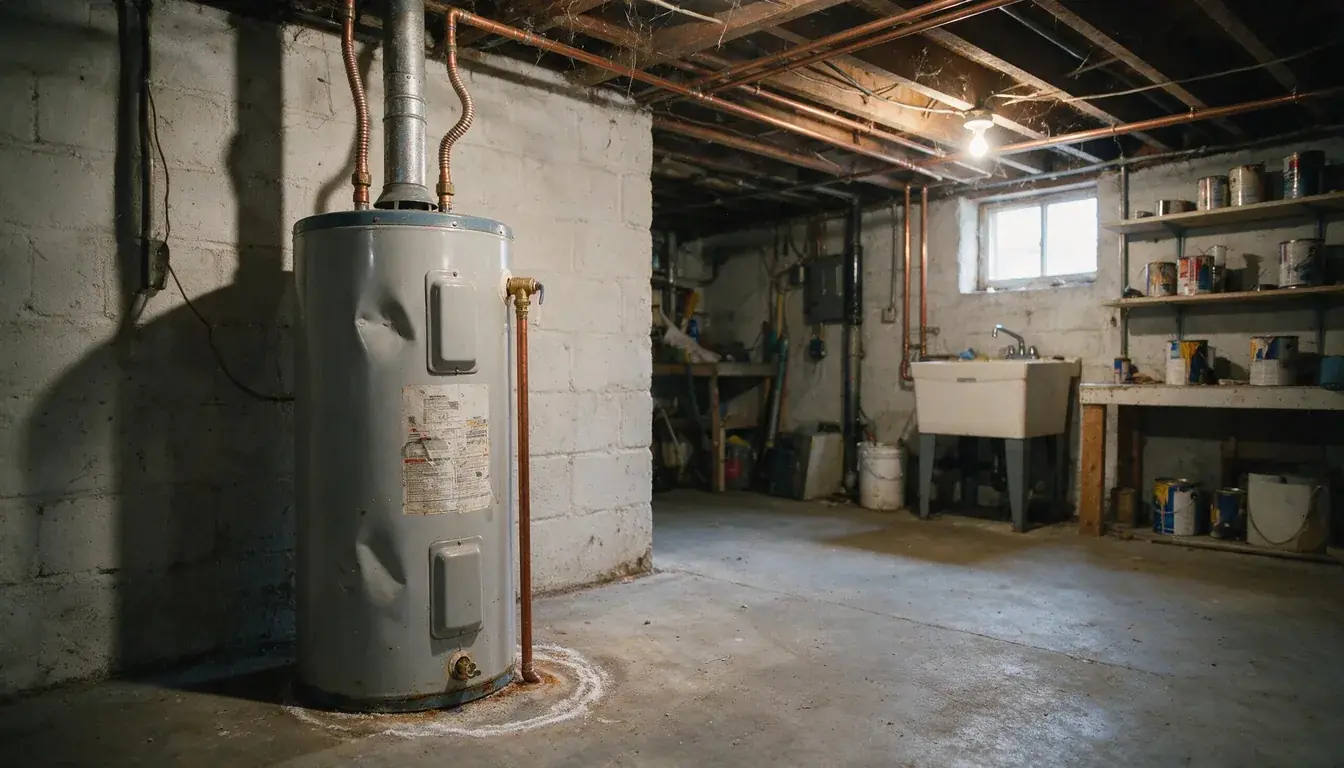
8–14 GPG shortens water heater service life to 8–11 years in Houston and drives rolling maintenance demand at aerators, shower cartridges, and heat exchanger ports. Annual flushing prevents premature failure; skipped maintenance cycles push units toward early replacement. Scale-related calls represent a significant share of the annual service workload here.
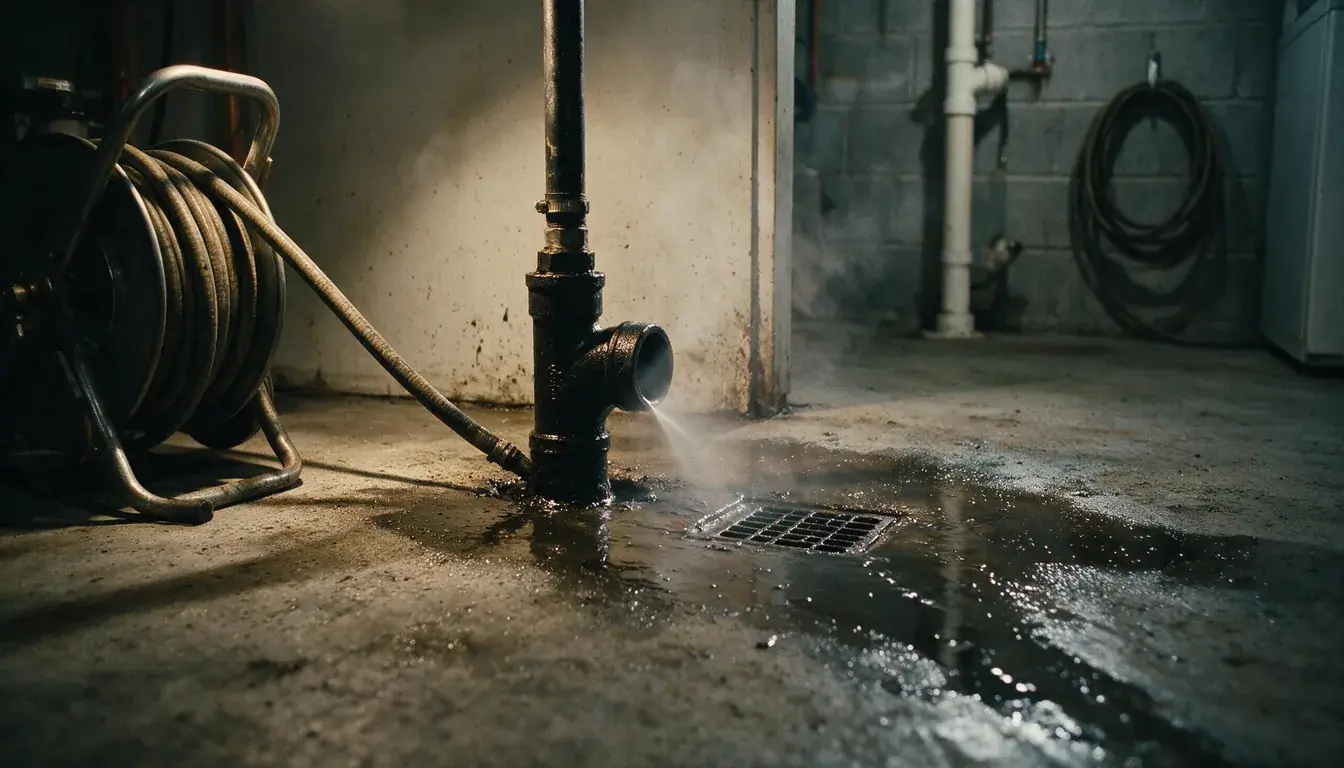
Without a hard freeze season, demand in Houston distributes evenly through the year. Maintenance-driven categories dominate: end-of-life water heater replacement, root intrusion clearing, and fixture repair. Deferred maintenance surfaces gradually as partial failures rather than acute winter emergencies — which means issues compound silently until they become a larger job.
Why diagnose before repairing in Houston?
Describe the symptom — not the repair. AlertPlumber routes the call to an independent TX-licensed plumber in its partner's network — ask whether the site visit will use camera tracing, acoustic detection, or hydrostatic pressure testing matched to the reported failure type.
Ask the plumber for a written diagnostic report: confirmed failure location, available repair methods, and tradeoffs — disruption level, material durability, long-term cost, and whether a Houston building permit applies to the selected method.
You select the repair path. Ask for a fixed scope and price on the authorized method before the Texas-licensed plumber proceeds and, where required, who files the permit application to Houston.
Slab Leak Repair cost calculator — Houston
Pre-filled for slab leak repair in Houston. Adjust the ZIP for a neighboring area, or change the service to compare. Calculator pulls from the city's scraped permit-fee + state plumber-density data.
Slab Leak Repair emergency in Houston?
Every hour without a repair increases structural risk and remediation cost. Calls connect to independent local plumbers in our partner's network — ask for an arrival time and a written estimate.
What else do people ask about slab leak repair in Houston?
How much does slab leak repair cost in Houston?
Houston slab leak repair runs a scope-based price for a spot repair, a scope-based price for a reroute, and a scope-based price for a full PEX repipe. Houston Public Works charges a plumbing permit. Texas has 27,810 TSBPE-independent plumbers in the state database, and the Greater Houston market sees enough slab-leak volume to keep detection equipment standard on most plumber trucks. For a typical Memorial, Spring Branch, or Cypress home with a confirmed slab leak, expect all-in. Houston's post-tension slab construction can add a separate charge to any spot-repair scope when cutting is required because of the engineering review step. Price ranges: slab leak repair cost guide.
How do I know if I have a slab leak in my Houston home?
Houston slab-leak symptoms blend corrosion-pinhole signs (warm spot on tile, water bill spike, audible hiss with fixtures off) with subsidence-shear signs (cracks in the slab or in mortar joints near the leak, doors and windows that suddenly stick, visible foundation movement). In Memorial, Spring Branch, Cypress, and Bear Creek 1970s-80s subdivisions, these symptoms after 35-50 years of in-slab copper service combined with 1-3 inches per year of land subsidence are statistically common. Houston's 9 gpg moderately hard water drives chemical corrosion; subsidence and 60% gumbo clay soil drive mechanical shear — both produce slab leaks. Price ranges: slab leak repair cost guide.
Why does Houston have so many slab leaks?
Three failure mechanisms stack uniquely in Houston. First, 1970s-80s post-tension slab tracts in Memorial, Spring Branch, Cypress, and the West Houston suburbs universally used in-slab copper supply lines. Second, Houston's 9 gpg moderately hard water drives internal pinhole corrosion in 35-50 year-old Type M copper. Third, Greater Houston experiences 1-3 inches per year of land subsidence due to groundwater extraction per USGS data, plus extreme shrink-swell loading from Houston's 60% gumbo-clay soil. The combined chemical (corrosion) plus mechanical (subsidence + clay shear) loading makes Houston one of the highest slab-leak volume markets in the country, with TSBPE's 27,810 independent plumbers supporting a large detection-and-repair industry concentrated in the Greater Houston metro.
Spot repair vs reroute vs repipe — which fits a Houston home?
For a 1970s-80s Memorial or Spring Branch home with a single confirmed slab leak in a non-post-tensioned slab, spot repair is reasonable for a first-time event. Reroute through the attic is the standard Houston fix for post-tension slab homes because cutting a tensioned slab requires engineering review and can add a separate charge in cost — reroute avoids the whole problem. Two confirmed leaks in 24 months in any Houston home: full PEX repipe is the durable answer because the underlying loading (corrosion + subsidence + clay) means failures will keep coming as long as the original copper stays in service. Price ranges: slab leak repair cost guide.
Will my Texas homeowners insurance cover the slab leak?
Texas HO-3 policies generally cover sudden water damage from a slab leak, but Texas has a unique exclusion landscape compared to other states. Many Texas carriers exclude foundation damage entirely or apply a separate higher deductible to foundation-related claims (which can include slab-leak-driven foundation movement). The "constant or repeated seepage" exclusion is invoked aggressively in Houston where subsidence and slab cracking can be cited as evidence of long-standing leak conditions. Texas Department of Insurance allows carrier-specific policy variations, so Houston homeowners should read the slab-leak and foundation language before filing. The matched plumber documents the leak as a recent discovery to support sudden-occurrence claim filing.
Does Houston soil and subsidence cause slab leaks?
Yes — Houston's combination of land subsidence (1-3 inches per year per USGS measurements due to groundwater extraction) plus 60% gumbo clay soil with extreme shrink-swell behavior creates significant mechanical loading on in-slab supply pipes. Subsidence causes differential settlement (one part of the slab drops more than another), bending the slab and shearing pipes at joints. Clay shrink-swell adds seasonal cycling that fatigues the same joints. Combined with 9 gpg hard water driving internal corrosion, Houston in-slab copper faces three independent failure mechanisms — which is why the metro sees frequent multi-leak homes, often clustering within 3-5 years of the first event.
How long does slab leak repair take in Houston?
Single-visit spot repair is realistic for a single localized leak in a non-post-tensioned slab. Detection in the morning, slab cut by midday, splice and pressure-test by afternoon. Post-tension slab repair adds a day for engineering scan and cable mapping before any cutting — total project time stretches to 2 days minimum. Attic reroutes (the common Memorial/Spring Branch fix) typically run 1-2 days. Full PEX repipes run 3-5 days for a 2,000 sq ft single-story. Houston's high volume from the post-tension tract market means most AlertPlumber-matched plumbers carry detection equipment, post-tension scanners, and PEX inventory — eliminating second-trip delays.
Will the plumber damage my flooring during repair?
1970s-80s Houston flooring is typically replaceable ceramic tile, vinyl, or carpet. The bigger issue in Memorial and West Houston homes is post-tension slab construction — cutting a tensioned slab releases stored cable energy and is dangerous if not done correctly, which is why Houston plumbers default to attic reroute over spot repair when post-tension is confirmed. Reroute avoids any flooring damage entirely. For non-post-tensioned slab homes, spot repair cuts are typically 2x2 ft and easy to patch, with tile-matching the bigger restoration cost. Houston tile-supply houses serving the tract-housing restoration market can usually match 1970s-80s patterns close enough.
Does Houston building code require permits for slab leak repair?
Yes. Houston Public Works requires a plumbing permit for any supply-line work, and post-tension slab cutting requires structural engineering review documented as part of the permit. The plumber must hold an active TSBPE license — Texas has 27,810 active state-credentialed plumbers per the TSBPE database. Suburban municipalities (Sugar Land, Pearland, Cinco Ranch, The Woodlands) have their own permit processes with similar fee ranges. PEX must be NSF/ANSI 14 certified, brass fittings must be lead-free per Safe Drinking Water Act, and post-cover inspection is required before slab patch. Un-permitted work voids insurance claims and creates resale-disclosure problems on title. Permit fee ranges: permit fee estimator.
What detection method works best on a Houston slab home?
Houston detection often requires all four methods plus a post-tension scanner because the failure modes stack (corrosion + subsidence shear + clay shear). Pressure isolation confirms leak existence and identifies the leg. FLIR thermal works on hot-water pinholes (the dominant Houston failure mode). Acoustic listening triangulates within inches and works on both corrosion and shear failures. Electronic line tracing confirms the leak point is on the suspected pipe. For post-tension slab homes, an additional GPR or x-ray scan maps cable locations before any cutting — this add-on is non-negotiable for safety. Total Houston detection workup a scope-based price including post-tension scanning. Price ranges: slab leak repair cost guide.
One call puts your problem in front of a local plumber.
Call the number, or put your number in the form below — the request goes to an independent Texas plumber in our partner's network; ask about the slab leak repair and for a written estimate.
Need a slab leak repair callback in Houston?
In a meeting, with the kids, or just prefer not to call? Drop your ZIP and number below. AlertPlumber sends your request to our routing partner — if a participating plumber serves your area, they may call you back directly. For anything urgent, call the number on this page.
- 1 Submit your info. ZIP, phone, and what kind of work you need.
- 2 AlertPlumber passes it on to our routing partner for your area.
- 3 If a participating plumber serves your area, they may call you back. Ask for a written estimate before work starts.
Slab Leak Repair in Houston — when to call
Acute plumbing failures cannot wait. AlertPlumber routes calls about slab leak repair in Houston to independent Texas plumbers in our partner's network — call now or submit the form above for a callback.