
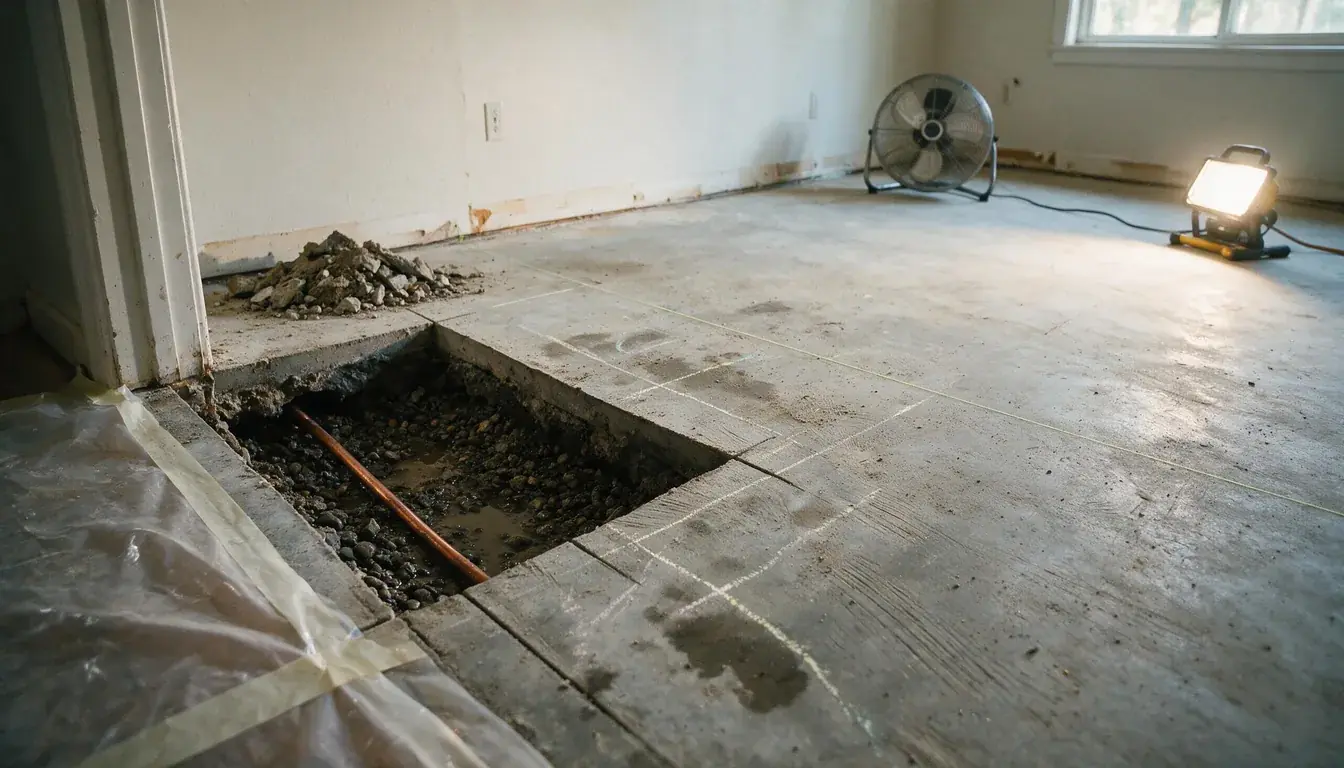
Emergency Slab Leak Repair in Minneapolis, Minnesota
Slab Leak Repair in Minneapolis, Minnesota detects and repairs leaks in pipes beneath the concrete slab foundation. Local conditions in Minneapolis: water measured at 5.8, a 60 frost line and a median home age of 78 years.
Camera first, quote second — know exactly what's wrong in your Minneapolis home before you approve a dollar.
Is slab leak repair in Minneapolis, MN the right job?
- Burst Pipe Repair in Minneapolis
- Water is spraying or leaking from a visibly split pipe, and the damaged section needs repair.
- Frozen Pipe Repair in Minneapolis
- A tap has stopped flowing in freezing weather, and a frozen pipe needs to be checked and thawed.
- Water Line Repair in Minneapolis
- Low pressure or water pooling between the meter and the house may point to an incoming water line that needs repair.
- Leak Detection in Minneapolis
- Water is disappearing, a meter keeps moving with taps off, or damp spots keep returning, and the leak's location is unclear.
Who do I call for a slab leak in Minneapolis?
A plumber who does leak detection and slab leak repair. In Minneapolis, as anywhere, ask whether they locate the leak with detection equipment before any concrete is opened. It is urgent when water is coming up through the floor or the leak is near electrical outlets or appliances.
What does the local plumbing data show for Minneapolis, MN?
Seeing these conditions at your place in Minneapolis? Describe them on the call to a state-licensed local plumber — free, no obligation.
What are the pipe conditions in Minneapolis, MN?
Slab leaks form when copper supply lines embedded in the concrete foundation develop pinholes from electrochemical corrosion, high-velocity water erosion, or slab movement. Minneapolis homes built during the 1960s–1980s on post-tensioned slabs face the highest slab-leak risk — copper installed at original construction is approaching or past the 50-year corrosion window. Early signs include warm or wet spots on the floor, unexplained water bill spikes, and the sound of running water when all fixtures are closed. AlertPlumber routes your call to an independent Minnesota-licensed plumber — ask for acoustic leak location before any slab cutting begins.
Minneapolis's water utility maintains an active lead service line (LSL) replacement program. With a median home age of 78 years, a portion of the housing stock may still have lead service laterals connecting the water main to interior supply — a consideration during any work near the service entry point. Ask a licensed plumber to confirm whether supply-side work requires utility coordination. Homes of other eras in Minneapolis may have galvanized pipe, copper pipe or polybutylene supply lines instead; ask the plumber which your home has.
Frost line depth in Minneapolis means supply lines and outdoor plumbing must be installed below the freeze threshold — typically 60 — to prevent pipe burst during cold events. Exterior hose bibs, irrigation shutoffs, and any exposed pipe runs are the most common winterization service points in freeze-risk markets.
- Median home age
- 78 yrs
- Water hardness
- 5.8 gpg
- Frost line
- 60 in.
- Permit
- City fee schedule
Census housing age, Minneapolis city, Minnesota: median year built 1951; 57% of homes built before 1960, 72.2% before 1980. Source: U.S. Census Bureau, ACS 2020–2024 5-year estimates, tables B25034 and B25035, read 2026-09-30.
Mention these conditions when you describe the symptom to the MN plumber you reach.
What local infrastructure shapes Slab Leak Repair in Minneapolis?
Minneapolis pre-war construction from 1900 through the 1940s produced concrete-encased supply configurations connecting basement mechanical spaces to above-grade distribution points — built before deep-frost jurisdictions standardized fully below-grade pipe routing. At 78 years median age, these grade-level concrete enclosures carry the steepest seasonal thermal gradient in this slab-market cluster: the 60-inch frost penetration drives a large temperature differential between the heated basement envelope and the unheated slab mass that cycles annually, accumulating differential stress at joints and penetrations across decades of pre-war service life.
Minneapolis's municipal inventory includes approximately 8,100 lead service lines — consistent with the pre-war construction era when lead was standard for street connections. In slab-foundation structures of that vintage, embedded horizontal supply runs may include lead-soldered joints and galvanized distribution branches that were never replaced during mid-century updates. Water hardness at 5.8 grains per gallon is moderate, which means the supply does not deposit a significant protective scale layer inside aging pipe connections — leaving lead-containing components in direct water contact without the passivation that harder supply deposits.
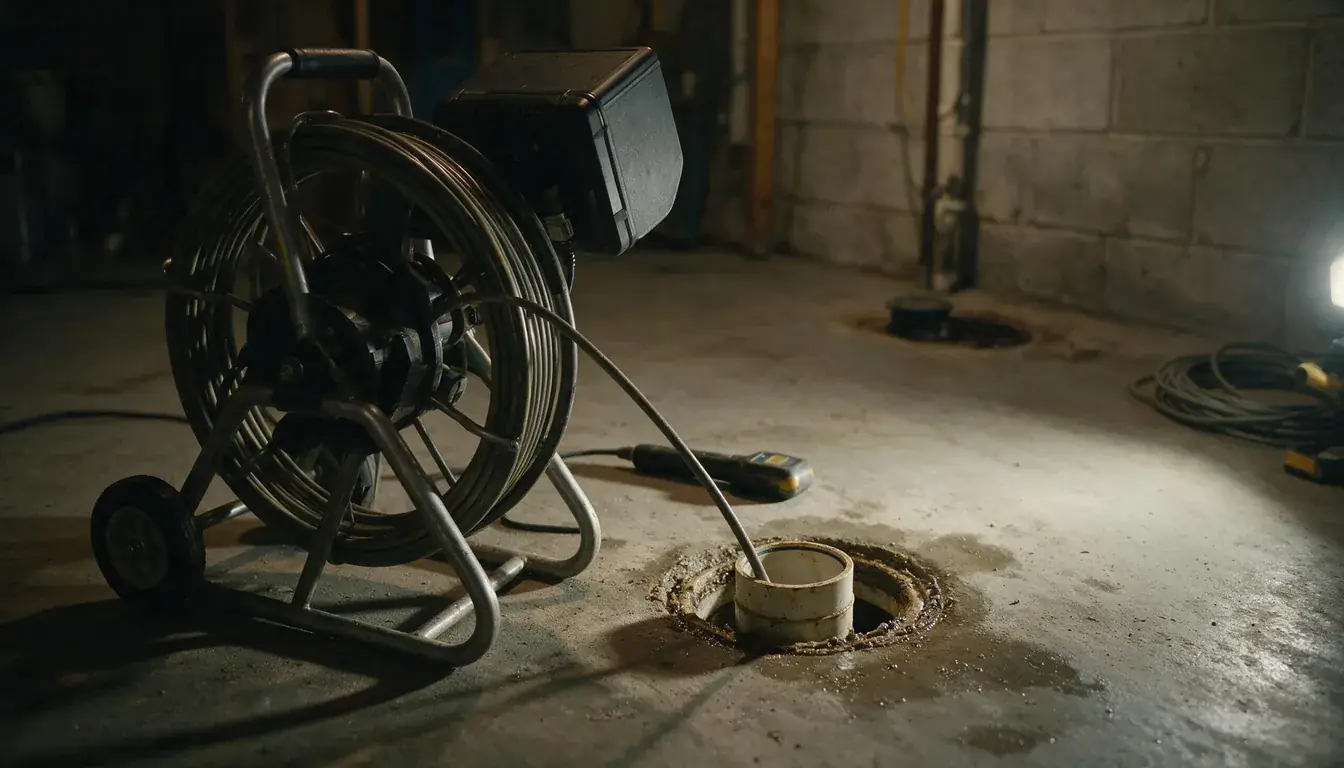
Electronic leak detection locates the active failure point without full-slab access. The permit covers investigation and repair scope documentation before concrete is cut. Once the pipe material at the failure depth is confirmed, the repair decision follows the material state: a single-point copper failure may support localized access; distributed galvanized corrosion or detected lead connections typically calls for above-slab rerouting to remove compromised material from the supply path. Permit fee ranges: permit fee estimator.
What shapes plumbing demand in Minneapolis, MN?
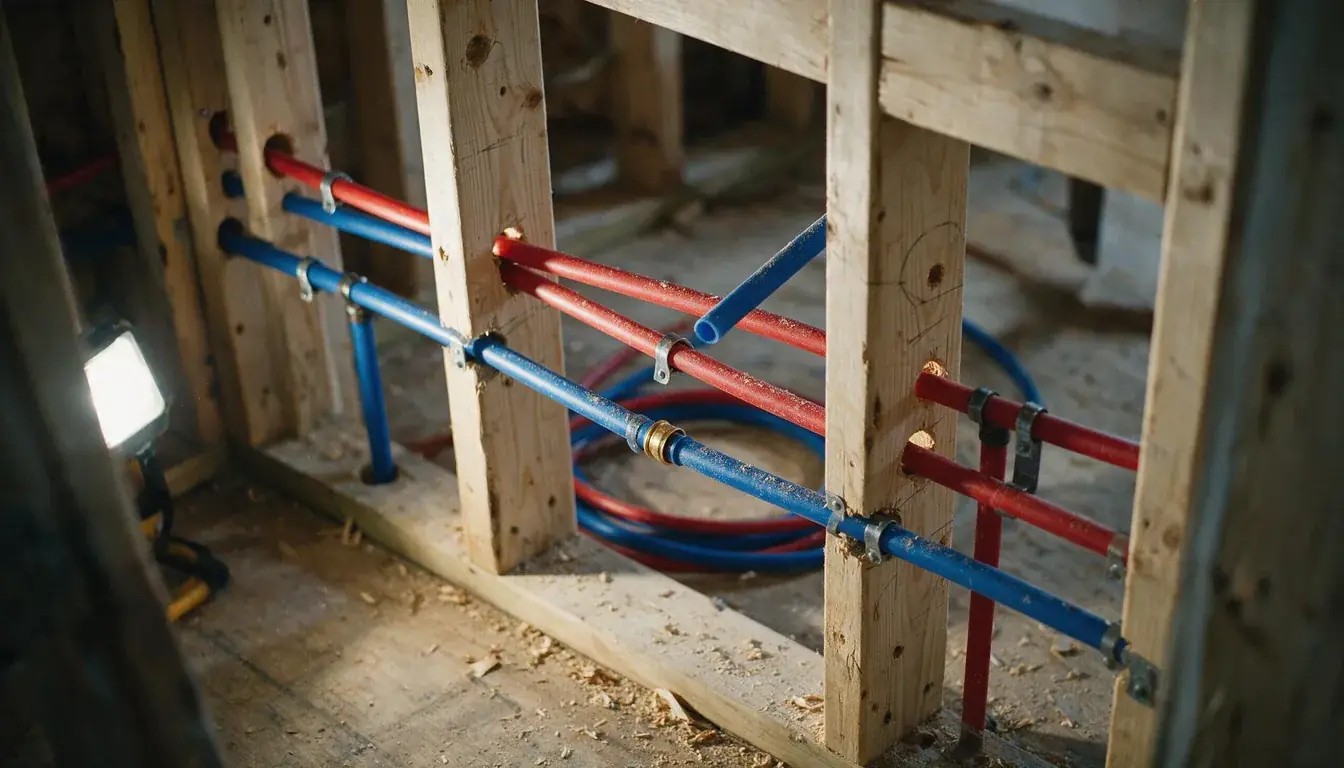
Galvanized supply lines and cast iron drain systems from the 1880s–1940s are past their 40–70-year design life across much of Minneapolis. Interior rust scale progressively narrows pipe bore. Plumbers here routinely scope supply lines before quoting any repair — the underlying pipe condition often makes full replacement more cost-effective than patching.
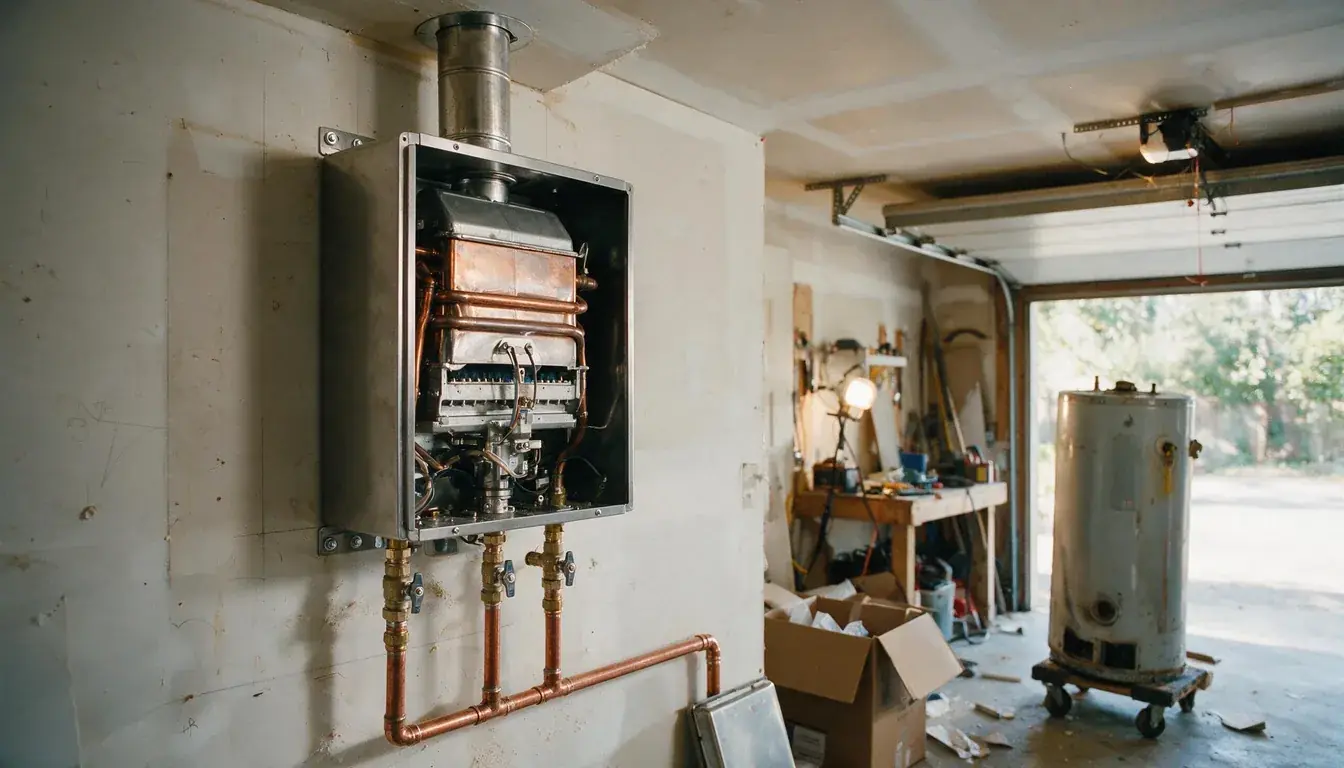
4–7 GPG produces gradual scale that stays manageable with standard maintenance intervals in Minneapolis — annual flushing, cartridge cleaning every 1–2 years. Equipment runs near design lifespan. The primary water quality driver here is preventive maintenance rather than emergency replacement, which distributes service demand more evenly across the calendar.
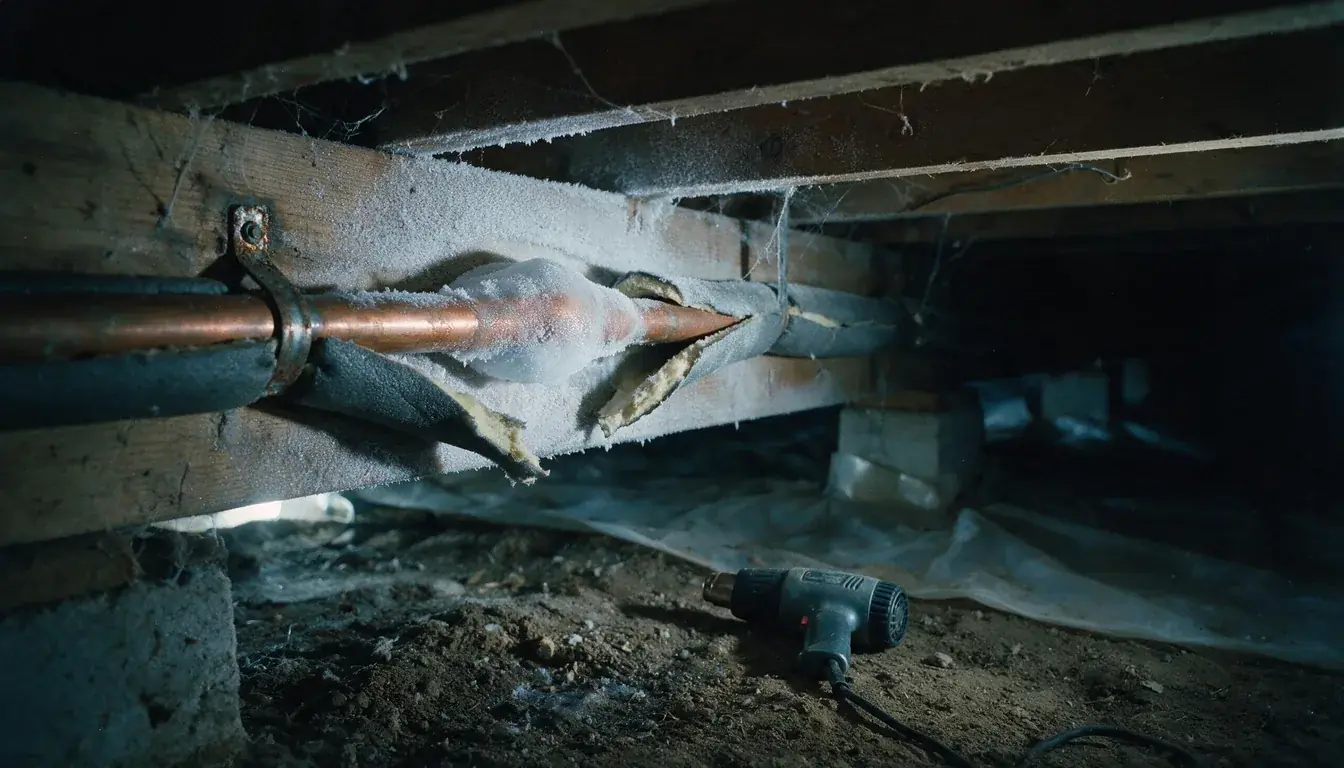
The primary surge in Minneapolis runs January–March, with a secondary wave at the spring thaw — when pipes that held through the freeze rupture as pressure is restored above 32°F. Scheduling competition peaks exactly when emergency calls are highest. Homeowners who wait for visible damage compete for the same limited plumber slots at the worst possible time.
Why diagnose before repairing in Minneapolis?
Describe the symptom — not the repair. AlertPlumber routes the call to an independent MN-licensed plumber in its partner's network — ask whether the site visit will use camera tracing, acoustic detection, or hydrostatic pressure testing matched to the reported failure type.
Ask the plumber for a written diagnostic report: confirmed failure location, available repair methods, and tradeoffs — disruption level, material durability, long-term cost, and whether a Minneapolis building permit applies to the selected method.
You select the repair path. Ask for a fixed scope and price on the authorized method before the Minnesota-licensed plumber proceeds and, where required, who files the permit application to Minneapolis.
Slab Leak Repair cost calculator — Minneapolis
Pre-filled for slab leak repair in Minneapolis. Adjust the ZIP for a neighboring area, or change the service to compare. Calculator pulls from the city's scraped permit-fee + state plumber-density data.
Slab Leak Repair emergency in Minneapolis?
Every hour without a repair increases structural risk and remediation cost. Calls connect to independent local plumbers in our partner's network — ask for an arrival time and a written estimate.
What else do people ask about slab leak repair in Minneapolis?
How much does slab leak repair cost in Minneapolis?
Minneapolis slab leak repair runs a scope-based price for a spot repair, a scope-based price for a reroute, and a scope-based price for a full repipe — among the highest in the country because Minnesota is a union plumber market and the rare slab-on-grade homes that do exist often have hydronic radiant heat under the slab, which complicates any cut. Minneapolis Regulatory Services charges a permit fee. However, in practice most "slab leak" calls in the Twin Cities turn out to be radiant-heat coil failures or basement-floor plumbing — actual slab-leak volume is very low because Minnesota's frost depth makes slab-on-grade impractical. Price ranges: slab leak repair cost guide.
Are slab leaks even common in Minneapolis?
No — slab-on-grade construction is extremely rare in the Twin Cities. Minnesota's 60-inch frost depth requires deep foundations to prevent frost-heave damage, which means basements (typically 8-foot full basements) are the dominant foundation type. The handful of Minneapolis slab homes that exist are usually mid-century moderns in Edina or 1950s-60s ranchers in Bloomington with hydronic radiant heat under the slab. When AlertPlumber routes a "slab leak" call from a Minneapolis ZIP, the matched plumber's first diagnostic question is whether the home has hydronic radiant — if yes, the failure is almost certainly a coil leak, which is a different repair scope than supply-line work.
Why are most Minneapolis "slab leaks" actually radiant-heat failures?
1950s-60s Minnesota slab homes that adopted slab-on-grade did so primarily to install hydronic radiant heating — copper or steel tubing carrying heated water embedded in the concrete, providing heated floor surfaces against the cold winter outside. Those tubes are now 60-70 years old and corroding internally; the failure mode looks identical to a slab leak (warm spot, water bill spike, audible flow with fixtures off) but the leak is in the heating loop, not the potable supply. Repair requires either patching the coil with a bypass loop or abandoning the under-slab radiant entirely and installing baseboard or forced-air heat — a conversion separate from any plumbing work. Price ranges: slab leak repair cost guide.
Spot repair vs reroute vs repipe — what fits a Minneapolis home?
For the rare Edina or Bloomington home with a confirmed potable-supply slab leak (not a radiant failure), spot repair is the right answer because Minneapolis water is 5.8 gpg moderately hard but the rest of the system is usually in fair condition. Reroute through the basement ceiling is straightforward for the small number of homes that have a basement plus partial slab. Full repipe is rarely the right answer in Minneapolis because the underlying pathology is one-off, not progressive — unlike a Phoenix or Houston home where the entire in-slab system is statistically near end-of-life. Price ranges: slab leak repair cost guide.
Will my Minnesota homeowners insurance cover the slab leak?
Standard Minnesota HO-3 policies cover sudden water damage and typically include freeze-burst as a covered peril provided the home was heated and reasonably winterized. The plumbing repair itself is excluded as wear-and-tear, but mold remediation up to a sublimit is usually covered. The Minnesota-specific complication: if the leak is actually a radiant-heat coil failure, some carriers classify it under "heating system" rather than "plumbing system" and apply a separate and often lower coverage limit. The matched plumber documents the leak source carefully so the claim is filed under the correct category. Price ranges: slab leak repair cost guide.
Does Minnesota frost depth cause slab leaks?
Minnesota's 60-inch frost depth does not directly cause slab leaks — it prevents them by making slab-on-grade construction impractical, which is why basements dominate the Twin Cities housing stock. Where frost does cause leaks is at the service-line level: the meter-to-house line must be buried below 60 inches, and homes built in the 1940s-50s sometimes have service lines that don't meet current depth standards, leading to freeze-burst at the inlet during 153-freeze-day winters. That repair is service-line replacement (a different scope than slab leak), a scope-based price depending on yard length and surface restoration. Price ranges: slab leak repair cost guide.
How long does slab leak repair take in Minneapolis?
For a confirmed Twin Cities slab leak in a small Edina or Bloomington slab room (often a sun-room addition or an attached garage slab), plan on a full day for spot repair: morning detection, midday slab cut, afternoon splice and patch. Radiant-coil failures take significantly longer and often require draining and repressurizing the heating loop, sometimes 2-3 days total. Minneapolis cold-snap season concentrates failures in January-February when sub-zero temperatures push freeze-burst events, and matched plumbers run a backlog — call within 24 hours of detecting symptoms to avoid a 5-7 day wait during peak burst weeks.
Will the plumber damage my flooring during the repair?
Most Minneapolis slab leaks happen under finished basement areas or in sun-room additions where the flooring is replaceable vinyl, ceramic tile, or sheet flooring rather than original hardwood. For sun-room additions, AlertPlumber-matched plumbers often perform spot repair through the slab because the flooring is straightforward to replace. For radiant-heat coil failures (which is what most "slab leaks" turn out to be), the better answer is usually to abandon the under-slab radiant entirely and convert to baseboard heat above the slab — eliminating any future under-slab failure risk and avoiding any further floor cuts.
Does Minneapolis building code require permits for slab leak repair?
Yes. Minneapolis Regulatory Services requires a plumbing permit for supply-line work, and the plumber must hold an active MN Master plumber license per the MN Department of Labor and Industry. Minnesota's licensing is among the strictest in the country and the city inspector verifies code compliance both before slab patch (pre-cover inspection on new pipe) and at final completion. For radiant-heat work, a separate mechanical permit is sometimes required depending on the scope. Un-permitted work voids insurance claims and shows up on title searches as an open issue when the home is sold. Permit fee ranges: permit fee estimator.
What detection method works best on a Minneapolis slab home?
Because most Twin Cities "slab leak" calls turn out to be radiant-coil failures rather than potable-supply failures, the first detection step is differentiation: pressure-isolating the potable supply system from the heating loop. If pressure holds on the supply side but drops on the heating side, the leak is in radiant tubing — a different repair entirely. For confirmed potable-supply leaks in Edina or Bloomington slab homes, FLIR thermal imaging is highly effective in 153-freeze-day climate because the temperature differential between leak water and surrounding cold slab is dramatic. Acoustic listening adds confirmation. Total detection workup runs a scope-based price. Price ranges: slab leak repair cost guide.
One call puts your problem in front of a local plumber.
Call the number, or put your number in the form below — the request goes to an independent Minnesota plumber in our partner's network; ask about the slab leak repair and for a written estimate.

Need a slab leak repair callback in Minneapolis?
In a meeting, with the kids, or just prefer not to call? Drop your ZIP and number below. AlertPlumber sends your request to our routing partner — if a participating plumber serves your area, they may call you back directly. For anything urgent, call the number on this page.
- 1 Submit your info. ZIP, phone, and what kind of work you need.
- 2 AlertPlumber passes it on to our routing partner for your area.
- 3 If a participating plumber serves your area, they may call you back. Ask for a written estimate before work starts.
Slab Leak Repair in Minneapolis — when to call
Acute plumbing failures cannot wait. AlertPlumber routes calls about slab leak repair in Minneapolis to independent Minnesota plumbers in our partner's network — call now or submit the form above for a callback.