
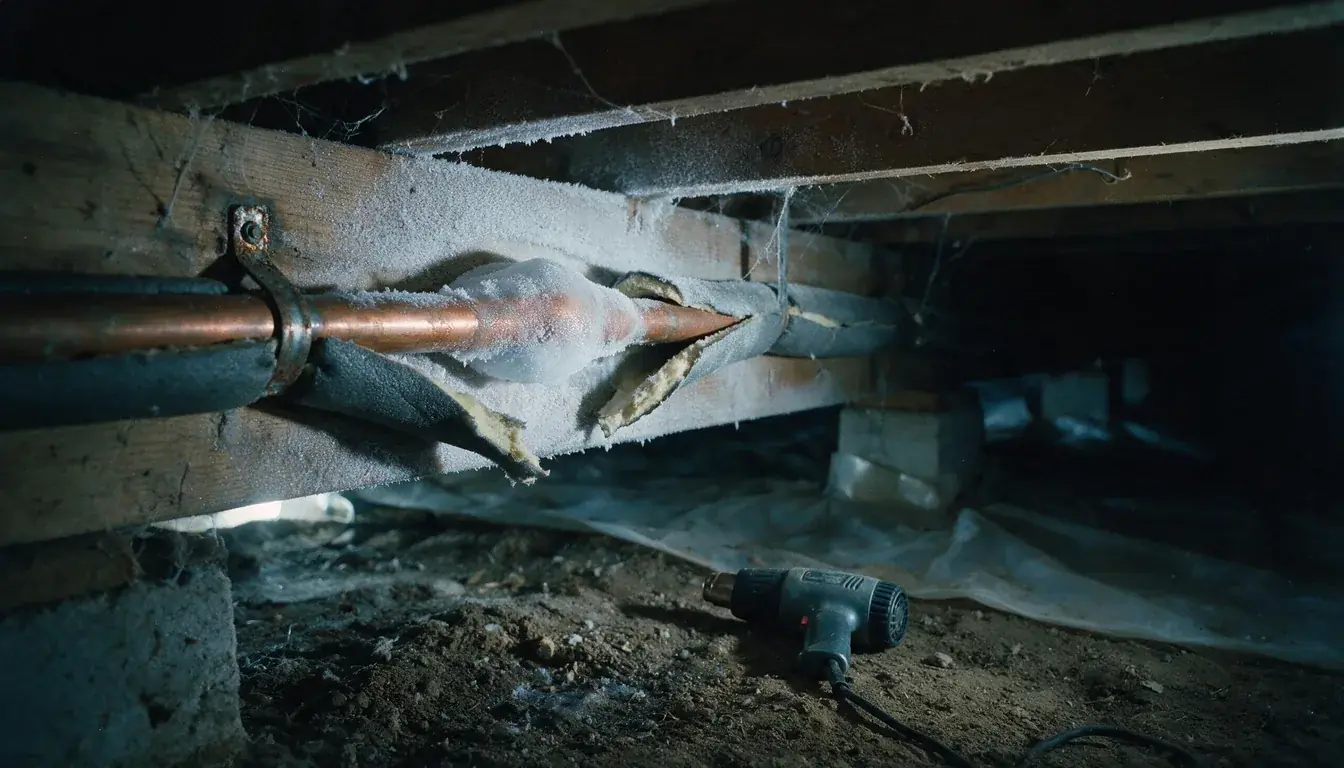
Emergency Frozen Pipe Repair in New York, New York
Frozen Pipe Repair in New York, New York thaws and repairs frozen pipes before they burst — winter emergency. Local conditions in New York: water measured at 1.4, a 36 frost line and a median home age of 70 years.
Active water damage compounds by the hour — the 24/7 line connects calls to independent local plumbers serving New York in our partner's network.
Is frozen pipe repair in New York, NY the right job?
- Burst Pipe Repair in New York
- Water is spraying or leaking from a visibly split pipe, and the damaged section needs repair.
- Water Line Repair in New York
- Low pressure or water pooling between the meter and the house may point to an incoming water line that needs repair.
- Slab Leak Repair in New York
- A wet or warm patch on a concrete floor may mean a leaking pipe beneath the slab needs repair.
- Leak Detection in New York
- Water is disappearing, a meter keeps moving with taps off, or damp spots keep returning, and the leak's location is unclear.
Who do I call for a frozen pipe in New York?
A plumber, when a frozen pipe in your New York home cannot be reached or thawed, or has split. A split pipe that is leaking is an emergency. The American Red Cross puts it this way:
“If you are unable to locate the frozen area, if the frozen area is not accessible, or if you can not thaw the pipe, call a licensed plumber.”
— American Red Cross, read 2026-09-29
What does the local plumbing data show for New York, NY?
Seeing these conditions at your place in New York? Describe them on the call to a state-licensed local plumber — free, no obligation.
What are the pipe conditions in New York, NY?
Frozen pipes are most dangerous in the 24–48 hours after the freeze: the ice blockage may hide a fracture that releases pressure only on thaw. New York homes with exterior wall plumbing, uninsulated crawlspaces, or garage supply lines face elevated risk during sustained cold snaps. Do not apply direct heat to a frozen line without opening a downstream faucet — steam pressure can split copper or PEX before the ice melts. AlertPlumber connects your call with an independent New York-licensed plumber; ask them to locate the freeze point, check for hidden fractures, and restore water safely. Freeze events and frost-depth requirements add pipe insulation, exterior faucet winterization, and burst-risk assessment to service calls in this climate.
New York's water utility maintains an active lead service line (LSL) replacement program. With a median home age of 70 years, a portion of the housing stock may still have lead service laterals connecting the water main to interior supply — a consideration during any work near the service entry point. Ask a licensed plumber to confirm whether supply-side work requires utility coordination. Homes of other eras in New York may have galvanized pipe, copper pipe or polybutylene supply lines instead; ask the plumber which your home has.
Frost line depth in New York means supply lines and outdoor plumbing must be installed below the freeze threshold — typically 36 — to prevent pipe burst during cold events. Exterior hose bibs, irrigation shutoffs, and any exposed pipe runs are the most common winterization service points in freeze-risk markets.
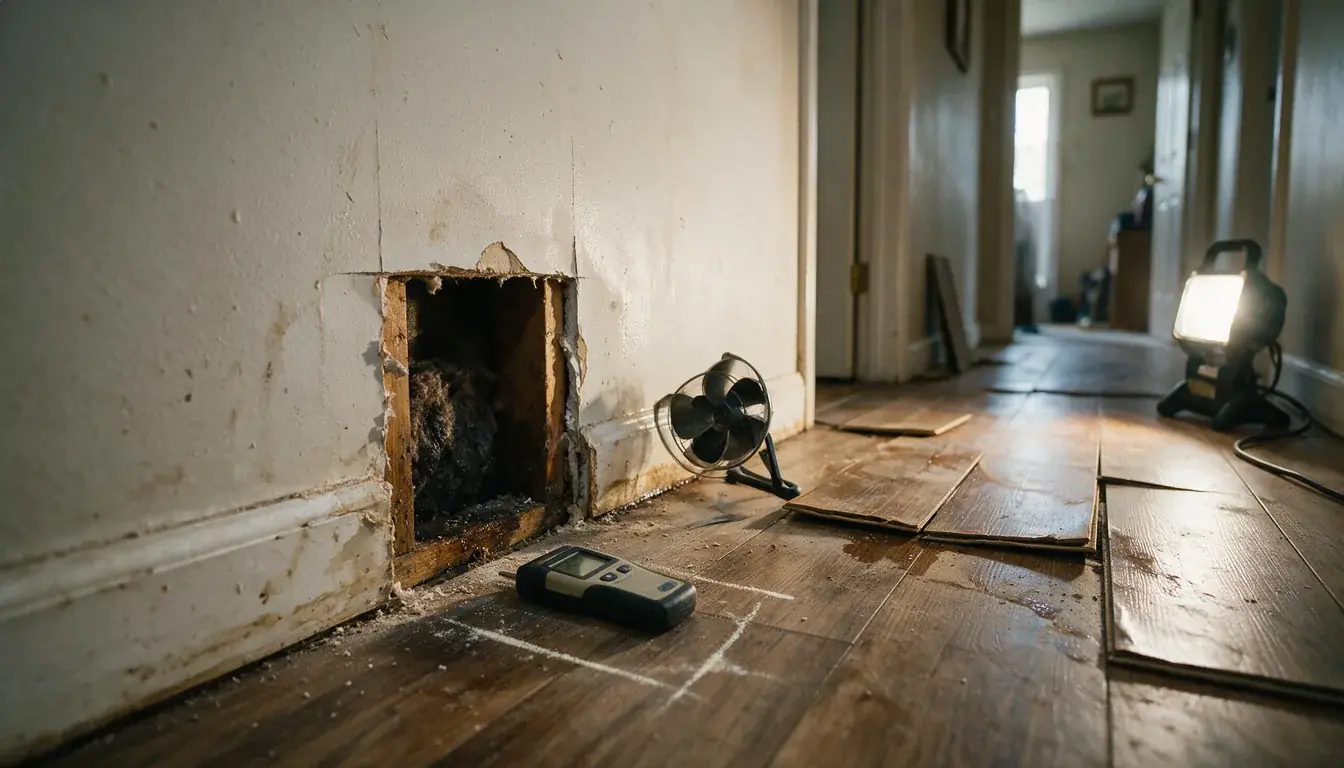
- Median home age
- 70 yrs
- Water hardness
- 1.4 gpg
- Frost line
- 36 in.
- Permit
- City fee schedule
Census housing age, New York city, New York: median year built 1952; 59.9% of homes built before 1960, 78.9% before 1980. Source: U.S. Census Bureau, ACS 2020–2024 5-year estimates, tables B25034 and B25035, read 2026-09-30.
Mention these conditions when you describe the symptom to the NY plumber you reach.
What local infrastructure shapes Frozen Pipe Repair in New York?
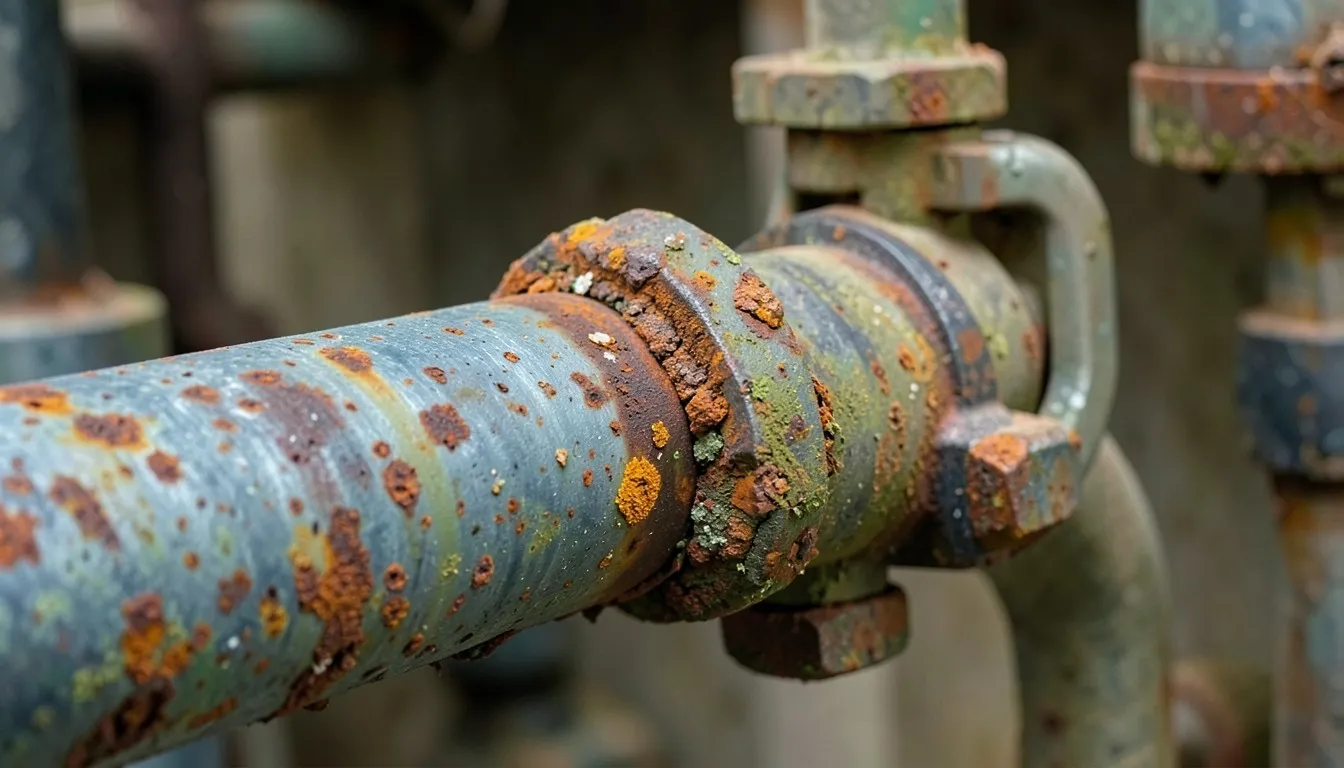
Pre-war construction with a 70-year median home age means galvanized steel supply lines are widespread in brownstones, tenements, and pre-war apartment buildings across the five boroughs. Galvanized steel corroding from the inside for 60-plus years develops thin-walled sections where freeze-cycle expansion splits the pipe at the most compromised point rather than at a joint.
A 36-inch frost line protects buried service infrastructure, but supply runs above that depth in unheated basement rim joist areas, courtyard-facing exterior wall framing in older masonry buildings, and poorly insulated attic distribution runs are directly exposed. Original brownstone and tenement construction used minimal exterior-wall insulation — thermal mass from masonry slows freeze onset but does not prevent it during sustained cold periods. Identifying the split location in a galvanized system before restoring supply pressure prevents secondary flooding at adjacent corroded sections that may have been weakened but not fully split by the freeze.
Frozen pipe repair requires a permit through the NYC Department of Buildings at the scheduled fee. New York licenses master plumbers through the NYC Department of Buildings examination process. NYC Department of Environmental Protection operates the Catskill-Delaware water distribution infrastructure; after a freeze event affecting the service entry or meter installation, DEP's emergency infrastructure line handles the utility-side scope. Full tracing and pressure testing across galvanized distribution after repair is standard given the multiple secondary failure locations common in 70-year-old corroded pre-war building systems. Permit fee ranges: permit fee estimator.
What shapes plumbing demand in New York, NY?
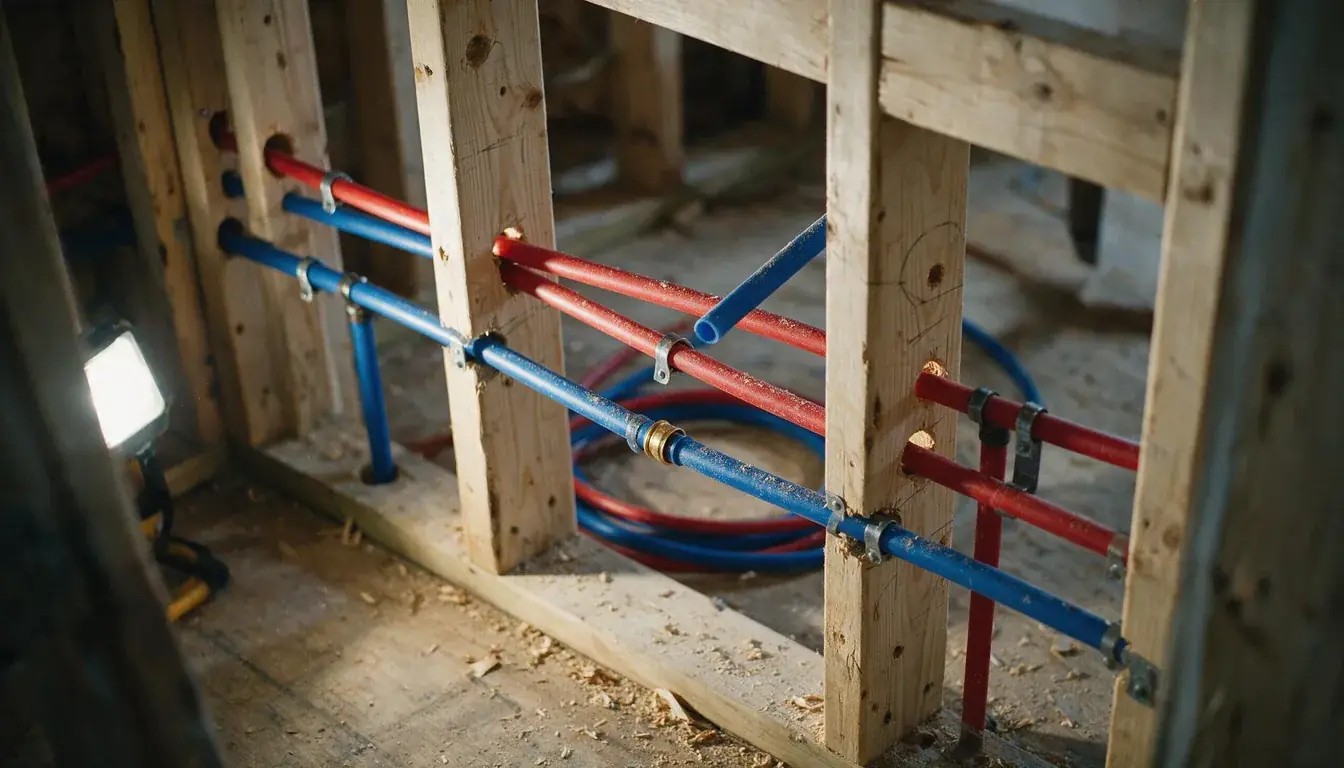
Galvanized supply lines and cast iron drain systems from the 1880s–1940s are past their 40–70-year design life across much of New York. Interior rust scale progressively narrows pipe bore. Plumbers here routinely scope supply lines before quoting any repair — the underlying pipe condition often makes full replacement more cost-effective than patching.
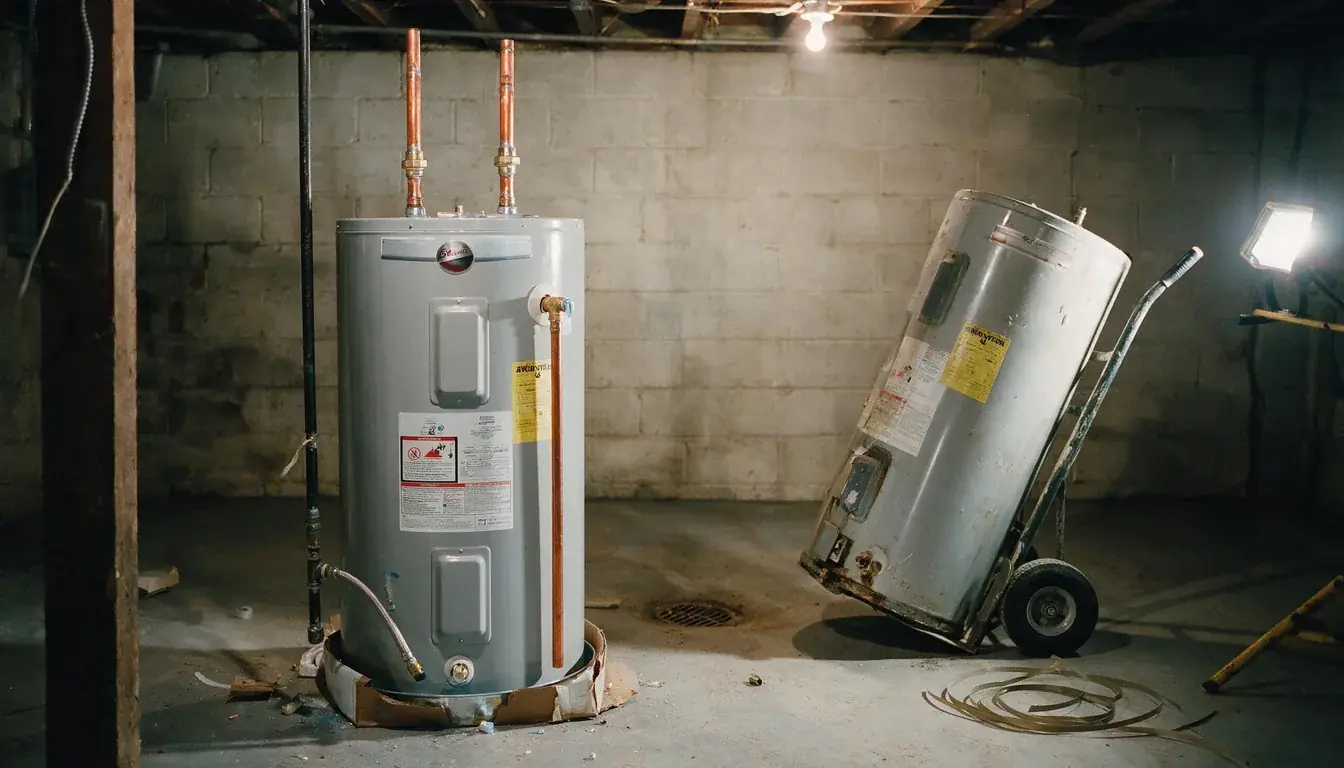
Soft, slightly acidic water in New York is corrosive to copper pipe and solder joints — the opposite failure pattern from hard-water markets. Pinhole failure at fittings and elbows is the dominant non-emergency repair category. Anode rods also deplete faster in soft water, shortening effective tank life without timely replacement.
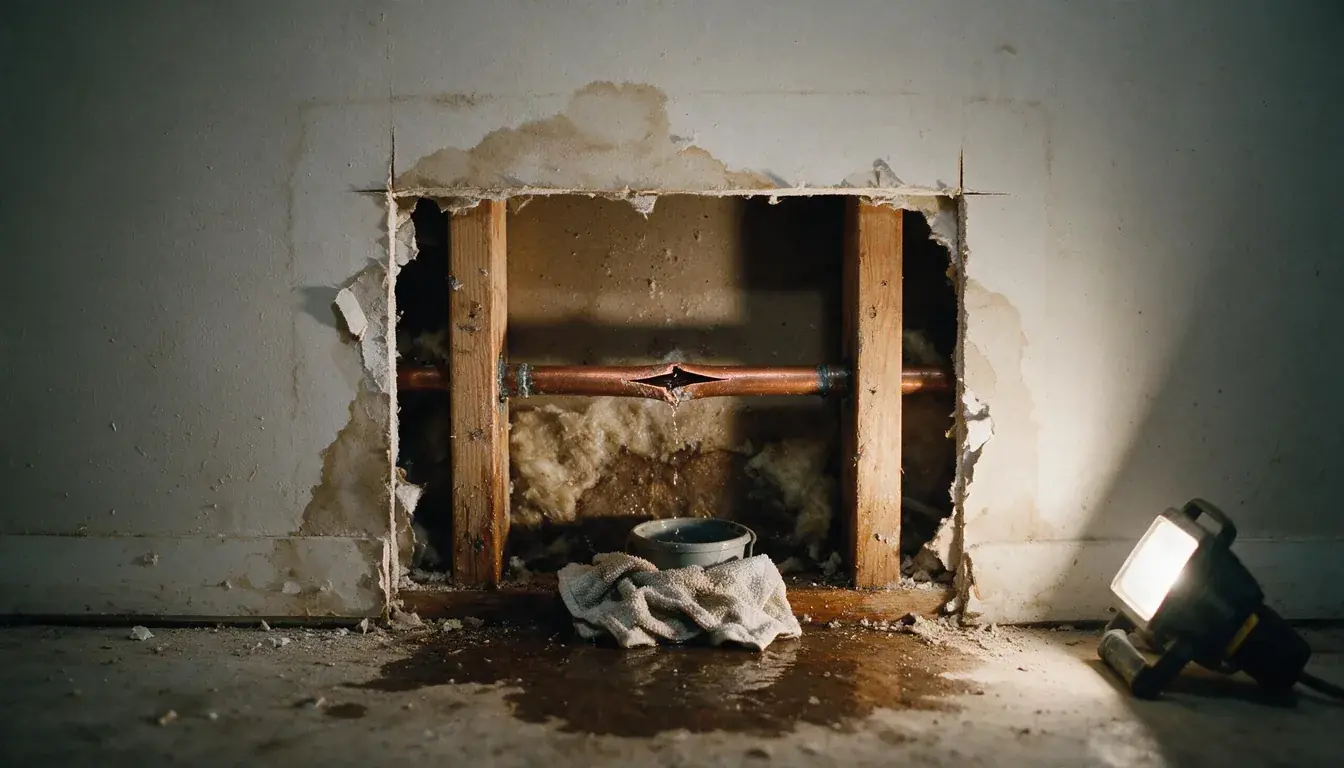
The primary surge in New York runs January–March, with a secondary wave at the spring thaw — when pipes that held through the freeze rupture as pressure is restored above 32°F. Scheduling competition peaks exactly when emergency calls are highest. Homeowners who wait for visible damage compete for the same limited plumber slots at the worst possible time.
Active damage in New York — how is it contained, assessed and restored?
Submit your New York address and describe the active damage — flooding, failed shutoff, burst or frozen line. AlertPlumber passes the request to an independent NY-licensed plumber in its partner's network — ask them to confirm receipt and give you an arrival window.
On arrival, ask the plumber to locate the nearest shutoff and map the damage boundary — affected lines, access points, material condition — and to tell you what requires immediate containment and what can wait until the full repair scope is confirmed.
Ask for a written containment and repair scope to approve before any work begins, with temporary isolation priced separately from full restoration. Give your explicit sign-off before each phase proceeds.
Frozen Pipe Repair cost calculator — New York
Pre-filled for frozen pipe repair in New York. Adjust the ZIP for a neighboring area, or change the service to compare. Calculator pulls from the city's scraped permit-fee + state plumber-density data.
Frozen Pipe Repair emergency in New York?
Every hour without a repair increases structural risk and remediation cost. Calls connect to independent local plumbers in our partner's network — ask for an arrival time and a written estimate.
What else do people ask about frozen pipe repair in New York?
How much does frozen pipe repair cost in New York, NY?
Frozen pipe repair in New York typically runs roughly 25% above the national average. A simple thaw-and-inspect with no rupture is on the low end. If the pipe burst during freezing (very common — you often don't know until it thaws), add a separate charge for the pipe repair itself. Price ranges: frozen pipe repair cost guide.
How much freeze risk does New York actually have?
New York sees ~82 cold days/yr with a 36" frost depth — enough that exposed crawlspace, garage-wall, and attic pipe runs are real freeze candidates every winter.
Can I thaw a frozen pipe myself or do I need a plumber in New York?
You can safely attempt DIY thaw on an exposed, accessible pipe with a hair dryer or heating pad — work from the faucet end toward the frozen section so steam pressure can escape. Never use an open flame. BUT: call a plumber immediately if (1) you can't locate the frozen section, (2) water has already appeared where it shouldn't, or (3) thawing produces a hiss or spray — those are burst indicators. In New York, professional crews carry thermal cameras to locate freeze points inside walls without destructive access.
How do I know if a frozen New York pipe has already burst?
Signs a frozen pipe has ruptured: water stains on ceilings or walls near the suspected freeze point, a bulge or wet spot on drywall, pressure loss at all fixtures after thawing, or visible water behind a cabinet when the pipe thaws. If any of these appear, shut off the main immediately — a burst pipe actively flooding inside a wall can cause tens of thousands in structural damage. Waiting to "see if it stops" only extends the flooding time.
Which pipes freeze first in New York homes?
New York's 87-year median home age means most supply lines are pre-1940 terracotta. The highest-freeze-risk locations are: exterior wall cavities (especially north- and west-facing walls), unheated crawlspaces, pipes running through attached garages, and attic runs that lack insulation above them. In New York winters, crawlspace pipes exposed below the 36" frost line are consistently the first to go.
How long does professional frozen pipe thawing take in New York?
Thawing an accessible freeze takes 30–90 minutes with professional-grade electric pipe-thawing equipment. Wall-buried freeze points take longer — the plumber locates the freeze with a thermal camera first (~30 min), then decides whether to thaw in place or open the wall. If opening is needed, plan for 2–4 hours of work. Add pipe-repair time if a rupture is found. Most New York frozen-pipe calls resolve in a half-day visit.
How do I prevent pipes from freezing in New York?
For New York winters: insulate exposed crawlspace and garage-wall runs, let faucets drip on the coldest nights, keep interior heat above 55°F, and drain hose bibs before the first frost.
Does homeowners insurance cover frozen pipe damage in New York?
Standard New York policies cover sudden water damage from a frozen pipe that burst — including drywall, flooring, and contents — but typically only if reasonable heat was maintained in the home. If the freeze happened while the home was unheated and left unattended, carriers often deny the claim as "neglect." Confirm your policy's heat-maintenance clause before winter. Document the burst pipe before any repairs begin and notify your carrier immediately.
When should I call a plumber about frozen pipes — before or after they freeze?
Before. If New York is forecast for sustained sub-20°F temps, proactively call to have vulnerable crawlspace or exterior-wall pipe runs insulated or heat-taped. Emergency call-out during an active freeze event means waiting in a queue behind dozens of other calls. Pre-season insulation visits book within a few days and cost a fraction of emergency rates plus pipe repair.
How do I check the license of frozen pipe plumbers in NY?
AlertPlumber does not vet plumbers: for frozen-pipe work in New York, ask for the NYC LMP license number and check it with the state board. Ask whether the plumber carries electric pipe-thawing equipment and thermal cameras standard — so they can locate and clear most freeze events without destructive wall access.
One call puts your problem in front of a local plumber.
Call the number, or put your number in the form below — the request goes to an independent New York plumber in our partner's network; ask about the frozen pipe repair and for a written estimate.
Need a frozen pipe repair callback in New York?
In a meeting, with the kids, or just prefer not to call? Drop your ZIP and number below. AlertPlumber sends your request to our routing partner — if a participating plumber serves your area, they may call you back directly. For anything urgent, call the number on this page.
- 1 Submit your info. ZIP, phone, and what kind of work you need.
- 2 AlertPlumber passes it on to our routing partner for your area.
- 3 If a participating plumber serves your area, they may call you back. Ask for a written estimate before work starts.
Frozen Pipe Repair in New York — when to call
Acute plumbing failures cannot wait. AlertPlumber routes calls about frozen pipe repair in New York to independent New York plumbers in our partner's network — call now or submit the form above for a callback.