
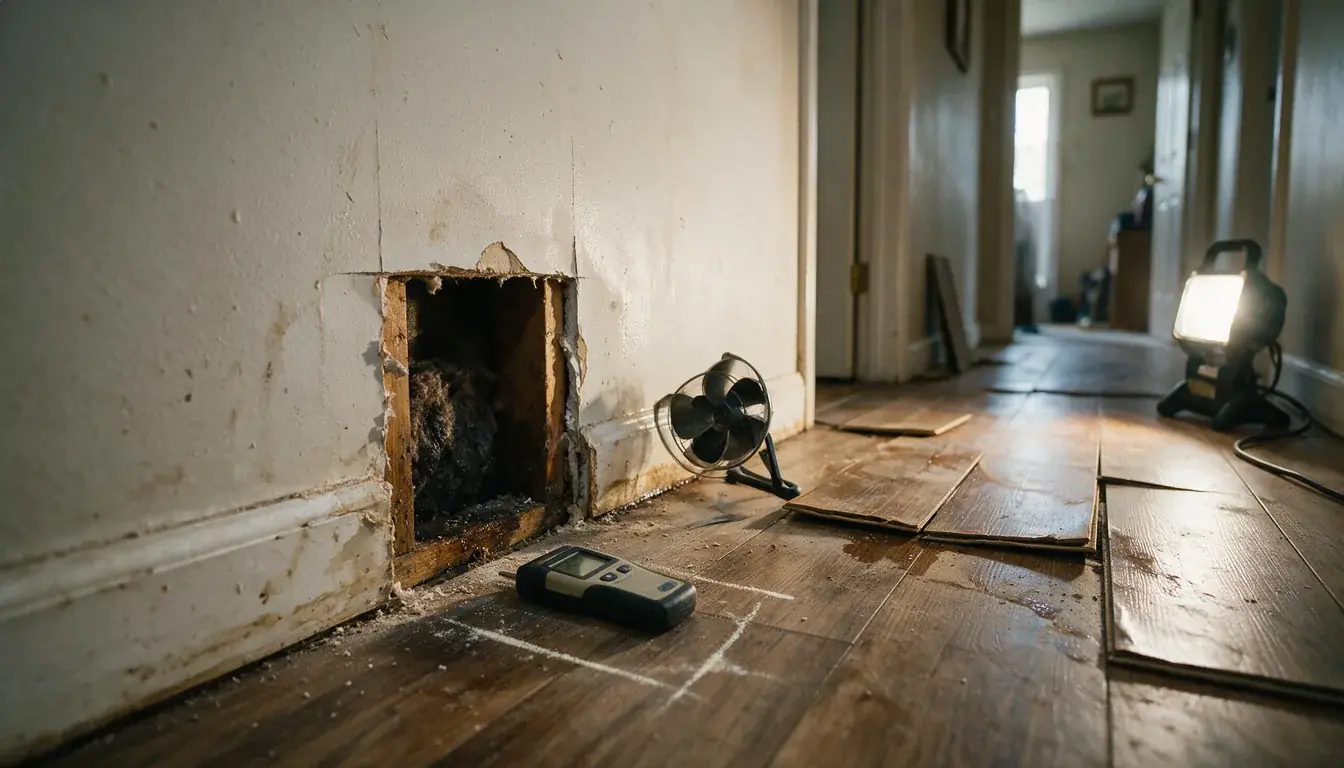
Emergency Leak Detection in Washington, District of Columbia
Leak Detection in Washington, District of Columbia locates hidden water and gas leaks using acoustic and thermal equipment. Local conditions in Washington: water measured at 8, a 30 frost line and a median home age of 68 years.
Camera first, quote second — know exactly what's wrong in your Washington home before you approve a dollar.
Who do I call for a hidden leak in Washington?
A plumber who offers leak detection. Ask what method they use (acoustic, thermal imaging or a pressure test) and whether finding the leak and repairing it are quoted separately. A hidden leak becomes urgent in a Washington home when water is visible on a ceiling, wall or floor.
What does the local plumbing data show for Washington, DC?
Seeing these conditions at your place in Washington? Describe them on the call to a state-licensed local plumber — free, no obligation.
What are the pipe conditions in Washington, DC?
Non-invasive leak detection uses acoustic amplification, thermal imaging, and pressure isolation to locate water loss in supply lines and drain systems without opening walls or floors. Washington homes with galvanized or older copper supply runs face the highest pinhole leak incidence — a slow leak inside a wall cavity can cause mold and structural damage for months before becoming visible. A professional leak detection prevents unnecessary demolition by confirming the exact break location before any drywall is cut. AlertPlumber connects your call with an independent District of Columbia-licensed plumber — ask them to locate first and open second.
Washington's housing stock spans multiple construction eras — median home age 68 years — meaning pipe materials and failure modes vary significantly by neighborhood and building vintage. An inspection-led approach that confirms pipe material before recommending a service path is standard practice for mixed housing profiles. Homes of other eras in Washington may have galvanized pipe, copper pipe or polybutylene supply lines instead; ask the plumber which your home has.
Hard water in Washington accelerates scale buildup inside water heater tanks, on heating elements, and at fixture connections. Sediment accumulation in tank heaters reduces efficiency and shortens element life; visible deposits at aerators and showerheads are an early indicator. Ask a licensed plumber to assess whether a water softener or conditioner is appropriate for the home's service configuration.
Frost line depth in Washington means supply lines and outdoor plumbing must be installed below the freeze threshold — typically 30 — to prevent pipe burst during cold events. Exterior hose bibs, irrigation shutoffs, and any exposed pipe runs are the most common winterization service points in freeze-risk markets.
- Median home age
- 68 yrs
- Water hardness
- 8 gpg
- Frost line
- 30 in.
- Lead lines
- Active replacement
- Permit
- City fee schedule
Census housing age, Washington city, District of Columbia: median year built 1958; 52.2% of homes built before 1960, 69% before 1980. Source: U.S. Census Bureau, ACS 2020–2024 5-year estimates, tables B25034 and B25035, read 2026-09-30.
Mention these conditions when you describe the symptom to the DC plumber you reach.
What local infrastructure shapes Leak Detection in Washington?
Pre-war housing averaging 75 years of age here was plumbed during the era when lead service lines connected city mains to interior galvanized supply networks as standard practice. DC Water supply from Potomac River sources delivers approximately 5 grains per gallon — moderately hard — with treatment that produces mild corrosivity at the lead-galvanized interface where protective scale is thin. Approximately 23,000 active lead service lines remain mapped in the distribution system, with older rowhouse and semi-detached neighborhoods in Northwest and Northeast quadrants carrying the highest density.
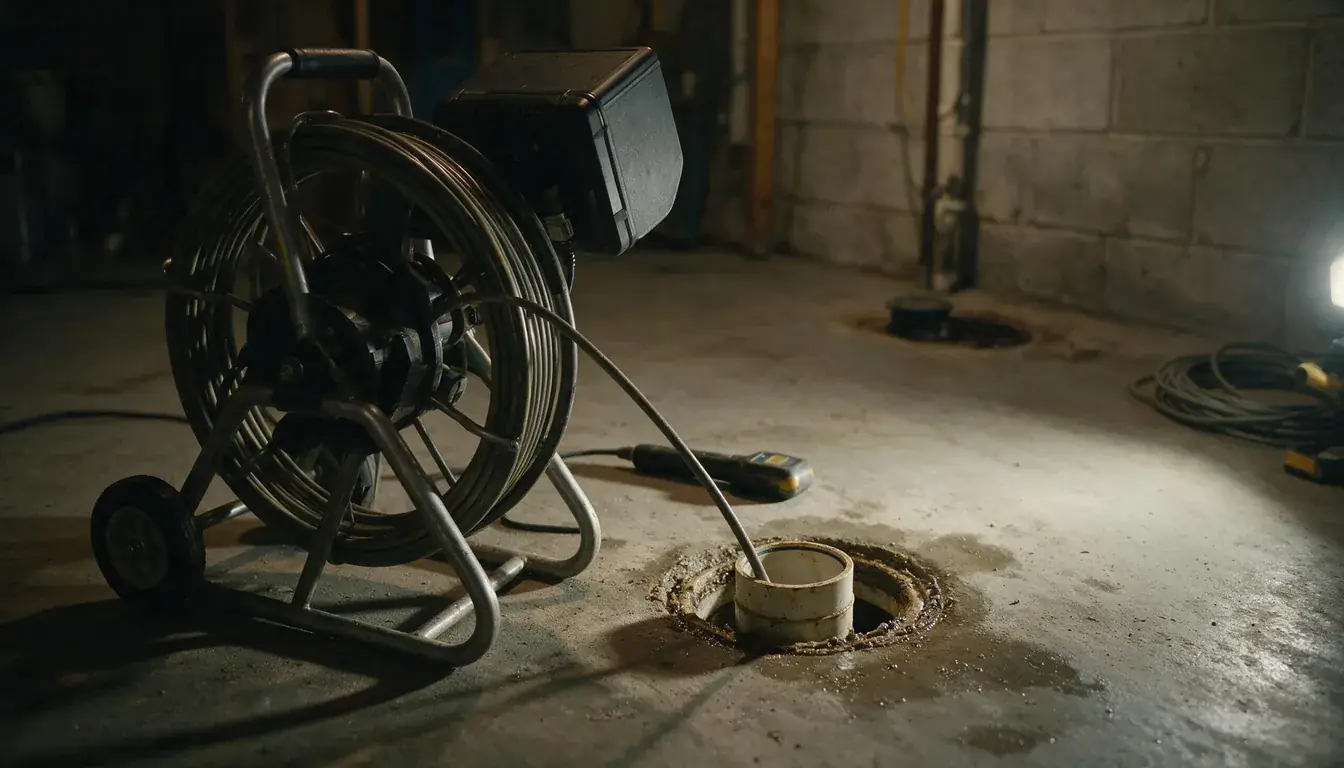
Acoustic scanning covers the full supply route from the service connection through interior branches in pre-war mixed-material properties — multi-junction supply systems require complete coverage rather than point-pressure isolation of a single accessible segment. A 24-inch frost line here subjects below-grade service penetrations to seasonal mechanical stress, and the region's clay-heavy Piedmont soils expand and contract with moisture changes that load corroded lead-galvanized transition joints. Tracer gas testing resolves inaccessible buried sections beneath concrete basement floors where camera access is not available.
DC WASA coordinates curb-stop shutoff, and a permit is required before closing wall or floor surfaces after any supply repair. DC's lead service line replacement program should be verified for properties with confirmed lead connections before interior repair scope is finalized. DCRA requires a licensed master plumber of record and post-repair pressure documentation before permit closure, with inspection scheduling coordinated through the city's online permit portal. Permit fee ranges: permit fee estimator.
What shapes plumbing demand in Washington, DC?
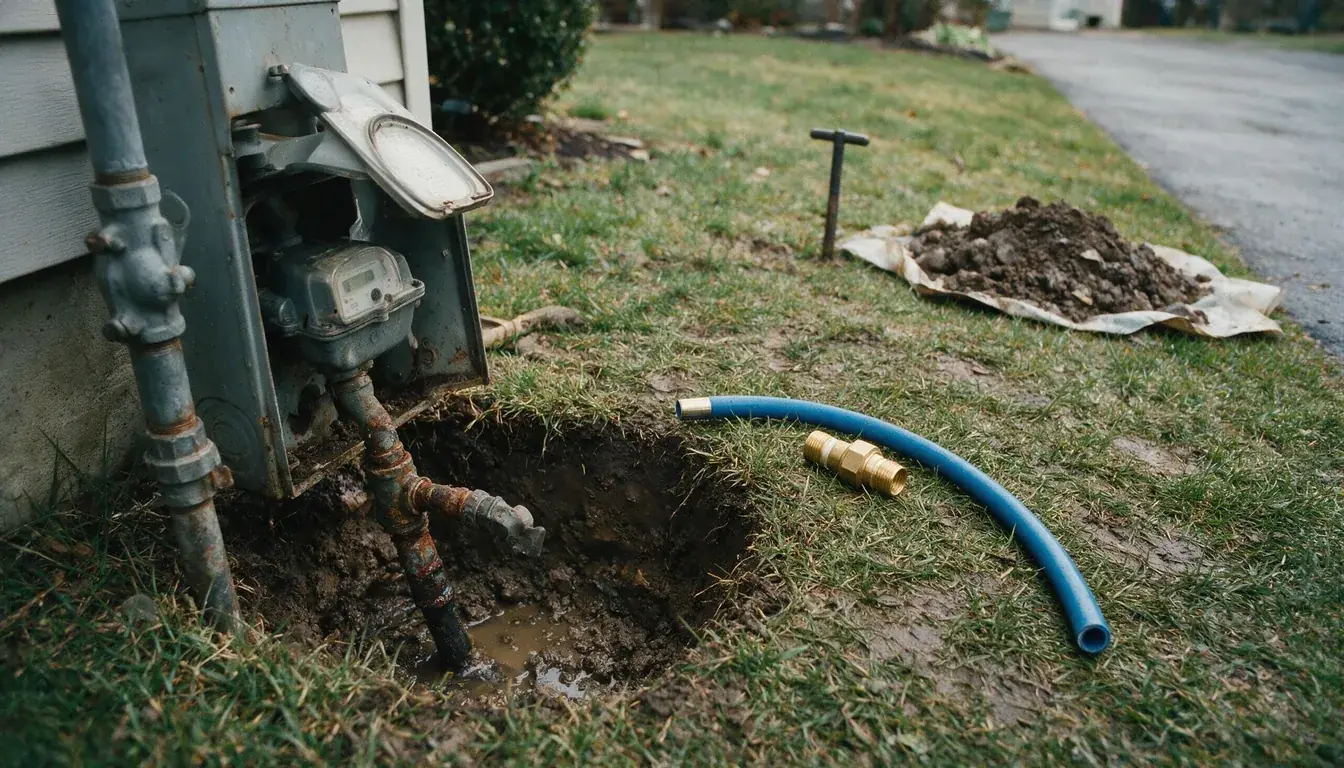
1950s–70s copper supply is now 50–70 years into its service cycle in Washington. Thermal fatigue at fittings and slab-on-grade access complexity — common in Sun Belt construction — make repair vs. replacement a live decision on most jobs. This housing cohort is the active primary replacement wave in this market.
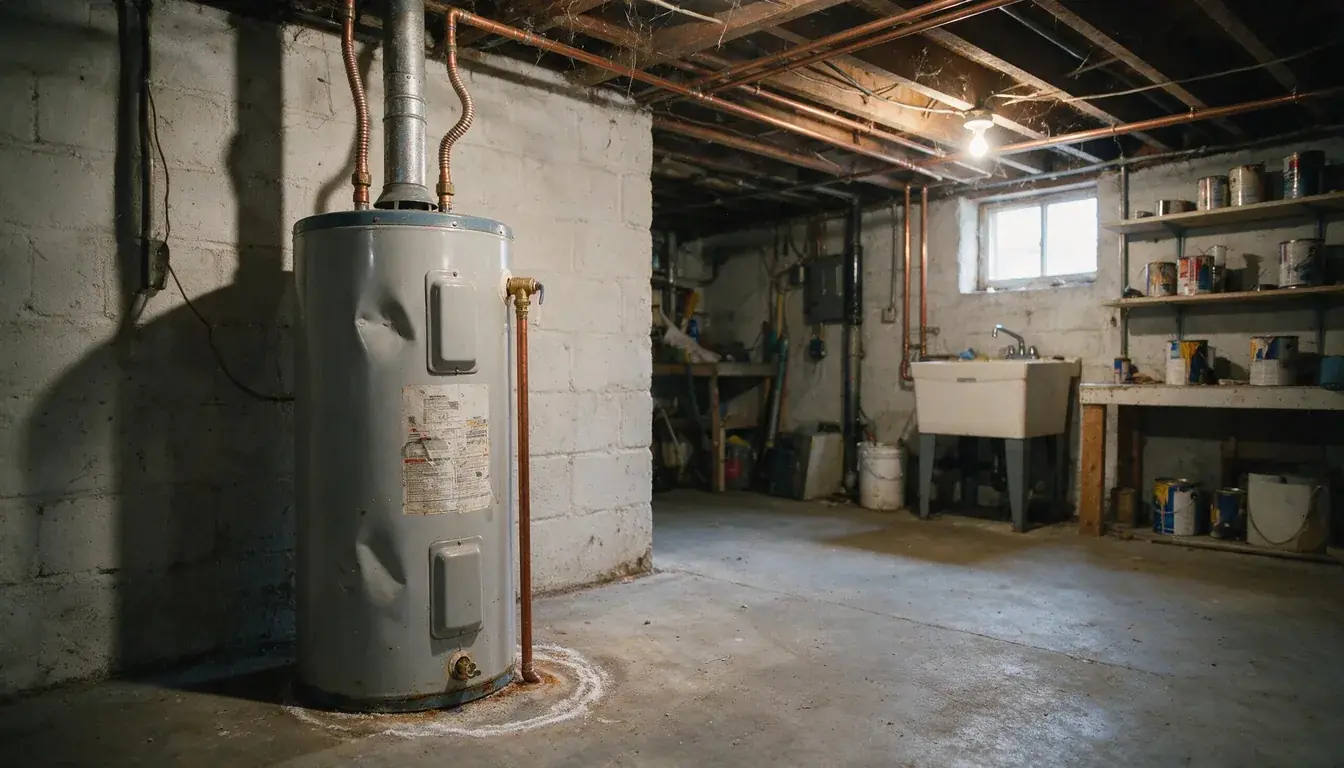
8–14 GPG shortens water heater service life to 8–11 years in Washington and drives rolling maintenance demand at aerators, shower cartridges, and heat exchanger ports. Annual flushing prevents premature failure; skipped maintenance cycles push units toward early replacement. Scale-related calls represent a significant share of the annual service workload here.
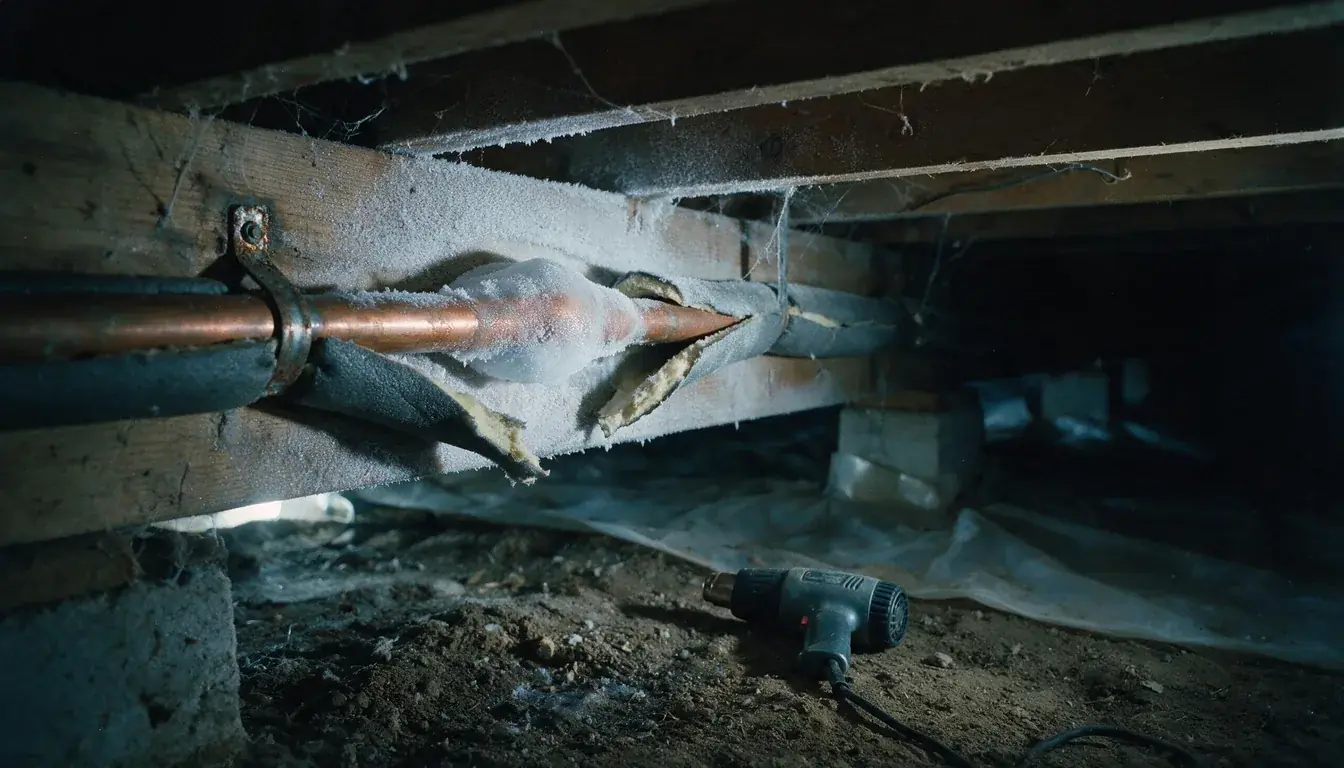
The primary surge in Washington runs January–March, with a secondary wave at the spring thaw — when pipes that held through the freeze rupture as pressure is restored above 32°F. Scheduling competition peaks exactly when emergency calls are highest. Homeowners who wait for visible damage compete for the same limited plumber slots at the worst possible time.
Why diagnose before repairing in Washington?
Describe the symptom — not the repair. AlertPlumber routes the call to an independent DC-licensed plumber in its partner's network — ask whether the site visit will use camera tracing, acoustic detection, or hydrostatic pressure testing matched to the reported failure type.
Ask the plumber for a written diagnostic report: confirmed failure location, available repair methods, and tradeoffs — disruption level, material durability, long-term cost, and whether a Washington building permit applies to the selected method.
You select the repair path. Ask for a fixed scope and price on the authorized method before the District of Columbia-licensed plumber proceeds and, where required, who files the permit application to Washington.
Leak Detection cost calculator — Washington
Pre-filled for leak detection in Washington. Adjust the ZIP for a neighboring area, or change the service to compare. Calculator pulls from the city's scraped permit-fee + state plumber-density data.

Leak Detection in Washington — the longer it runs, the more it costs.
Slow failures compound: soft pipe walls, root penetration, mineral buildup. Ask the plumber you reach for a scope-first estimate before anything is dug up.
What else do people ask about leak detection in Washington?
How much does Federal-period rowhouse leak detection cost in Washington, DC?
A non-destructive detection workup on a DC Federal-period rowhouse runs flat, billed before any repair quote — the upper band reflects the extra labor of scanning plaster-and-lath party walls in Capitol Hill, Georgetown, and Dupont Circle. The fee covers FLIR thermal sweep, acoustic ground-microphone listening on the supply manifold, static pressure-isolation on a 7-9 gpg Potomac feed, and party-wall sewer coordination paperwork (DC's row-built stock shares lateral connections, so a leak below grade often involves the neighboring deed). The detection fee is typically credited toward repair if you book the same plumber. Spot repair on a Federal-period plaster wall opening runs a scope-based price (the lath layer adds restoration cost over modern drywall). Capitol Riverfront and Far Northwest infill (post-2000) prices closer to a scope-based price because the slab-on-grade scanning is straightforward. Always confirm whether the DC DOB plumbing permit is bundled. Price ranges: leak detection cost guide.
How does a hidden leak show up differently in a Capitol Hill rowhouse versus a Capitol Riverfront infill condo?
The symptom set splits sharply by build era in DC. Federal-period and Adams Morgan tenement (1800s–1900s): bubbling Federal-period plaster on a party wall, lath staining on the neighbor-side surface (party-wall migration), efflorescence on cellar brick where Potomac-basin groundwater is wicking, faint hissing at the rim joist where original cast-iron meets a copper retrofit. Brookland and Petworth craftsman (1920s–40s): warped oak flooring near radiator returns, ceiling halos under second-floor baths. Capitol Riverfront and Far Northwest infill (2000s+): warm spot on a polished-concrete slab, low-flow indicator drift on the smart meter, drywall taping bands lifting near a manifold. A Dupont Circle rowhouse leak rarely surfaces at the leak — moisture migrates along the lath cavity and the party-wall assembly before showing.
What detection methods does a DC plumber use on Federal-period plaster and party-wall sewer connections?
The DC sequence is built around two constraints: Federal-period plaster-and-lath wall assemblies and shared party-wall sewer laterals. (1) Static pressure-isolation on the supply manifold confirms a leak and isolates hot vs cold on a 7-9 gpg Potomac feed. (2) FLIR thermal scanning across the plaster — the lath horsehair-binder layer attenuates contrast, so the tech runs the scan after a 20-minute hot-side recirculation to amplify the gradient. (3) Acoustic ground-microphone listening through the original wood baseboard (drilling is avoided in historic-overlay zones). (4) Camera-scoped lateral inspection at the party-wall cleanout — DC rowhouse sewers often share a Y-connection with the neighbor before reaching the DC Water tap, so coordination paperwork precedes any excavation. (5) Potomac and Anacostia basin moisture-mapping for cellar-floor anomalies in flood-prone zones below 50 ft elevation.
Will DC HO-3 homeowners insurance cover detection on a diplomatic-zone or embassy-housing property?
Standard DC HO-3 policies cover the detection fee when the underlying leak is "sudden and accidental" — not slow seepage that's been weeping into Federal-period plaster for months. Federal-zone properties (embassy-housing leases, State Department-held townhouses, federally-owned diplomatic residences in Kalorama and Sheridan-Kalorama) carry a different scope: detection on those parcels often requires a State Department OFM coordinator notification before a plumber sets foot inside, and the carrier on a diplomatic-tenant lease may be a foreign government's domestic carrier rather than a US HO-3. For privately-held DC homes adjacent to the diplomatic zone, the standard HO-3 tear-out and access language applies. Submit the plumber's written report with party-wall moisture mapping; verbal diagnosis on a row-built stock claim is almost always denied.
How does the DC Water + DC DOEE combined utility billing reveal a hidden leak?
DC Water bills the supply side and DC DOEE (Department of Energy and Environment) layers the stormwater and Clean Rivers IAC charges on the same statement — so a hidden leak inflates two line items, not one. A 60-psi pinhole loses 70–150 gal/day, which on a typical DC residential bill adds between the DC Water consumption charge and the DC DOEE-assessed wastewater volumetric charge. The Clean Rivers IAC is fixed by impervious surface area, so it doesn't move — but a 20%+ jump in the DC Water consumption block for two consecutive cycles, with no household-usage change, is the standard threshold for ordering detection. Pull the DC Water online portal hourly-usage graph before the plumber arrives; a flat overnight baseline above 0 gph is diagnostic of a continuous leak. Price ranges: leak detection cost guide.
Can a DC homeowner narrow down the leak before calling a plumber?
Yes — narrow it, don't locate it. Shut every fixture and watch the DC Water smart-meter low-flow indicator for 20 minutes; any movement means water is escaping. Then isolate the water heater (close its cold-inlet shutoff) and re-watch — if the meter stops, the leak is on the hot side, common on Federal-period rowhouse copper retrofits at 7-9 gpg Potomac hardness. If it keeps moving, the leak is on the cold supply or an outdoor hose-bib (DC silcocks freeze-split in the Dec-Feb window even with moderate winters). What you cannot do at home: distinguish a Federal-period plaster cavity leak from a party-wall migration originating in the neighbor's unit. That requires calibrated FLIR plus the party-wall cleanout-camera workflow — leave that step to the independent plumber.
What does the federal-zone embassy-housing detection workflow look like?
Detection inside the federal diplomatic zone — embassy chanceries, ambassador residences, State Department lease properties in Kalorama, Observatory Circle, and parts of Massachusetts Avenue Heights — runs a stricter scope than a standard DC rowhouse. The plumber confirms the property's status (private residence, diplomatic-tenant lease, or federally-held), checks whether OFM (Office of Foreign Missions) coordination is required, and confirms the DC DOB permit pathway since some federal parcels are exempt from local DOB review but still require DC Water tap-coordination. Equipment scope is the same — FLIR through Federal-period plaster, acoustic on the supply manifold, party-wall cleanout camera — but the documentation chain is longer. The independent plumber routed through AlertPlumber confirms whether the address requires the federal-zone workflow before scheduling, since the lead time is typically 5-10 business days longer than a standard Capitol Hill rowhouse call.
How accurate is FLIR thermal imaging through Federal-period plaster-and-lath?
Federal-period plaster-and-lath assemblies are the toughest substrate in DC for FLIR work. The lath layer is sawn wood strips with horsehair-bound lime plaster on top — the horsehair binder scatters infrared, and the wood lath has its own thermal mass that lags behind a leak by 8-15 minutes. A calibrated FLIR T-series camera localizes a hot-side leak in this assembly to a 22-28 inch radius on the first sweep, lower than the 18-inch radius achievable on modern drywall. The tech compensates by running a 20-minute hot-side recirculation cycle before the scan to amplify the thermal gradient, then confirms with acoustic listening through the baseboard joint. On a Capitol Riverfront infill condo with painted drywall over a steel-stud cavity, the same camera lands inside 14-18 inches first scan. Always ask whether the camera output will be paired with acoustic confirmation before any plaster is opened — restoration on Federal-period lath runs a scope-based price. Price ranges: leak detection cost guide.
Should I get a system-wide pressure test on a Federal-period DC rowhouse?
Yes, especially on a Capitol Hill, Georgetown, or Dupont Circle rowhouse where a copper retrofit was layered onto original lead or cast-iron between 1955-1985. A system-wide static pressure test isolates supply, hot recirculation, and the party-wall lateral, then holds 80 psi for 15 minutes — any pressure drop flags an additional weak point. DC plumbers report rowhouses with one detected pinhole have a 40-55% probability of a second pinhole within 30 months on the same hot manifold, because 7-9 gpg Potomac hardness at recirculation temperature compounds copper corrosion uniformly across the loop. The test is lower-cost than a second emergency tear-open of plaster-and-lath. Combine the pressure test with the party-wall sewer cleanout camera in the same visit to consolidate the DC DOB permit fee. Price ranges: leak detection cost guide.
How do I check the license of plumbers in DC?
The partner network requires every plumber routed through AlertPlumber for leak detection in DC to maintain active DC plumber credentialing through the DC Department of Buildings (DOB). DC Department of Buildings, 2025 — the agency was reorganized out of DCRA (DC Department of Consumer & Regulatory Affairs) in the recent restructuring, so older online references still pointing at DCRA reflect the prior org name. The DC plumber pool exceeds 5,000 credentialed individuals and the DOB plumbing permit is the standard pull for a detection-plus-repair scope. Detection on Federal-period plaster, party-wall sewer coordination, and federal-zone diplomatic-property work each carry distinct documentation chains. Local context. Capitol Hill, Georgetown, and Dupont Circle Federal-period rowhouses (1800s–1900s plaster-and-lath party walls), Adams Morgan and Mount Pleasant tenement-style stock, Brookland and Petworth 1920s-40s craftsman, and Capitol Riverfront 2000s+ infill each show distinctive leak signatures. Roughly 700,000 DC homes on a 7-9 gpg Potomac River feed through DC Water, billed jointly with DC DOEE stormwater charges, define the verified-plumber detection workflow. USGS and NOAA NWS Baltimore-Washington, 2025 publish the basin and freeze-day data the matched plumber's workflow draws on. Permit fee ranges: permit fee estimator.
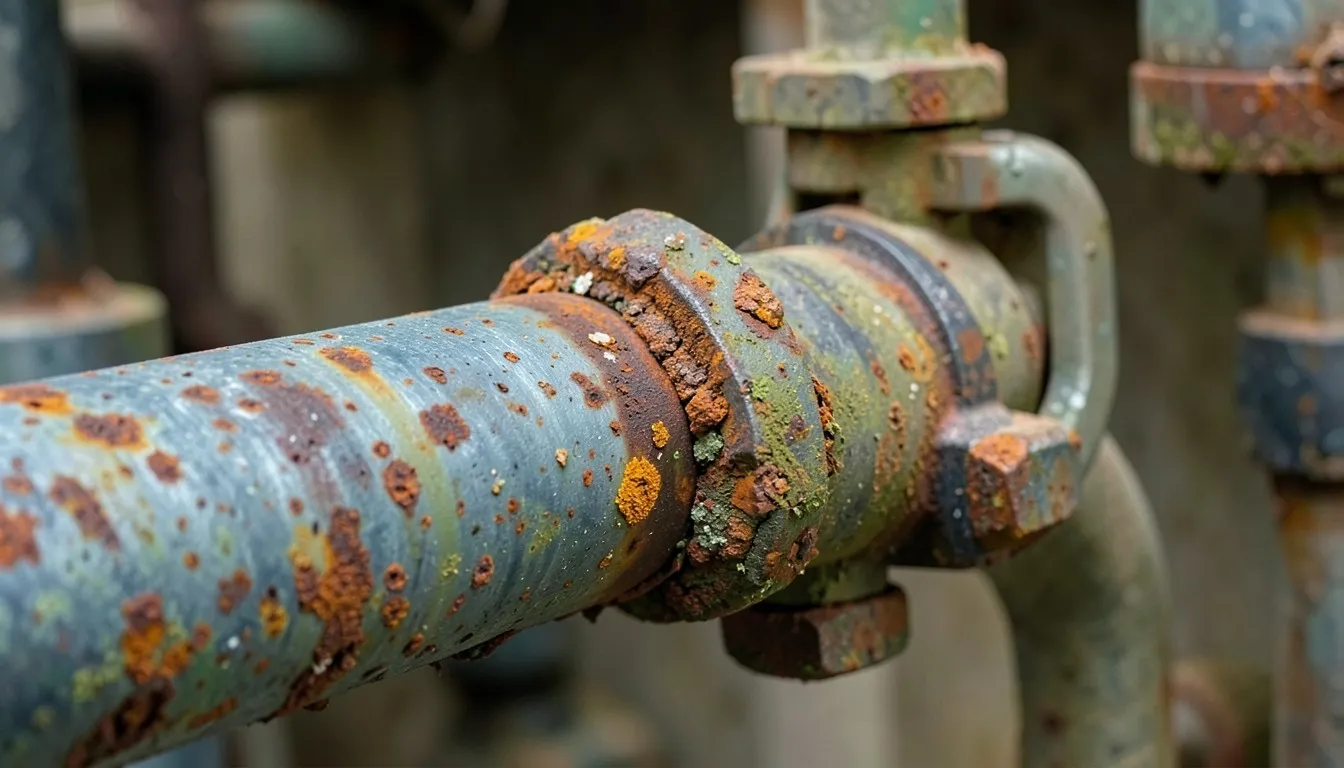
The fix gets cheaper the sooner a plumber sees it.
Degradation problems compound quietly. Call now, or use the form below to reach an independent District of Columbia plumber, and ask for an estimate for the leak detection — you are under no obligation.

Need a leak detection callback in Washington?
In a meeting, with the kids, or just prefer not to call? Drop your ZIP and number below. AlertPlumber sends your request to our routing partner — if a participating plumber serves your area, they may call you back directly. For anything urgent, call the number on this page.
- 1 Submit your info. ZIP, phone, and what kind of work you need.
- 2 AlertPlumber passes it on to our routing partner for your area.
- 3 If a participating plumber serves your area, they may call you back. Ask for a written estimate before work starts.
Leak Detection in Washington — catch it early
Degradation-driven failures worsen over time and cost more to fix the longer they run. Ask the independent DC plumber you reach in Washington to diagnose your specific condition and put the scope in writing before any work begins.