
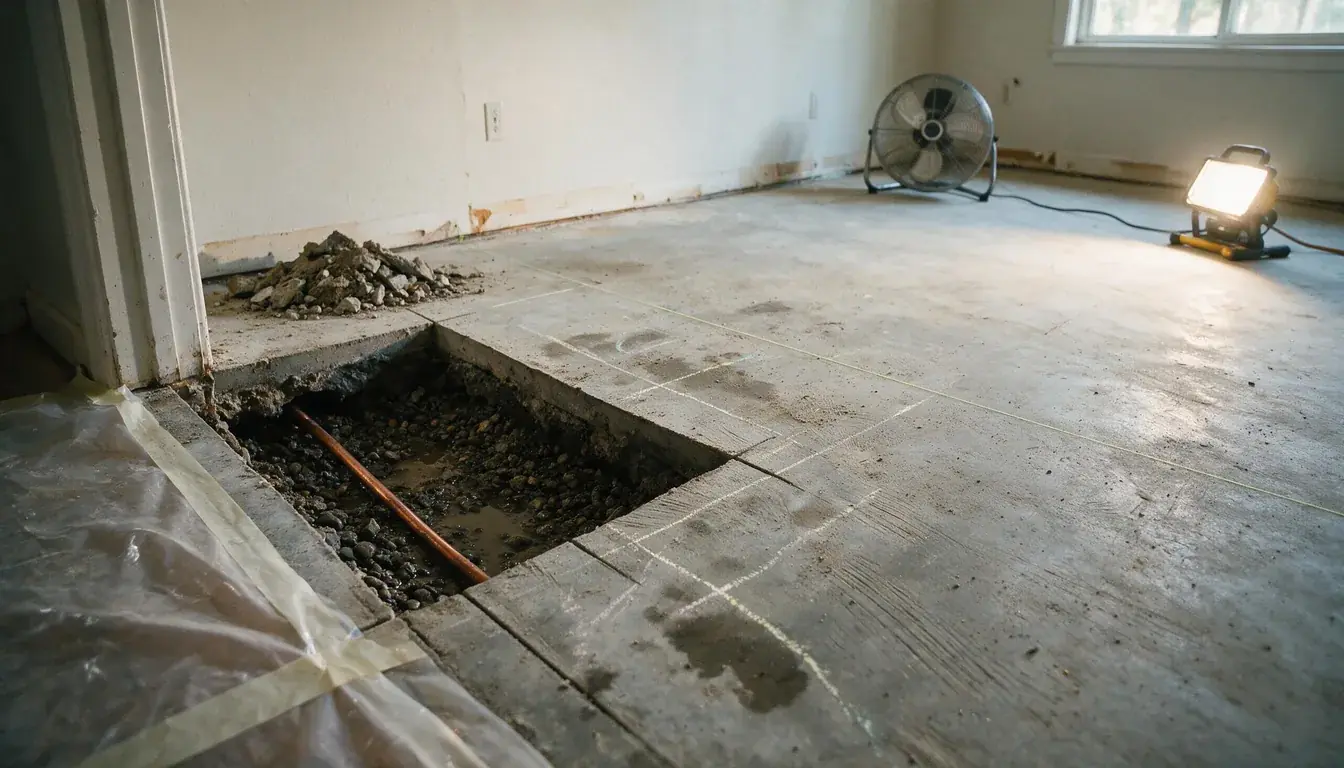
Emergency Slab Leak Repair in Dayton, Ohio
Slab Leak Repair in Dayton, Ohio detects and repairs leaks in pipes beneath the concrete slab foundation. Local conditions in Dayton: water measured at 15, a 32 frost line and a median home age of 79 years.
Camera first, quote second — know exactly what's wrong in your Dayton home before you approve a dollar.
Who do I call for a slab leak in Dayton?
A plumber who does leak detection and slab leak repair. In Dayton, as anywhere, ask whether they locate the leak with detection equipment before any concrete is opened. It is urgent when water is coming up through the floor or the leak is near electrical outlets or appliances.
What does the local plumbing data show for Dayton, OH?
Seeing these conditions at your place in Dayton? Describe them on the call to a state-licensed local plumber — free, no obligation.
What are the pipe conditions in Dayton, OH?
Slab leaks form when copper supply lines embedded in the concrete foundation develop pinholes from electrochemical corrosion, high-velocity water erosion, or slab movement. Dayton homes built during the 1960s–1980s on post-tensioned slabs face the highest slab-leak risk — copper installed at original construction is approaching or past the 50-year corrosion window. Early signs include warm or wet spots on the floor, unexplained water bill spikes, and the sound of running water when all fixtures are closed. AlertPlumber routes your call to an independent Ohio-licensed plumber — ask for acoustic leak location before any slab cutting begins.
Dayton's water utility maintains an active lead service line (LSL) replacement program. With a median home age of 79 years, a portion of the housing stock may still have lead service laterals connecting the water main to interior supply — a consideration during any work near the service entry point. Ask a licensed plumber to confirm whether supply-side work requires utility coordination. Homes of other eras in Dayton may have galvanized pipe, copper pipe or polybutylene supply lines instead; ask the plumber which your home has.
Very hard water in Dayton is a primary driver of accelerated appliance failure: water heater anode rods exhaust in 2–3 years instead of 6–8, scale deposits at fixture connections form within months of installation, and tankless heat exchangers accumulate mineral buildup that can reduce lifespan by half without regular descaling. A softener or whole-house conditioner is strongly recommended alongside any appliance service call.
Frost line depth in Dayton means supply lines and outdoor plumbing must be installed below the freeze threshold — typically 32 — to prevent pipe burst during cold events. Exterior hose bibs, irrigation shutoffs, and any exposed pipe runs are the most common winterization service points in freeze-risk markets.
- Median home age
- 79 yrs
- Water hardness
- 15 gpg
- Frost line
- 32 in.
- Permit
- City fee schedule
Census housing age, Dayton city, Ohio: median year built 1951; 64.7% of homes built before 1960, 85.4% before 1980. Source: U.S. Census Bureau, ACS 2020–2024 5-year estimates, tables B25034 and B25035, read 2026-09-30.
Mention these conditions when you describe the symptom to the OH plumber you reach.
What shapes plumbing demand in Dayton, OH?
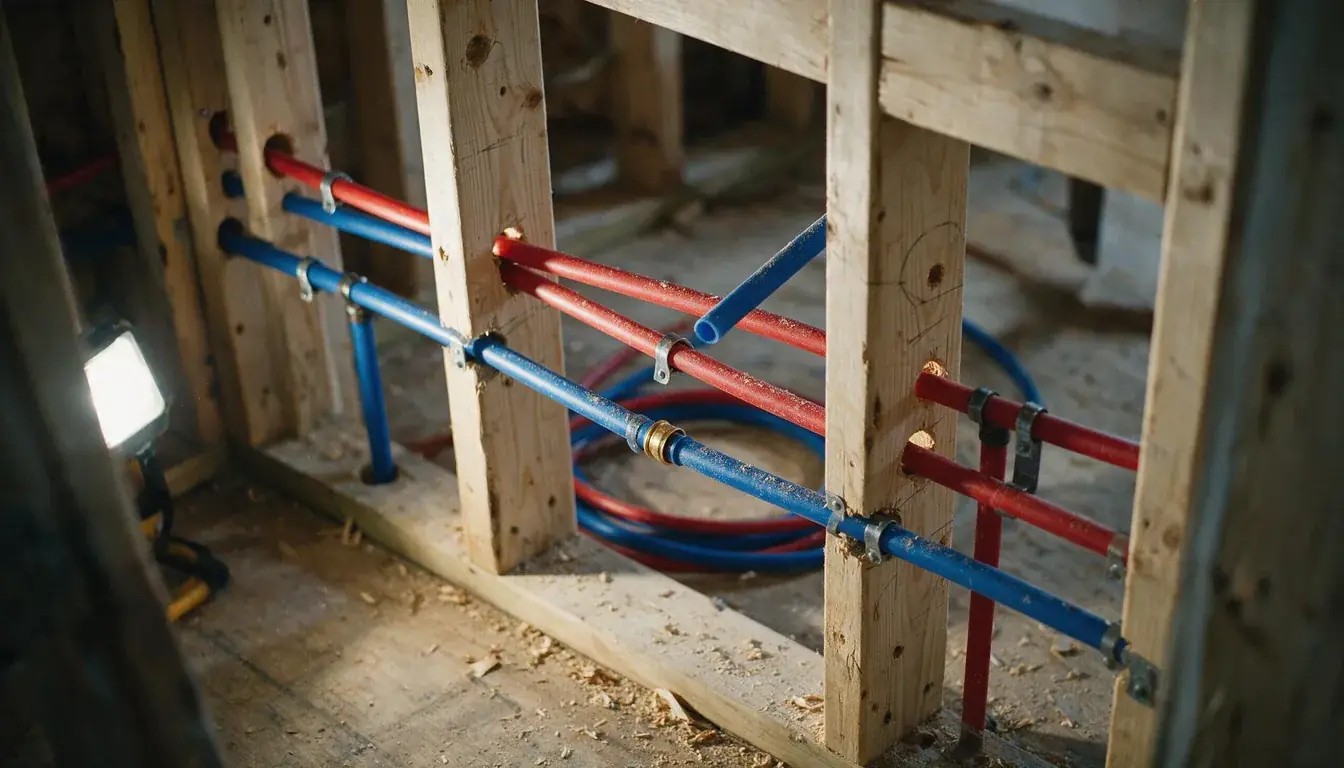
Galvanized supply lines and cast iron drain systems from the 1880s–1940s are past their 40–70-year design life across much of Dayton. Interior rust scale progressively narrows pipe bore. Plumbers here routinely scope supply lines before quoting any repair — the underlying pipe condition often makes full replacement more cost-effective than patching.
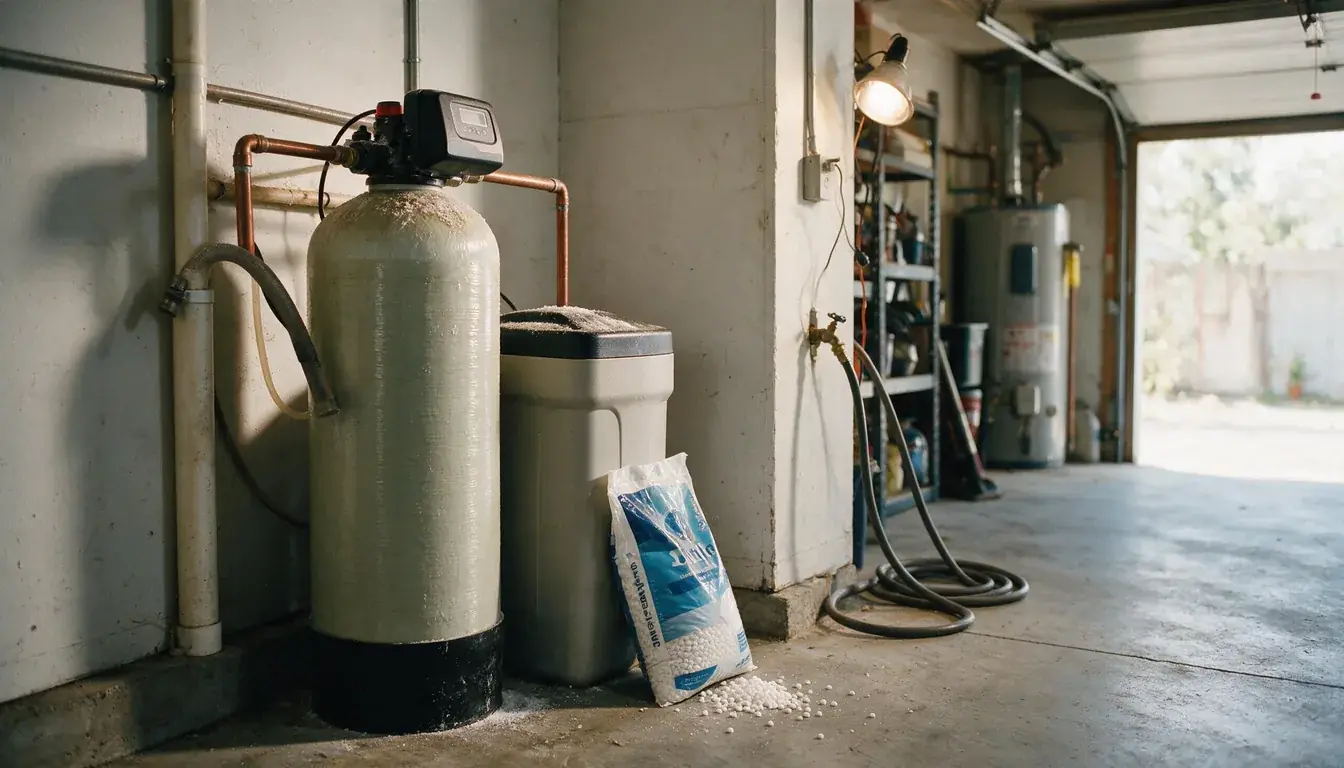
At 15–20+ GPG, calcium scale forces compressed equipment cycles in Dayton: tank heaters average 6–9 years vs. the 10–12-year national benchmark, and tankless units require annual descaling. Anode rods calcify within 12–18 months. Most plumbers here assess heater age against the local scale timeline — not the manufacturer's service life.
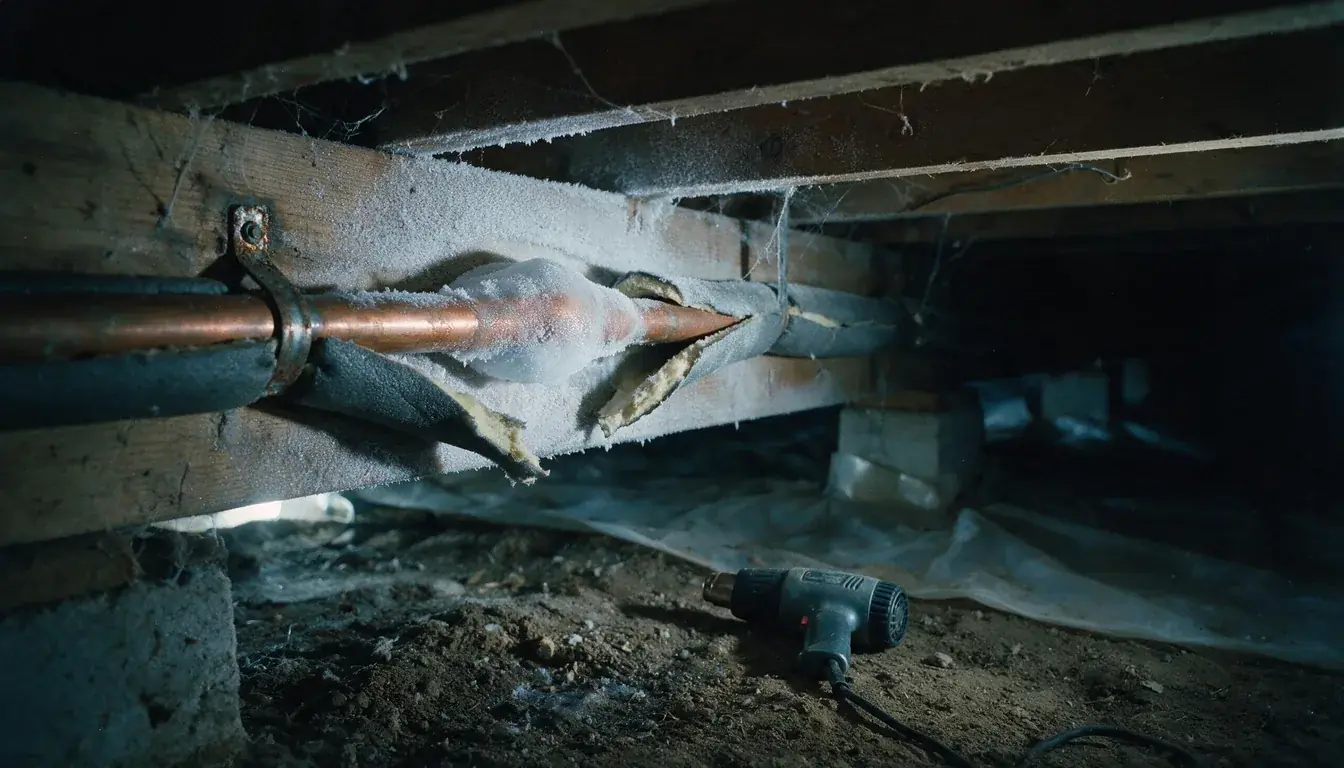
The primary surge in Dayton runs January–March, with a secondary wave at the spring thaw — when pipes that held through the freeze rupture as pressure is restored above 32°F. Scheduling competition peaks exactly when emergency calls are highest. Homeowners who wait for visible damage compete for the same limited plumber slots at the worst possible time.
Why diagnose before repairing in Dayton?
Describe the symptom — not the repair. AlertPlumber routes the call to an independent OH-licensed plumber in its partner's network — ask whether the site visit will use camera tracing, acoustic detection, or hydrostatic pressure testing matched to the reported failure type.
Ask the plumber for a written diagnostic report: confirmed failure location, available repair methods, and tradeoffs — disruption level, material durability, long-term cost, and whether a Dayton building permit applies to the selected method.
You select the repair path. Ask for a fixed scope and price on the authorized method before the Ohio-licensed plumber proceeds and, where required, who files the permit application to Dayton.
Slab Leak Repair cost calculator — Dayton
Pre-filled for slab leak repair in Dayton. Adjust the ZIP for a neighboring area, or change the service to compare. Calculator pulls from the city's scraped permit-fee + state plumber-density data.

Slab Leak Repair emergency in Dayton?
Every hour without a repair increases structural risk and remediation cost. Calls connect to independent local plumbers in our partner's network — ask for an arrival time and a written estimate.
What else do people ask about slab leak repair in Dayton?
Is slab-leak repair even common in Dayton given the Miami Valley basement standard?
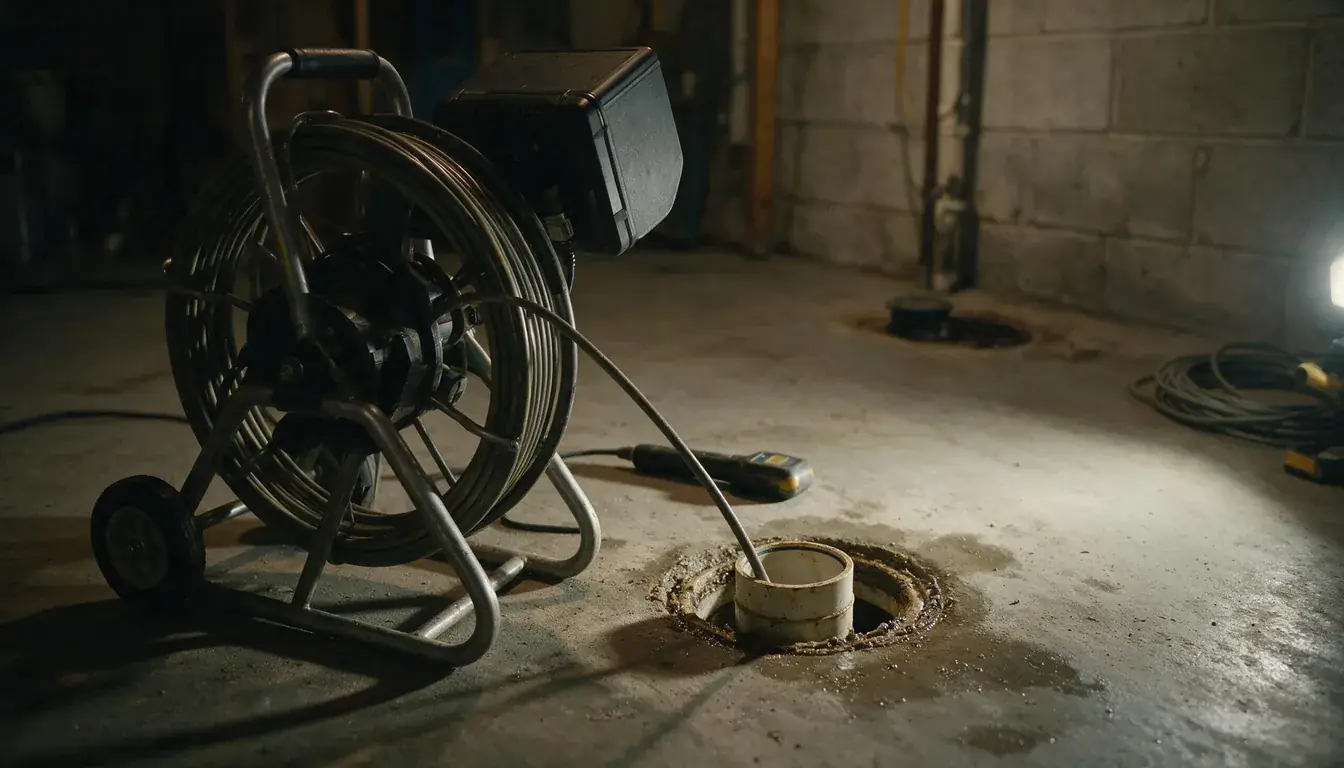
Slab-leak calls in Dayton are a minority of the leak-detection mix because basements are the architectural standard across the Miami Valley housing stock — Oregon District 1820s-1860s stone-foundation construction, St. Anne's Hill and South Park 1880s-1910s brick Victorians, Five Oaks 1910s craftsman, and the bulk of pre-1950 stock all build over full basements with the supply and waste runs in the basement ceiling or accessible. The slab-on-grade subset that drives slab-leak calls concentrates in two specific Dayton segments. (1) Mid-century 1950s-1960s ranch additions in Belmont, Westwood, Madden Hills, and similar inner-ring neighborhoods where post-war single-story builds went up on slab-on-grade foundations with copper supply lines run through the slab pour. (2) Post-1913 flood-rebuild slab pockets downtown where reconstruction after the Great Miami flood used slab-on-grade for some commercial and adapted-residential structures. Outside those two segments, plumbers more often deal with basement-ceiling supply leaks than true slab leaks. The matched plumber confirms the foundation type on the callback before quoting because the detection and repair approach differs entirely.
What does Dayton slab-leak repair cost on a Belmont 1950s ranch addition?
Pricing reflects the two-step nature of slab-leak work — detection, then repair scope selection. Detection across acoustic, thermal-imaging, and tracer-gas methods runs a scope-based price for the diagnostic visit. Spot-repair with surgical slab penetration (cut a 12–18 inch section of slab over the localized leak, repair the copper section, patch slab) runs a scope-based price on a typical Belmont ranch supply line. Re-route around the slab (abandon the failed slab-section run, install a new copper or PEX-A line through accessible wall and ceiling cavities) runs a scope-based price — often the preferred path on Westwood and Madden Hills mid-century slab homes where a single failed copper section signals more failures coming. Full repipe to PEX-A running overhead through walls and attic (never back through the slab) runs a scope-based price on a Dayton-typical 3-bedroom 1950s ranch and is the durable answer when detection finds multiple at-risk hot-side copper branches in the slab. The City of Dayton Building Services permit plus inexpensive inspection apply to all repair scope beyond surgical spot work. AlertPlumber routes to an OH OCILB plumber with active Dayton municipal residential authorization. Price ranges: slab leak repair cost guide.
How fast can a Dayton slab-leak detection crew arrive for an active slab-leak warm-spot?
An active slab leak presents distinct symptoms — a warm spot on flooring where the hot-water line runs through the slab, an unexplained water-meter spin with all fixtures off, or a damp baseboard along an exterior wall. Realistic Miami Valley response by ZIP for an active slab-leak call. Inside-city Dayton (45402, 45403, 45404, 45405, 45406, 45410, 45417): 95–165 minutes weekday business hours, 145–225 minutes 2 a.m.–5 a.m. Outer Montgomery County 45414, 45415, 45419, 45420, 45424, 45426, 45429, 45439, 45449, 45458 (Belmont, Kettering, Centerville, Huber Heights, Trotwood, West Carrollton, Westwood): 125–195 minutes weekday — the highest concentration of slab-on-grade Dayton stock is in these ZIPs so detection equipment is regularly deployed here. Wright-Patterson region 45431, 45432, 45433, 45434 (Beavercreek, Fairborn, base housing): 145–225 minutes. December–February 120-freeze-day window stretches every ETA by 25–45 minutes since the cold-weather hot-water-line stress pattern drives slab-leak symptom emergence. AlertPlumber confirms the detection method on the callback so you can clear furniture from the suspect slab zone.
Do I need a Dayton permit for slab-leak repair and what's the City of Dayton process?
The detection portion of slab-leak work is permit-exempt. Repair work requires the City of Dayton Building Services plumbing permit plus the inexpensive inspection fee for any of the following: spot-repair with slab penetration, re-route around the slab through walls and ceiling, partial or full repipe to PEX-A, or replacement of failed copper supply sections. Ask whether the plumber will pull the permit through City of Dayton Building Services Division on West Third Street and itemize both the permit and inexpensive inspection separately on the written quote. Inspection is scheduled before slab patching closes off any work that needs to be visible at inspection — the inspector confirms pipe material (copper Type L or PEX-A SDR-9 acceptable), joint method (sweat soldered, press-fit, or PEX-A cold-expansion), and supply pressure (working pressure under 80 PSI per IPC § 604.8). Of the 3,420 residential permits Dayton issued in 2024, slab-leak repair permits average a 5–9 business day cycle from filing to final inspection. Greene County addresses route through Greene County Building Department on a parallel schedule. Permit fee ranges: permit fee estimator.
Why does the Great Miami Buried Valley Aquifer's 15 gpg water drive copper-in-slab pinholes?
Mid-century 1950s-1960s Belmont, Westwood, and Madden Hills ranch additions used copper Type M tubing run through the slab pour on the hot-water supply side — that copper has been exposed to 15 gpg very hard Great Miami Buried Valley Aquifer water for 65–75 years now. The sole-source aquifer (EPA-designated under SDWA § 1424(e)) delivers unblended groundwater with elevated calcium, magnesium, and dissolved-oxygen concentrations. Two corrosion mechanisms drive slab-leak pinholes. (1) Type 1 hot-side pitting corrosion. The hot-water side (130–140°F typical Dayton setpoint) accelerates dissolved-oxygen attack at copper grain boundaries — small pits form and gradually penetrate the pipe wall, with hot-side pinholes appearing 30–50% more frequently than cold-side. (2) External slab-contact corrosion. Direct copper-to-concrete contact in the slab pour creates an electrochemical cell where alkaline concrete pH attacks the copper exterior — the failure presents as a leak from the outside-in rather than the inside-out. Both mechanisms cluster around the 60–80 year mark on Dayton mid-century slab-on-grade stock, which means the 1950s-1960s Belmont and Westwood ranch additions are now in peak slab-leak window. The matched plumber's recommendation typically shifts from spot-repair to re-route or full PEX-A repipe once the second slab leak appears within 24 months.
Acoustic, thermal, tracer-gas, or pressure-decay — which Dayton slab-leak detection method?
Method selection follows a slab-specific decision tree. Thermal imaging (FLIR or equivalent) is the first-line method for hot-side slab leaks in Belmont and Westwood mid-century ranch additions — the warm-spot on flooring above the leak reads cleanly on the thermal image when the hot-water side has been recently used, and the matched plumber localizes the leak to within 12–18 inches without any slab penetration. Acoustic detection (200–800 Hz contact microphone on the slab surface) for cold-side slab leaks where thermal contrast is unavailable — picks up the characteristic high-frequency hiss of a pressurized pinhole. Tracer-gas detection (hydrogen-nitrogen 95/5 blend introduced into the isolated supply line) for slab leaks where the slab construction (post-tension cable layout, dense reinforcement, finished flooring) blocks both thermal and acoustic signals. Pressure-decay testing to confirm the leak is in fact in the slab versus a basement-ceiling run that's gravity-draining onto the slab from above — a common Dayton false-positive on partial-basement homes. The matched plumber asks foundation type, suspected leak side (hot vs cold), and observable symptoms on the callback to load the right detection kit for the visit.
Will my Ohio HO-3 cover Dayton slab-leak repair?
Standard Ohio HO-3 policies typically cover sudden-and-accidental slab-leak events — the burst pipe itself plus the consequential damage to flooring, baseboard, drywall, and contents — subject to your deductible. The coverage nuances specific to Dayton's mid-century slab stock: (1) Sudden vs gradual classification. A pinhole that's been slowly seeping for months before discovery may be classified as gradual seepage and denied as preventable. The matched plumber's detection invoice with timestamp helps establish the sudden-discovery date for claim purposes. (2) Access-and-repair coverage caps. Many Ohio HO-3 policies cover the flooring tear-out and slab cutting to access the leak (often called "tear-out coverage") with a separate cap from the leak repair itself — read the schedule because caps run from a scope-based price. (3) Pre-1980 hot-side copper exclusions. Newer endorsement language on some Ohio carriers excludes coverage for chronic-corrosion-driven failures on hot-side copper systems older than 60 years — this affects Belmont and Westwood 1955–1965 ranch additions specifically. (4) Aquifer-water-corrosion exclusions. A small number of carriers exclude hard-water-driven pinhole failures regardless of age. Documentation requirements: detection method invoice, repair invoice, before-and-after photos, and submission within the 14–30 day window your carrier mandates. Price ranges: slab leak repair cost guide.
When is full PEX-A repipe the right answer versus spot-repair in a Dayton mid-century ranch?
Full repipe is the durable answer for Belmont, Westwood, Madden Hills, and similar Dayton mid-century slab-on-grade stock when one or more of the following applies. (1) Second slab leak within 24 months. Once Type 1 pitting corrosion appears on one hot-side branch, neighboring branches are typically within 12–36 months of failure on the same corrosion timeline. (2) Home is past the 60-year mark on original hot-side copper (built 1965 or earlier on 15 gpg sole-source aquifer water). (3) Detection identifies multiple at-risk slab-pass copper sections via acoustic or thermal survey of all hot-side runs. (4) Insurance carrier signals exclusion for the next claim — a common warning that full repipe is the only path forward. PEX-A run overhead through walls and ceilings (and where necessary through the attic) — never back through the slab — is the standard Dayton repipe approach. Per PEX Association, PEX-A in 2026 carries a 25-year manufacturer warranty when installed per spec, and the cross-linked polyethylene is immune to the dissolved-oxygen pitting that drove the original copper failures. The matched plumber documents the as-built repipe routing for both inspection and future homeowner reference.
How does AlertPlumber confirm a Dayton plumber holds the right credentials for slab-leak repair?
Slab-leak work crosses both detection (non-invasive, no permit required) and repair (regulated under City of Dayton Building Services Division). Ohio's split credential framework requires: state-level Ohio OCILB Construction Industry Licensing Board commercial plumbing credential (roughly 5,800 active statewide) for commercial work, plus active City of Dayton municipal residential registration for the work address. Greene County (Beavercreek, Fairborn, Wright-Patterson region) operates a parallel residential registration. AlertPlumber routes slab-leak detection and repair calls to plumbers holding both OH OCILB commercial standing where applicable and the appropriate Dayton or Montgomery County residential authorization. Slab-leak detection equipment proficiency — thermal imager, contact-acoustic geophone, tracer-gas equipment — is not a separate Ohio credential but a contractor-level training matter, and AlertPlumber prioritizes affiliates with documented manufacturer training on at least two detection methods. Confirm OH OCILB status through the Ohio Department of Commerce industrial compliance lookup and Dayton municipal registration through City of Dayton Building Services before authorizing slab penetration or repipe work. The matched plumber provides both credentials on the callback.
What Dayton ZIP codes does AlertPlumber cover for slab-leak repair calls?
AlertPlumber's Miami Valley slab-leak call-out grid covers the full 137,644-resident City of Dayton footprint plus the Montgomery County and Greene County rings, with concentrated coverage of the mid-century slab-on-grade subset. Inside-city ZIPs with slab-on-grade pockets: 45402 (post-1913 flood-rebuild downtown slab pockets), 45405, 45406, 45417 (west-side and Belmont edges). The highest-density slab-on-grade ZIPs are in the Montgomery County ring: 45417, 45418, 45420, 45424, 45429, 45439, 45449, 45458 (Belmont, Westwood, Kettering, Centerville, Huber Heights, West Carrollton, Madden Hills). Wright-Patterson region in Greene County: 45431, 45432, 45433, 45434 (Beavercreek, Fairborn, base housing — including 1960s-1970s base-housing slab construction). Per City of Dayton building stock records, the 1955–1975 mid-century build cohort is concentrated in these outer-ring ZIPs and the slab-leak emergence pattern follows that cohort tightly. Local context. Miami Valley atop the Great Miami Buried Valley Aquifer (EPA-designated sole-source under SDWA § 1424(e)), 15 gpg very hard water at a scope-based price per 1,000 gallons, 120 freeze days, 32" frost line. City of Dayton Department of Water is the operating utility for inside-city addresses with Montgomery County and Greene County districts handling suburban service. Basements remain the Dayton architectural standard so slab-leak calls are a minority of the overall leak-repair mix. Price ranges: slab leak repair cost guide.
One call puts your problem in front of a local plumber.
Call the number, or put your number in the form below — the request goes to an independent Ohio plumber in our partner's network; ask about the slab leak repair and for a written estimate.
Need a slab leak repair callback in Dayton?
In a meeting, with the kids, or just prefer not to call? Drop your ZIP and number below. AlertPlumber sends your request to our routing partner — if a participating plumber serves your area, they may call you back directly. For anything urgent, call the number on this page.
- 1 Submit your info. ZIP, phone, and what kind of work you need.
- 2 AlertPlumber passes it on to our routing partner for your area.
- 3 If a participating plumber serves your area, they may call you back. Ask for a written estimate before work starts.
Slab Leak Repair in Dayton — when to call
Acute plumbing failures cannot wait. AlertPlumber routes calls about slab leak repair in Dayton to independent Ohio plumbers in our partner's network — call now or submit the form above for a callback.