
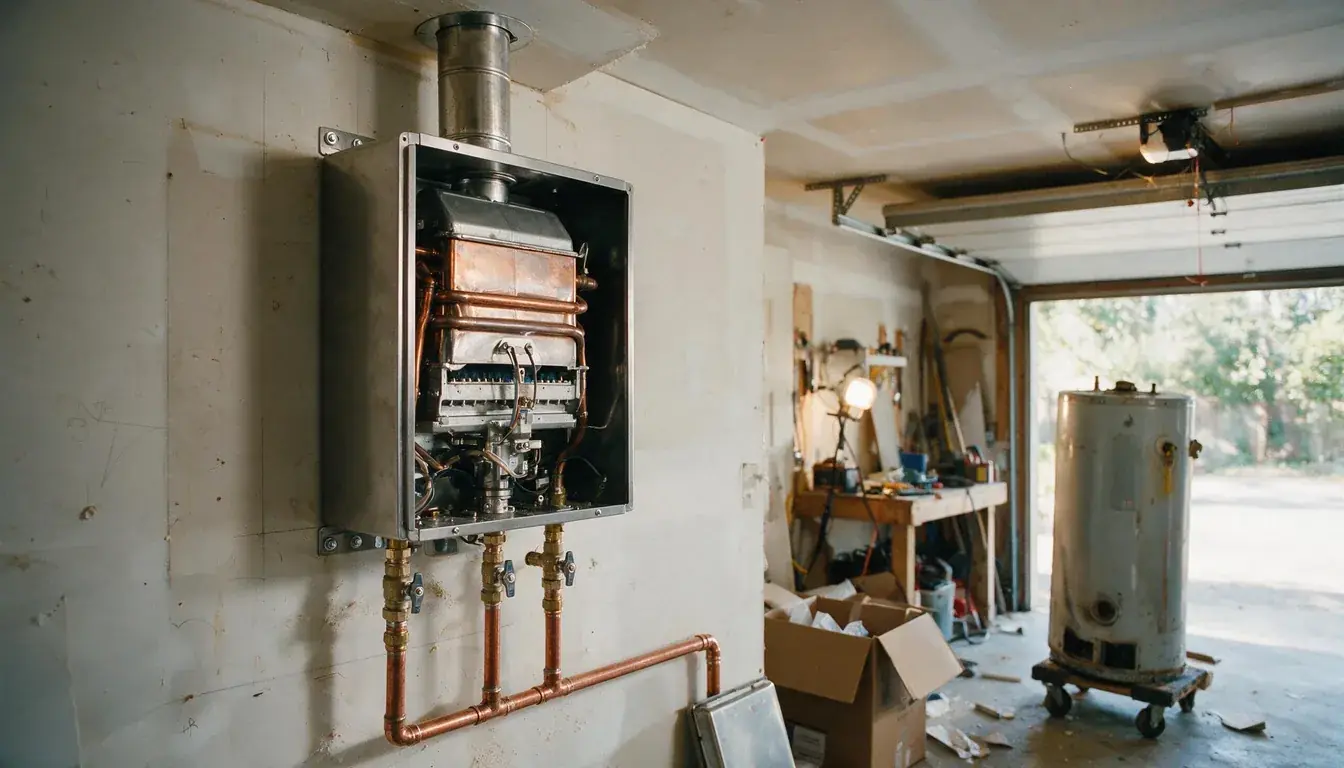
Tankless Water Heater Installation in Dayton, Ohio
Tankless Water Heater Installation in Dayton, Ohio installs gas or electric tankless water heaters with proper venting. Local conditions in Dayton: water measured at 15, a 32 frost line and a median home age of 79 years.
Permitted, inspected, documented — ask for the permit and the license number before Dayton work starts.
Is tankless water heater installation in Dayton, OH the right job?
- Water Heater Repair in Dayton
- Hot water is unreliable or the heater has stopped working, and the existing unit needs troubleshooting and repair.
- Water Heater Installation in Dayton
- An old or leaking tank water heater needs replacement, or a tank water heater is needed where there is none.
What does the local plumbing data show for Dayton, OH?
Seeing these conditions at your place in Dayton? Describe them on the call to a state-licensed local plumber — free, no obligation.
What are the pipe conditions in Dayton, OH?
Tankless water heater installation in Dayton requires matching the unit's BTU capacity to the home's peak simultaneous demand — undersized units produce cold sandwiches at full hot draw. Hard water markets require an upstream softener or scale inhibitor to protect the heat exchanger; without it, mineral buildup cuts heat-exchanger life by 30–50%. Gas-powered units need a dedicated large-diameter gas line; electric units require significant electrical panel capacity. AlertPlumber routes your call to an independent Ohio-licensed plumber — ask for a load calculation before any unit is specified. Freeze events and frost-depth requirements add pipe insulation, exterior faucet winterization, and burst-risk assessment to service calls in this climate.
Dayton's water utility maintains an active lead service line (LSL) replacement program. With a median home age of 79 years, a portion of the housing stock may still have lead service laterals connecting the water main to interior supply — a consideration during any work near the service entry point. Ask a licensed plumber to confirm whether supply-side work requires utility coordination. Homes of other eras in Dayton may have galvanized pipe, copper pipe or polybutylene supply lines instead; ask the plumber which your home has.
Very hard water in Dayton is a primary driver of accelerated appliance failure: water heater anode rods exhaust in 2–3 years instead of 6–8, scale deposits at fixture connections form within months of installation, and tankless heat exchangers accumulate mineral buildup that can reduce lifespan by half without regular descaling. A softener or whole-house conditioner is strongly recommended alongside any appliance service call.
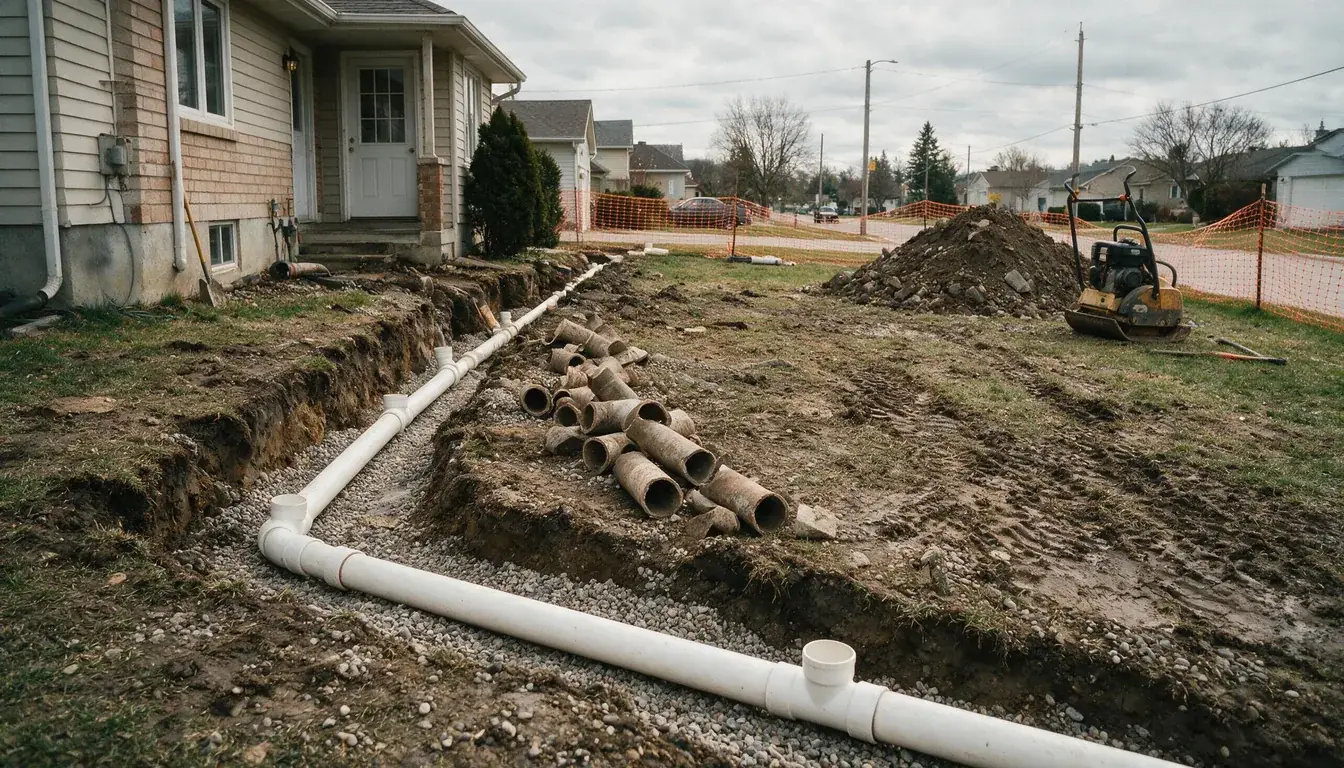
Frost line depth in Dayton means supply lines and outdoor plumbing must be installed below the freeze threshold — typically 32 — to prevent pipe burst during cold events. Exterior hose bibs, irrigation shutoffs, and any exposed pipe runs are the most common winterization service points in freeze-risk markets.
- Median home age
- 79 yrs
- Water hardness
- 15 gpg
- Frost line
- 32 in.
- Lead lines
- Active replacement
- Permit
- City fee schedule
Census housing age, Dayton city, Ohio: median year built 1951; 64.7% of homes built before 1960, 85.4% before 1980. Source: U.S. Census Bureau, ACS 2020–2024 5-year estimates, tables B25034 and B25035, read 2026-09-30.
Mention these conditions when you describe the symptom to the OH plumber you reach.
What shapes plumbing demand in Dayton, OH?
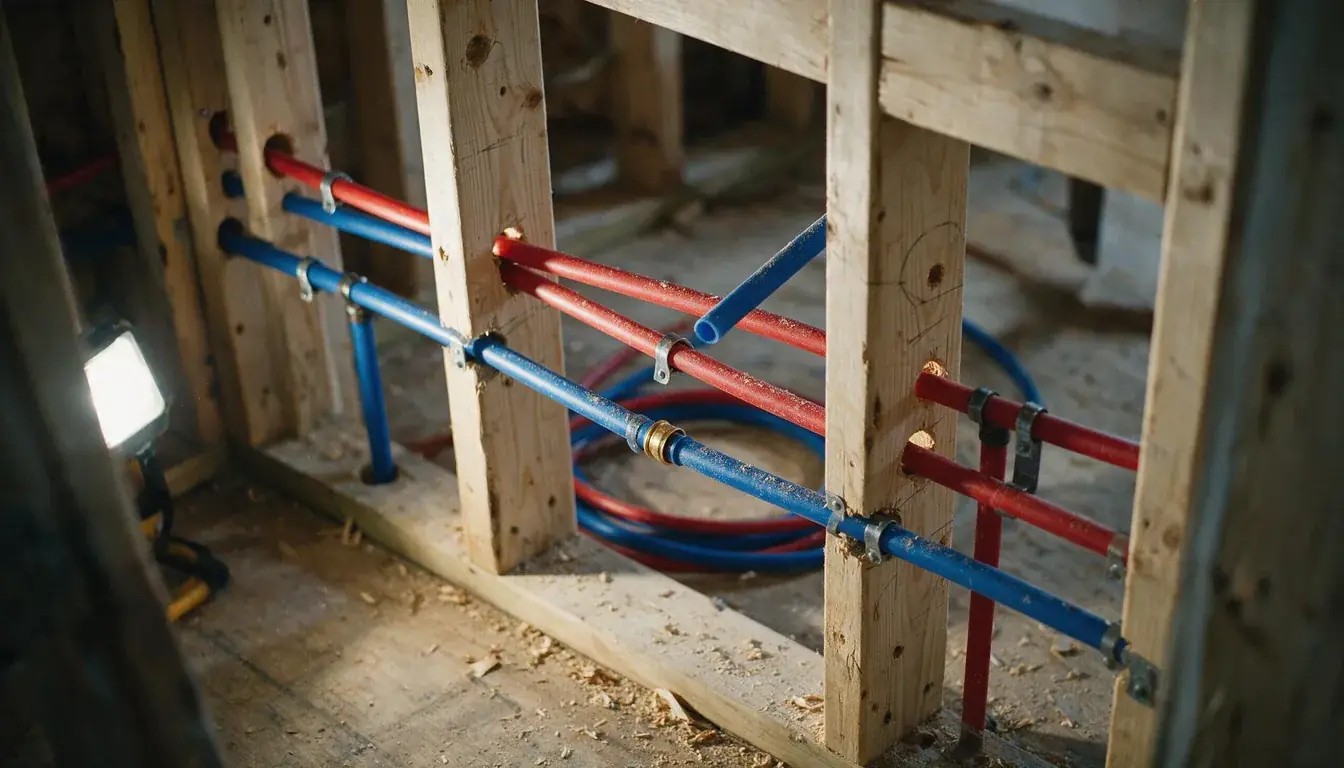
Galvanized supply lines and cast iron drain systems from the 1880s–1940s are past their 40–70-year design life across much of Dayton. Interior rust scale progressively narrows pipe bore. Plumbers here routinely scope supply lines before quoting any repair — the underlying pipe condition often makes full replacement more cost-effective than patching.
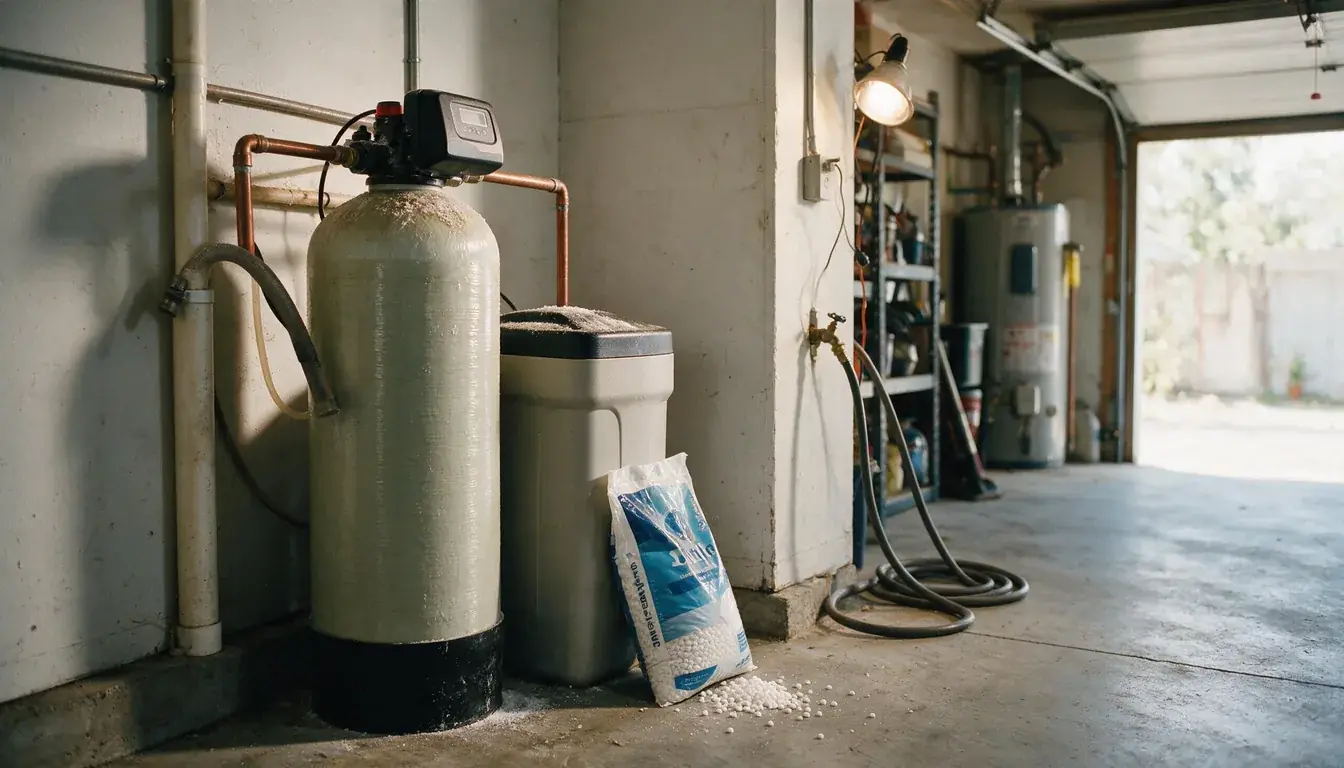
At 15–20+ GPG, calcium scale forces compressed equipment cycles in Dayton: tank heaters average 6–9 years vs. the 10–12-year national benchmark, and tankless units require annual descaling. Anode rods calcify within 12–18 months. Most plumbers here assess heater age against the local scale timeline — not the manufacturer's service life.
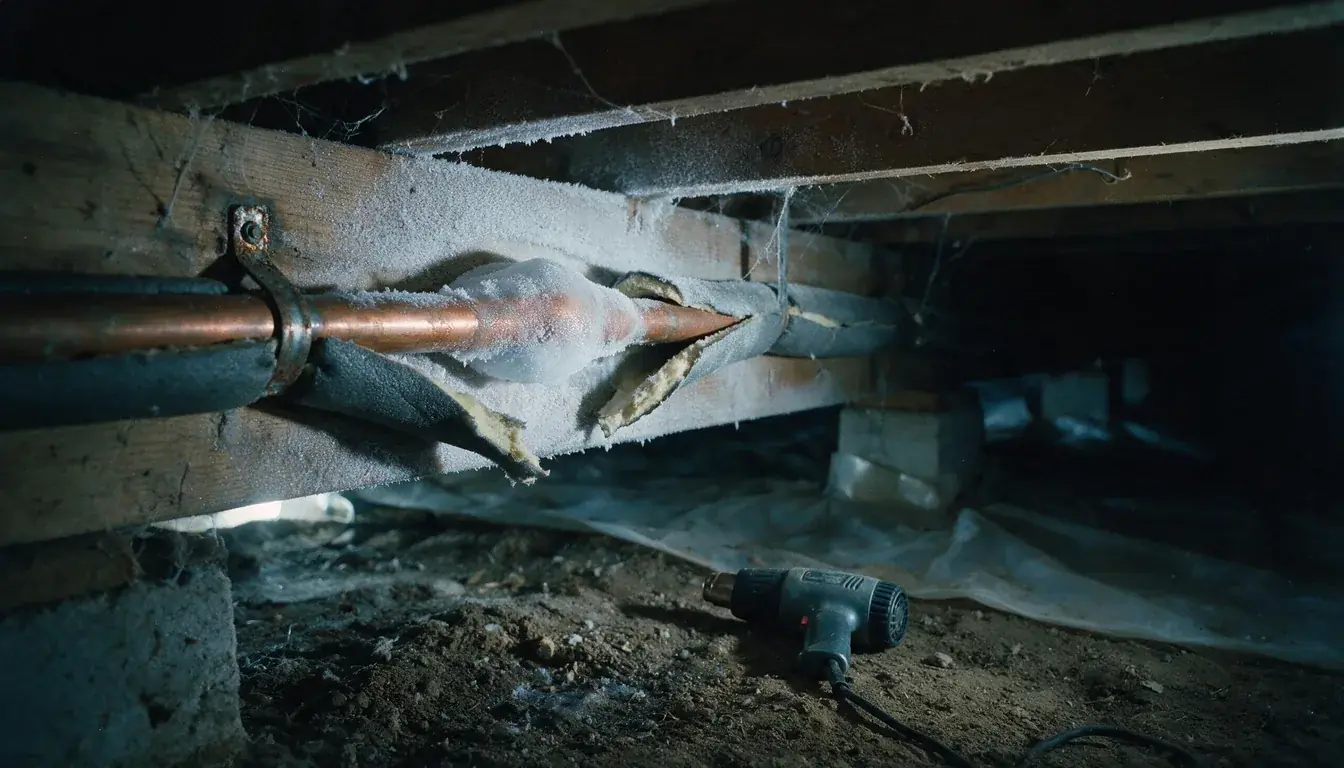
The primary surge in Dayton runs January–March, with a secondary wave at the spring thaw — when pipes that held through the freeze rupture as pressure is restored above 32°F. Scheduling competition peaks exactly when emergency calls are highest. Homeowners who wait for visible damage compete for the same limited plumber slots at the worst possible time.
Should you repair or replace a water heater in Dayton?
- Where the water is coming from: ask whether a leak is at a replaceable part (a valve, fitting or drain valve) or the tank itself — the answer usually decides repair versus replacement.
- Age: the rating plate or serial number shows when the unit was made. Ask the plumber how old yours is and how that changes the advice.
- Symptom: no hot water, not enough hot water, rusty water or rumbling each point to different parts. Ask which part has failed and whether the rest of the unit is sound.
- Fit: if the size and fuel type have suited your household, a like-for-like replacement keeps the job simple.
85.4% of Dayton homes were built before 1980 and the median home was built in 1951 (U.S. Census Bureau, ACS 2020–2024). In an older home, ask the plumber to look at the shutoff valve and supply connections at the same visit.
“If your current water heater meets your needs most of the time, you can probably replace it with one the same size.”
— ENERGY STAR (U.S. EPA), read 2026-10-01
“To make your life easier, plan ahead for your next water heater replacement and you will have time to research and select the best technology for your situation before it's an emergency.”
— ENERGY STAR (U.S. EPA), read 2026-10-01
Price ranges live on the cost guides: water heater repair cost → · water heater replacement cost → · signs a water heater needs replacing →
Tank or tankless: which water heater fits a Dayton home?
- Sizing works differently: ask the plumber to size a tankless unit from the fixtures you run at the same time, not from the old tank’s gallons.
- For a gas tankless unit, ask whether the gas line and venting need changes; for an electric one, whether the electrical panel can carry it.
- Replacing like for like is usually the simpler job; switching type changes the installation, so ask for both options in writing.
“While the capacity of gas storage water heaters is based on the number of gallons that will fit in the tank, tankless models are rated by how many gallons of hot water they produce per minute (GPM).”
— ENERGY STAR (U.S. EPA), read 2026-10-01
“By heating water only when it's needed, ENERGY STAR certified gas tankless water heaters cut water heating expenses, while also providing continuous hot water delivery.”
— ENERGY STAR (U.S. EPA), read 2026-10-01
Gas water heaters: if you smell gas, the Public Service Commission of Wisconsin says:
“If you smell natural gas leave the area immediately and, from a safe distance outdoors, call the local gas utility's emergency number or 911.”
— Public Service Commission of Wisconsin, read 2026-09-29
Tankless vs tank water heater compared → · tankless installation cost → · tankless sizing guide → · Water Heater Repair in Dayton → · Water Heater Installation in Dayton →
How does permit-required work run in Dayton, application through certificate?
The Ohio contractor prepares the permit application — drawings, specifications, contractor license number (ask for it) — and submits it to the Dayton building department. Issuance typically takes 3–10 business days. No construction begins until the permit is in hand.
Once Dayton issues the permit, the contractor notifies affected utilities — gas, water, electrical — as required by the permit scope. Work follows the approved drawings; any scope change requires an amended permit before that portion starts.
The contractor schedules the final inspection with the Dayton building department inspector. After sign-off, a certificate of completion is issued. All permit documentation is filed with the city; you receive copies for home records and future property disclosure.
Tankless Water Heater Installation cost calculator — Dayton
Pre-filled for tankless water heater installation in Dayton. Adjust the ZIP for a neighboring area, or change the service to compare. Calculator pulls from the city's scraped permit-fee + state plumber-density data.
Ready to move forward on tankless water heater installation in Dayton?
Lead times for equipment and scheduling vary by season. Ask the plumber you reach about availability and a written estimate — and settle timing before demand peaks.
What else do people ask about tankless water heater installation in Dayton?
How much does tankless water heater installation cost in Dayton, OH?
Tankless water heater installation in Dayton typically runs roughly 5% below the national average for Dayton labor. The city's OH COS permit floor is set by the local fee schedule. Final cost depends on whether you're swapping a tank for tankless (often requires gas line upsize and new venting) or doing a like-for-like tankless replacement. Price ranges: tankless water heater installation cost guide.
Should I install a gas or electric tankless heater in Dayton?
Most Dayton homes run gas tankless because natural-gas BTU output handles whole-home demand more economically than electric. Electric tankless suits small homes, ADUs, or point-of-use applications. Confirm gas-line capacity (3/4" minimum typical) with the independent Ohio plumber during the site visit.
Do I need a permit for tankless installation in Dayton?
Yes. Dayton requires a plumbing permit (OH COS) for any water-heater swap, with a floor of the scheduled fee plus inspection. Gas-line modifications and new venting penetrations also fall under the permit. Ask whether the plumber will pull the permit on your behalf and schedule the inspection. Permit fee ranges: permit fee estimator.
Will Dayton water quality affect my tankless heater?
Dayton water hardness sits at 8 gpg. Scale buildup is minimal at this hardness, but a sediment pre-filter is still recommended to protect the heat exchanger. Plan to flush the unit annually with white vinegar or descaling solution either way.
How fast can a tankless installer arrive in Dayton?
Tankless installation is scheduled work, not emergency, so most Dayton-area plumbers in the AlertPlumber network book within 2–5 business days. If your existing tank failed and you need hot water before the tankless install, the matched plumber can typically install a temporary spot-replacement or expedite the tankless swap. ETAs depend on whether parts are stocked locally or need overnight shipping.
How do I protect a tankless heater from Dayton winter freeze?
Dayton sees ~113 sub-32°F days/yr with a 36" frost depth, so interior-mount tankless units are the standard install — exterior-mount requires built-in freeze protection and a heated/insulated enclosure. Always insulate exterior plumbing lines either way.
Will my existing gas line and venting work for a tankless unit in Dayton?
It depends on home age. Dayton's median home age is 68 years (1920s-60s clay). Pre-1990 homes often have 1/2" gas branches that need upsizing to 3/4" for a 199K BTU tankless. Venting also changes — tankless requires either Category III stainless or PVC concentric venting routed to an exterior wall, not the old B-vent up through the roof. The plumber assesses both during the quote visit.
What's the payback period for switching to tankless in Dayton?
Tankless units run 22–34% more efficient than a 50-gallon tank at typical Ohio usage patterns. Dayton's long heating season (113+ cold days) means higher hot-water demand and faster payback — typically 8–12 years. The unit's ~20-year service life usually outlasts the payback window.
What venting is required for tankless installation in Dayton?
Modern condensing tankless heaters use direct-vent (sealed combustion) through Schedule 40 PVC or polypropylene to an exterior wall — no chimney needed. Dayton code under OH COS requires a minimum 12" clearance from windows/doors and 36" from forced-air intakes. Power-vent (non-condensing) units use Category III stainless and exhaust horizontally. The installer confirms termination clearances during the permit walkthrough.
How do I check the license of tankless installers in OH?
AlertPlumber does not vet plumbers: for Dayton tankless work, ask for the OH COS license number and check it with the state board. Many also hold the manufacturer-specific factory certification (Rinnai, Navien, Rheem) required to honor the unit's full parts-and-labor warranty.
Asking for a written quote costs you nothing. Guessing costs you the job.
The form below takes under a minute — it goes to an independent Ohio plumber in our partner's network; ask them to scope the tankless water heater installation and put the quote in writing.
Need a tankless water heater installation callback in Dayton?
In a meeting, with the kids, or just prefer not to call? Drop your ZIP and number below. AlertPlumber sends your request to our routing partner — if a participating plumber serves your area, they may call you back directly. For anything urgent, call the number on this page.
- 1 Submit your info. ZIP, phone, and what kind of work you need.
- 2 AlertPlumber passes it on to our routing partner for your area.
- 3 If a participating plumber serves your area, they may call you back. Ask for a written estimate before work starts.
Tankless Water Heater Installation in Dayton — scope and schedule
AlertPlumber connects your call with an independent OH plumber for tankless water heater installation in Dayton. Ask for a written estimate and permit coordination; you are under no obligation until you approve a quote.