
Emergency Slab Leak Repair in Honolulu, Hawaii
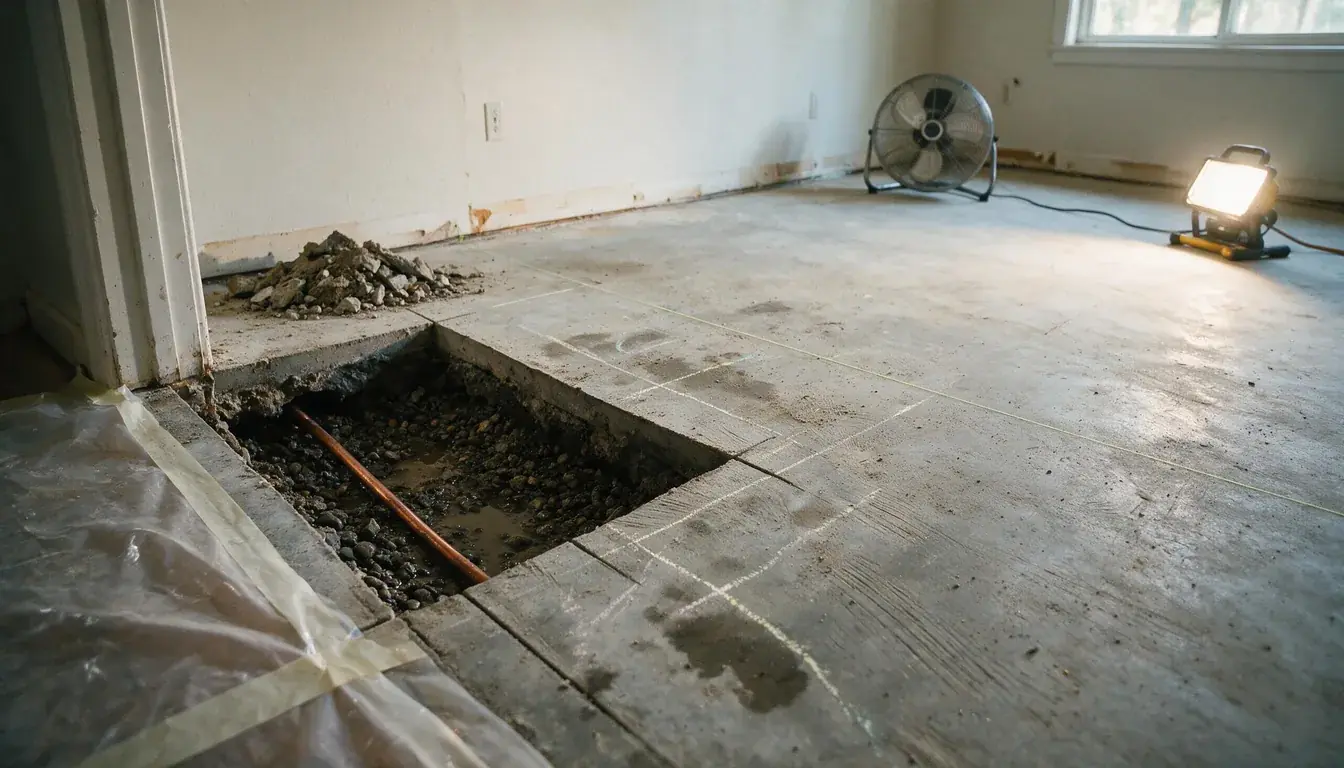
Slab Leak Repair in Honolulu, Hawaii detects and repairs leaks in pipes beneath the concrete slab foundation. Local conditions in Honolulu: water measured at 2, a 0 frost line and a median home age of 52 years.
Camera first, quote second — know exactly what's wrong in your Honolulu home before you approve a dollar.
Is slab leak repair in Honolulu, HI the right job?
- Burst Pipe Repair in Honolulu
- Water is spraying or leaking from a visibly split pipe, and the damaged section needs repair.
- Frozen Pipe Repair in Honolulu
- A tap has stopped flowing in freezing weather, and a frozen pipe needs to be checked and thawed.
- Water Line Repair in Honolulu
- Low pressure or water pooling between the meter and the house may point to an incoming water line that needs repair.
- Leak Detection in Honolulu
- Water is disappearing, a meter keeps moving with taps off, or damp spots keep returning, and the leak's location is unclear.
Who do I call for a slab leak in Honolulu?
A plumber who does leak detection and slab leak repair. In Honolulu, as anywhere, ask whether they locate the leak with detection equipment before any concrete is opened. It is urgent when water is coming up through the floor or the leak is near electrical outlets or appliances.
What does the local plumbing data show for Honolulu, HI?
Seeing these conditions at your place in Honolulu? Describe them on the call to a state-licensed local plumber — free, no obligation.
What are the pipe conditions in Honolulu, HI?
Slab leaks form when copper supply lines embedded in the concrete foundation develop pinholes from electrochemical corrosion, high-velocity water erosion, or slab movement. Honolulu homes built during the 1960s–1980s on post-tensioned slabs face the highest slab-leak risk — copper installed at original construction is approaching or past the 50-year corrosion window. Early signs include warm or wet spots on the floor, unexplained water bill spikes, and the sound of running water when all fixtures are closed. AlertPlumber routes your call to an independent Hawaii-licensed plumber — ask for acoustic leak location before any slab cutting begins.
Honolulu's housing stock spans multiple construction eras — median home age 52 years — meaning pipe materials and failure modes vary significantly by neighborhood and building vintage. An inspection-led approach that confirms pipe material before recommending a service path is standard practice for mixed housing profiles. Homes of other eras in Honolulu may have galvanized pipe, copper pipe or polybutylene supply lines instead; ask the plumber which your home has.
- Median home age
- 52 yrs
- Water hardness
- 2 gpg
- Frost line
- 0 in.
- Permit
- City fee schedule
Census housing age, Urban Honolulu CDP, Hawaii: median year built 1974; 20.8% of homes built before 1960, 65.4% before 1980. Source: U.S. Census Bureau, ACS 2020–2024 5-year estimates, tables B25034 and B25035, read 2026-09-30.
Mention these conditions when you describe the symptom to the HI plumber you reach.
What shapes plumbing demand in Honolulu, HI?
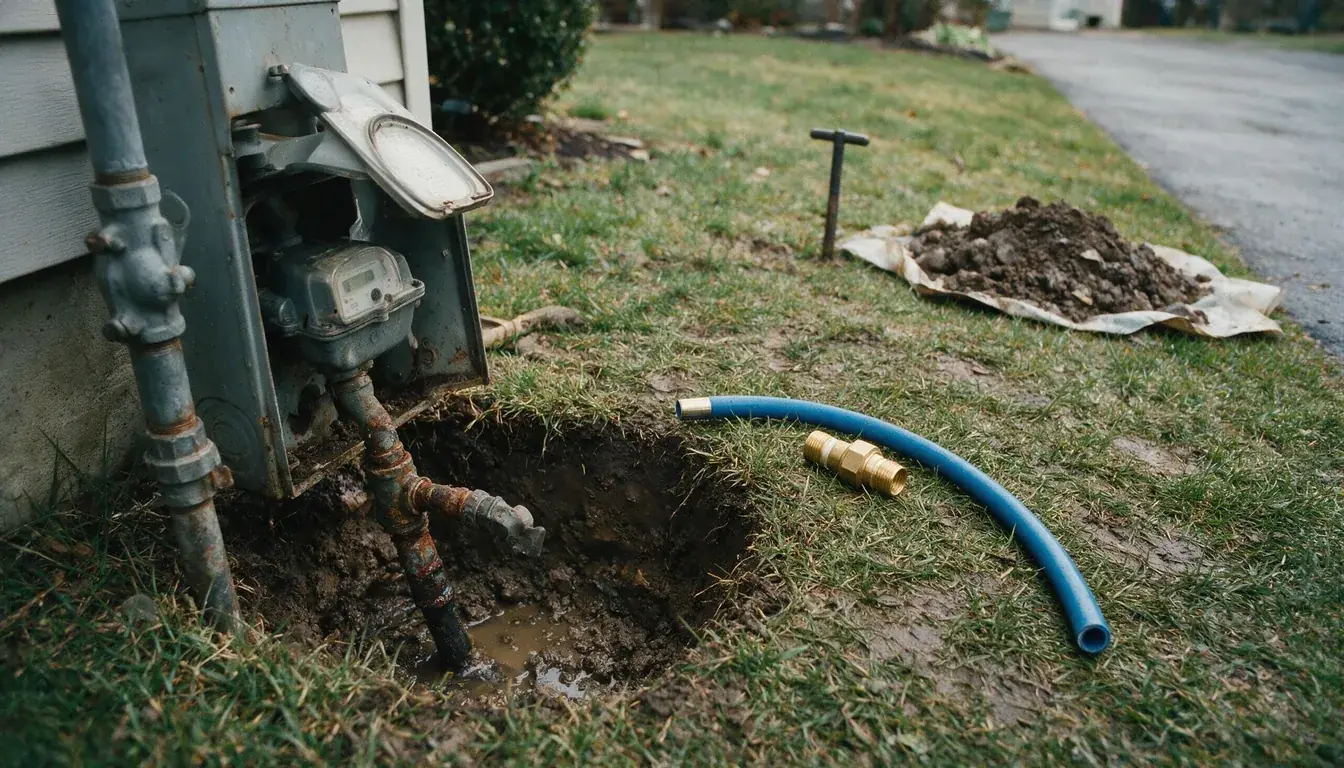
1950s–70s copper supply is now 50–70 years into its service cycle in Honolulu. Thermal fatigue at fittings and slab-on-grade access complexity — common in Sun Belt construction — make repair vs. replacement a live decision on most jobs. This housing cohort is the active primary replacement wave in this market.
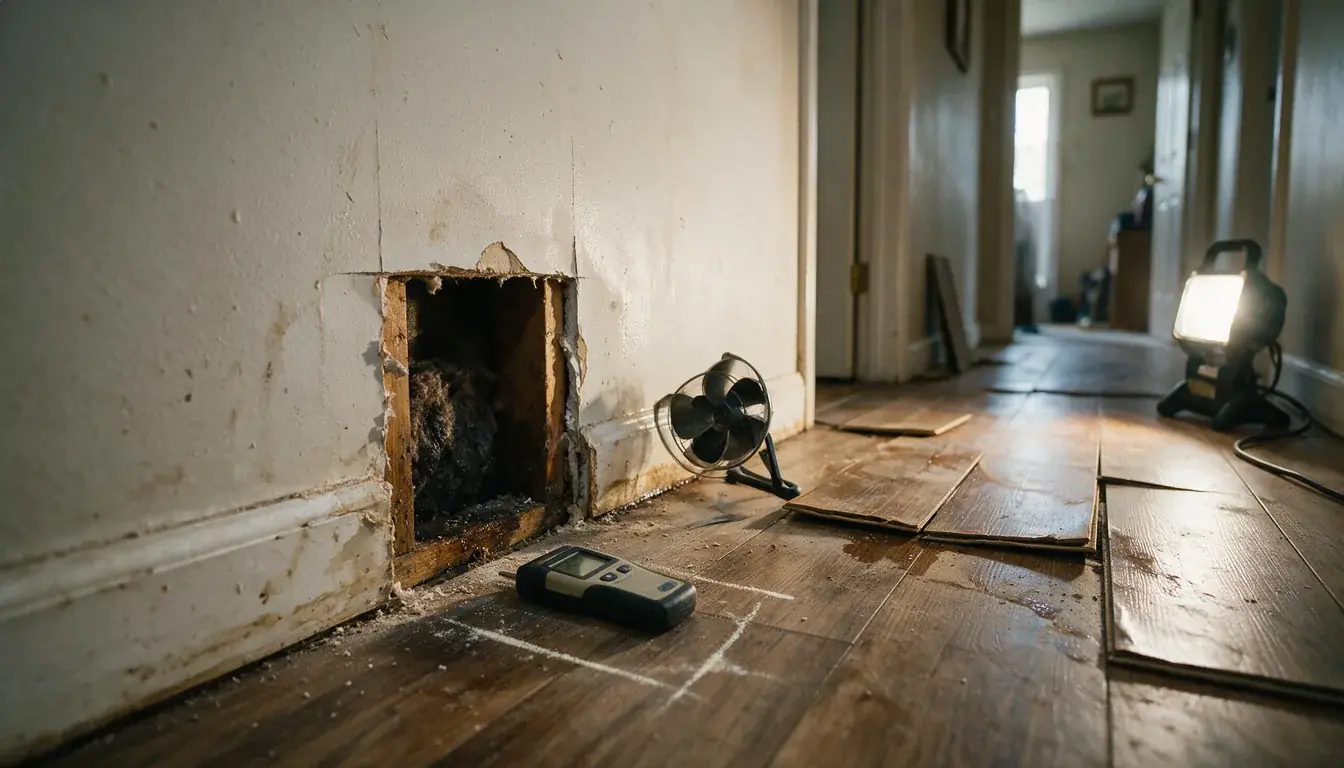
Soft, slightly acidic water in Honolulu is corrosive to copper pipe and solder joints — the opposite failure pattern from hard-water markets. Pinhole failure at fittings and elbows is the dominant non-emergency repair category. Anode rods also deplete faster in soft water, shortening effective tank life without timely replacement.
Summer heat above 95–115°F in Honolulu keeps sediment in suspension inside tank water heaters — accelerating element failure instead of allowing sediment to settle and flush. Attic-mounted supply lines face diurnal thermal stress year-round. Root intrusion concentrates around irrigated landscaping rather than distributing evenly across the full sewer lateral path.
Why diagnose before repairing in Honolulu?
Describe the symptom — not the repair. AlertPlumber routes the call to an independent HI-licensed plumber in its partner's network — ask whether the site visit will use camera tracing, acoustic detection, or hydrostatic pressure testing matched to the reported failure type.
Ask the plumber for a written diagnostic report: confirmed failure location, available repair methods, and tradeoffs — disruption level, material durability, long-term cost, and whether a Honolulu building permit applies to the selected method.
You select the repair path. Ask for a fixed scope and price on the authorized method before the Hawaii-licensed plumber proceeds and, where required, who files the permit application to Honolulu.
Slab Leak Repair cost calculator — Honolulu
Pre-filled for slab leak repair in Honolulu. Adjust the ZIP for a neighboring area, or change the service to compare. Calculator pulls from the city's scraped permit-fee + state plumber-density data.
Slab Leak Repair emergency in Honolulu?
Every hour without a repair increases structural risk and remediation cost. Calls connect to independent local plumbers in our partner's network — ask for an arrival time and a written estimate.
What else do people ask about slab leak repair in Honolulu?
How much does slab leak repair cost in Honolulu, HI?
Honolulu slab leak repair runs a scope-based price for a single spot-repair under slab (concrete cut, pipe section replacement, finish restoration), a scope-based price for a partial re-route through ceiling or wall cavity that bypasses the failed under-slab run, and a scope-based price for full slab-side re-pipe of supply lines on a Diamond Head, Kahala, or Hawaii Kai slab-on-coral home. The Honolulu Department of Planning and Permitting permit-and-inspection floor applies to all slab leak work. AlertPlumber routes calls to plumbers with active Hawaii DCCA C-37 plumbing contractor credentials (~4,200 statewide). Pacific freight on PEX, copper, and CIPP components means most slab-leak repair projects schedule 2-4 weeks out for non-emergency scope. Price ranges: slab leak repair cost guide.
Are slab leaks common in Honolulu, HI homes?
Yes — Honolulu is one of the higher slab-leak incidence rate cities nationally for its age cohort. Three reasons. First, slab-on-grade is dominant: post-WWII single-family in Diamond Head, Kahala, Hawaii Kai, and most newer East Honolulu subdivisions was built slab on coral pad or slab on lava-rock foundation, where copper supply runs through the slab pour. Second, salt-air trade-wind exposure on south-shore properties accelerates copper failure from outside-in. Third, 2 gpg ultra-soft BWS volcanic basal-aquifer water per USGS hardness classification runs corrosive-not-scaling, attacking copper from inside-out simultaneously. Pre-WWII Manoa craftsman is more often pier-and-post-on-slab, and Chinatown 1880s-1920s is wood-frame on stone foundation — those neighborhoods see fewer slab leaks. Slab-leak concentration is specifically a Diamond Head/Kahala/Hawaii Kai/East Honolulu post-WWII sub-market issue.
Why does Honolulu salt-air trade-wind exposure attack slab copper?
South-shore Diamond Head, Kahala, and Hawaii Kai properties face direct Pacific trade-wind chloride aerosol exposure. The trade winds carry sea-salt particles inland, depositing chloride on every exposed surface — including the exterior wall and yard around the home where copper supply lines enter the building. Salt-air chloride drives copper corrosion through chloride-induced pitting at the metal surface, working from outside-in. Combined with the inside-out corrosion from 2 gpg ultra-soft BWS water, slab-embedded copper supply runs face attack from both directions simultaneously. 50-70 years of that combined chemistry on Diamond Head/Kahala post-WWII single-family has reached the documented pinhole-failure window. The matched plumber detects with acoustic plus thermal across the slab grid and quotes spot repair, re-route, or full re-pipe based on detection findings.
Why is Hawaii Kai dredge-fill particularly hard on slab supply lines?
Hawaii Kai was developed across the 1960s-70s on an engineered dredge-fill of Kuapa Pond. The dredge-fill subgrade has continued to consolidate and settle for six decades, and that settlement stresses slab-embedded copper supply runs at every elbow, tee, and turn. Stress-cracking at soldered joints develops where the slab has settled differentially under one section of the home versus another. The matched plumber adds eddy-current testing on adjacent supply sections in Hawaii Kai to confirm wall thickness on the home's overall copper system — if multiple sections show end-of-life wall thickness, full re-pipe is the cost-effective path rather than serial spot repairs. Hawaii Kai slab-leak detection-plus-repair is one of the larger AlertPlumber call-out categories on Oahu given the concentration of 1960s-70s slab housing combined with subgrade settlement.
Why does 2 gpg ultra-soft BWS water cause slab leaks?
The Honolulu Board of Water Supply volcanic basal-aquifer drawing from the Pearl Harbor and Honolulu aquifer systems is exceptionally soft at 2 gpg per USGS hardness classification. Soft water doesn't scale, which is normally a win, but it runs corrosive-not-scaling and erodes the protective oxide layer that hard-water cities form naturally inside copper pipes. Over 50-70 years, that erosion thins copper wall and creates pinhole leaks at high-flow points (elbows, tees, hot-water-line turns) — the exact points where slab-embedded supply runs concentrate stress. Diamond Head/Kahala 1950s-70s slab homes with original copper are hitting the 55-75-year mark where pinhole rates climb steeply. The matched plumber detects with acoustic plus thermal, confirms wall thickness on adjacent sections with eddy-current testing, and quotes spot repair versus partial re-route based on how many sections are at end-of-life.
Does the matched plumber detect the leak before opening concrete?
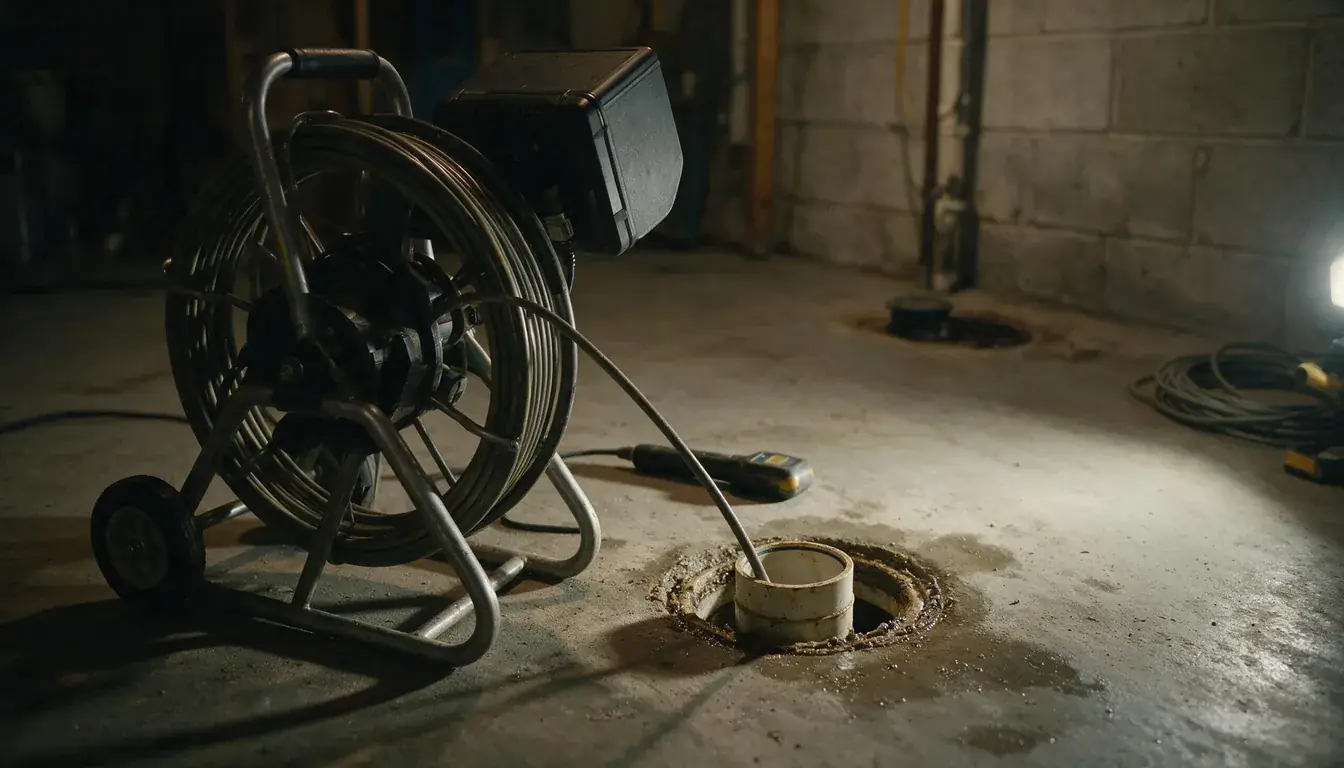
Yes, always. Cutting concrete blind is wasteful and damages flooring unnecessarily. Detection sequence on a Honolulu slab. Step 1: meter pressure test to confirm the leak is in the supply system (not a drain or external source, with ahupua'a upstream rule-out for yard-saturation signals). Step 2: acoustic ground microphone across the slab grid to triangulate sound from pressurized leak. Step 3: thermal infrared imaging to confirm temperature differential at the suspected location (warm spot for hot-water leak, cold-damp for cold-water). Step 4: tracer gas in some cases for deep-under-slab or PEX lines where acoustic signature is weaker. Detection runs typically and pins the leak to within 12-18 inches before concrete saw enters the picture, which cuts restoration cost by 60-80% versus exploratory opening. Price ranges: slab leak repair cost guide.
Reroute through ceiling chase vs slab cut on a Diamond Head slab?
Decision tree the Hawaii DCCA C-37-credentialed plumber works on a slab-leak call. Slab cut (pinpoint spot repair) is the right call when detection has triangulated a single small leak, slab access is clear of high-value tile or wood flooring, and the homeowner accepts that a future second pinhole on the same run will require another slab cut. a scope-based price. Reroute through ceiling chase is the right call when (a) multiple slab pinholes have surfaced within 18 months, (b) the floor finish above the leak is high-cost (custom tile, refinished hardwood common in Diamond Head/Kahala), or (c) the detection shows the same run has multiple pre-failure points. a scope-based price and finishes with PEX overhead replacing the failed copper slab run. Full repipe with manifold conversion is the right call when 3+ pinholes have surfaced on the property — the combined salt-air-plus-soft-water chemistry has reached the whole copper system. a scope-based price. Price ranges: slab leak repair cost guide.
How long does Honolulu slab leak repair take?
Single spot repair: 1-2 days from detection through concrete cure on the patch. Partial re-route through wall or ceiling: 1-2 days because no concrete work is involved. Full re-pipe: 4-7 days for the plumbing work, plus 7-14 days for finish restoration if drywall or flooring was opened. Concrete cure on patches needs 7 days minimum before reload-bearing finish goes back, with 28 days for full strength on any flooring that takes structural load. Pacific freight lead time on PEX manifold systems can add 2-3 weeks to project start when full re-pipe is the scope — the matched plumber confirms parts availability on the callback. The matched plumber schedules each phase and confirms downtime on supply (typically 4-8 hours per day during repair) so household water service planning is clear before work starts.
What are the early signs of a slab leak in Diamond Head, Kahala, or Hawaii Kai?
Six early signals on Honolulu slab-on-coral product. (1) Warm spot on tile or wood floor — hot-water-side slab leak, strongest single indicator. (2) Hairline crack in slab visible at the wall-floor transition, following a leak path. (3) Water bill jump of 20%+ at the BWS a scope-based price/1,000-gallon rate with no use change. (4) Salt-stained crystallization spots on slab edges on south-shore Diamond Head/Kahala — chloride concentration from a slow leak combining with salt-air aerosols. (5) Mildew or musty smell at a baseboard distinguishable from ambient south-shore humidity. (6) Pressure-gauge reading below 45 psi when BWS service is typically 55-75 psi. Any one of these in a Diamond Head, Kahala, or Hawaii Kai slab home escalates to detection rather than wait-and-see — the longer it runs, the higher the structural drying cost in humid south-shore conditions. Price ranges: slab leak repair cost guide.
Will Hawaii HO-3 cover Honolulu slab leak repair?
Standard Hawaii HO-3 typically covers the access cost (concrete cut, patch, finish restoration) for a sudden-and-accidental slab leak — meaning a clean break or pinhole that wasn't gradual seepage over years — subject to deductible. They do NOT cover the pipe repair itself (that's classified as maintenance) and they do NOT cover gradual seepage that should have been detected earlier. Hawaii carriers require the matched plumber's written diagnostic report distinguishing sudden-versus-gradual, photographic evidence of the failure, and acoustic-plus-thermal detection results. File within 30 days of discovery for fastest claim resolution. Some Hawaii carriers exclude slab-leak coverage entirely on copper supply systems past 50 years — common on Diamond Head/Kahala 1950s-60s product — so check policy before the claim becomes the surprise.
Can I re-pipe through walls and skip the slab entirely?
Often yes, and it's the preferred approach when multiple pinholes signal end-of-life copper. A partial re-route runs new PEX through wall or ceiling cavities, abandons the failed under-slab supply line, and re-connects at fixtures. Cost runs a scope-based price for a partial re-route serving 2-4 fixtures versus a scope-based price for a full re-pipe and a scope-based price for repeated spot repairs. PEX has a 50+ year service life and is materially less vulnerable to the soft-water-and-salt-air combined corrosion that's eroding Honolulu post-WWII copper. Two reasons to stay with slab repair on Honolulu addresses: (1) historic-finish constraints where wall and ceiling penetrations damage value (custom Hawaiian koa or monkeypod millwork in older Kahala homes), (2) Kalihi single-wall construction where wall-cavity routing isn't available. The matched plumber confirms the optimal pathway on the callback. Price ranges: slab leak repair cost guide.
Does Honolulu's tropical climate cause slab leaks differently than mainland?
Yes, three ways. First, no freeze cycle: zero freeze days per NOAA NCEI climate normals remove freeze-thaw stress as a slab-leak driver entirely — Honolulu slab leaks are driven by chemistry (salt-air-plus-soft-water-corrosion) and subgrade (Hawaii Kai dredge-fill settlement), not freeze cycles. Second, year-round ambient temperature 65-85F means slab moisture and humidity are persistent rather than seasonal, making early-detection more critical because secondary damage compounds faster in humid conditions. Third, salt-air exposure on south-shore properties means even non-slab copper sections suffer outside-in corrosion — slab failure often correlates with whole-system end-of-life rather than isolated single-point failure.
How fast can a Honolulu plumber arrive for an active slab leak?
Arrival times depend on which independent plumber takes the call, the time of day and the season — ask for an arrival window on the call. South-shore Oahu plumber density is tightest inside the urban core; for slab-leak calls specifically, Diamond Head/Kahala and Hawaii Kai are the concentration points and crews stage accordingly. The Hawaii DCCA C-37-credentialed plumber confirms ETA on callback. Triage protocol: shut off the supply at the main valve to stop active flow, mark the warm-spot location, and call. An active slab leak that runs unchecked overnight at typical BWS a scope-based price/1,000-gallon rate can put 1,000+ gallons under the floor — and the structural drying cost in humid south-shore conditions dwarfs the repair cost. Price ranges: slab leak repair cost guide.
Are AlertPlumber-matched plumbers credentialed for slab leak work in Hawaii?
The partner network requires every plumber routed through AlertPlumber for Honolulu slab leak work to maintain active Hawaii DCCA Contractors License Board C-37 plumbing contractor credentialing. Hawaii has roughly 4,200 active DCCA C-37 plumbers statewide. Homeowners can confirm credentials at the DCCA license-verification portal before authorizing detection or repair. Honolulu DPP permit sign-off on repair scope requires the active C-37 credential on file. AlertPlumber encourages homeowners to verify credentials with the state board directly before authorizing any work.
What ZIP codes does Honolulu slab leak repair cover?
The AlertPlumber call-out grid covers the full south-shore Oahu footprint — 96813 (Downtown / Chinatown / Kakaako — slab work uncommon here), 96814 (Ala Moana / Kakaako Makai — selective slab pockets), 96815 (Waikiki / Diamond Head — primary slab-leak zone), 96816 (Kahala / Diamond Head / Kapahulu — primary slab-leak zone), 96817 (Kalihi / Liliha / Nuuanu — single-wall construction zone), 96818 (airport / Salt Lake / Aliamanu), 96819 (Kalihi Valley / Kapalama), 96821 (Hawaii Kai / Aina Haina — primary slab-leak zone), 96822 (Manoa / Makiki / Punchbowl — pier-and-post construction limits slab work), 96825 (Hawaii Kai / Portlock — primary slab-leak zone). Local context. Honolulu's 343,302 residents per US Census Bureau, 2024, 1960 median home age, slab-on-coral construction concentrated in Diamond Head/Kahala 1950s-70s and Hawaii Kai 1960s-70s dredge-fill tracts, 2 gpg ultra-soft BWS volcanic basal-aquifer water that runs corrosive-not-scaling on aged copper supply, salt-air trade-wind chloride exposure on south-shore copper, and end-of-life copper at the 55-75-year mark on Diamond Head 1950s slab homes driving most slab-leak detection demand on south-shore Oahu.
One call puts your problem in front of a local plumber.
Call the number, or put your number in the form below — the request goes to an independent Hawaii plumber in our partner's network; ask about the slab leak repair and for a written estimate.
Need a slab leak repair callback in Honolulu?
In a meeting, with the kids, or just prefer not to call? Drop your ZIP and number below. AlertPlumber sends your request to our routing partner — if a participating plumber serves your area, they may call you back directly. For anything urgent, call the number on this page.
- 1 Submit your info. ZIP, phone, and what kind of work you need.
- 2 AlertPlumber passes it on to our routing partner for your area.
- 3 If a participating plumber serves your area, they may call you back. Ask for a written estimate before work starts.
Slab Leak Repair in Honolulu — when to call
Acute plumbing failures cannot wait. AlertPlumber routes calls about slab leak repair in Honolulu to independent Hawaii plumbers in our partner's network — call now or submit the form above for a callback.