
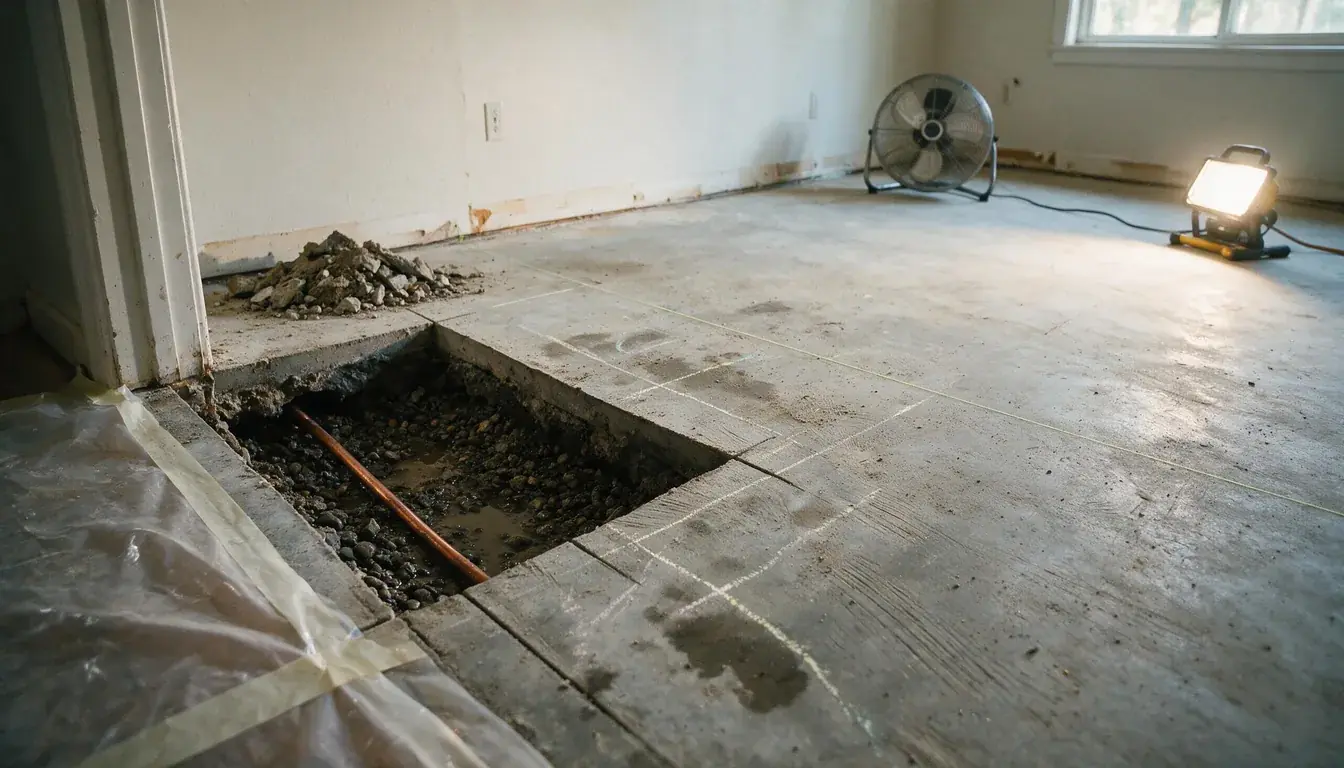
Emergency Slab Leak Repair in San Francisco, California
Slab Leak Repair in San Francisco, California detects and repairs leaks in pipes beneath the concrete slab foundation. Local conditions in San Francisco: water measured at 1.0, a 0 frost line and a median home age of 86 years.
Camera first, quote second — know exactly what's wrong in your San Francisco home before you approve a dollar.
Is slab leak repair in San Francisco, CA the right job?
- Burst Pipe Repair in San Francisco
- Water is spraying or leaking from a visibly split pipe, and the damaged section needs repair.
- Frozen Pipe Repair in San Francisco
- A tap has stopped flowing in freezing weather, and a frozen pipe needs to be checked and thawed.
- Water Line Repair in San Francisco
- Low pressure or water pooling between the meter and the house may point to an incoming water line that needs repair.
- Leak Detection in San Francisco
- Water is disappearing, a meter keeps moving with taps off, or damp spots keep returning, and the leak's location is unclear.
Who do I call for a slab leak in San Francisco?
A plumber who does leak detection and slab leak repair. In San Francisco, as anywhere, ask whether they locate the leak with detection equipment before any concrete is opened. It is urgent when water is coming up through the floor or the leak is near electrical outlets or appliances.
What does the local plumbing data show for San Francisco, CA?
Seeing these conditions at your place in San Francisco? Describe them on the call to a state-licensed local plumber — free, no obligation.
What are the pipe conditions in San Francisco, CA?
Slab leaks form when copper supply lines embedded in the concrete foundation develop pinholes from electrochemical corrosion, high-velocity water erosion, or slab movement. San Francisco homes built during the 1960s–1980s on post-tensioned slabs face the highest slab-leak risk — copper installed at original construction is approaching or past the 50-year corrosion window. Early signs include warm or wet spots on the floor, unexplained water bill spikes, and the sound of running water when all fixtures are closed. AlertPlumber routes your call to an independent California-licensed plumber — ask for acoustic leak location before any slab cutting begins.
Pre-war housing in San Francisco — median home age 86 years — may still carry galvanized steel supply lines installed before the copper era. Galvanized pipe corrodes from the inside out: internal oxidation gradually narrows bore diameter, reduces water pressure, and eventually results in pinhole failure at corroded sections. Inspection confirms whether scale and corrosion warrant section replacement or full repipe. Homes of other eras in San Francisco may have copper pipe or polybutylene supply lines instead; ask the plumber which your home has.
- Median home age
- 86 yrs
- Water hardness
- 1.0 gpg
- Frost line
- 0 in.
- Permit
- City fee schedule
Census housing age, San Francisco city, California: median year built 1946; 61.3% of homes built before 1960, 76.5% before 1980. Source: U.S. Census Bureau, ACS 2020–2024 5-year estimates, tables B25034 and B25035, read 2026-09-30.
Mention these conditions when you describe the symptom to the CA plumber you reach.
What local infrastructure shapes Slab Leak Repair in San Francisco?
Galvanized supply lines running below concrete slabs in 86-year structures here fail through internal zinc oxidation rather than slab movement or exterior soil stress. Zinc corrodes from the inside of the pipe wall outward — oxidation driven by sustained water contact regardless of mineral content, concentrating at joints between pipe sections and at points where concrete contacts the pipe without a protective sleeve. At 86 years, the zinc coating in the oldest below-slab runs is largely exhausted; direct water contact with the steel substrate drives accelerating corrosion of the pipe wall, which means bore restriction develops without the mineral staining that marks scale-driven failures in harder-water markets.
Water hardness at 1 grains per gallon is soft — mineral scale is not a secondary problem here. The absence of scale buildup means the oxidation of the galvanized wall itself is the sole internal failure driver rather than a combination of scale and metal degradation. That does not reduce severity; it means bore restriction and eventual wall breach are caused entirely by metal corrosion.
Electronic detection equipment locates the active failure point within the slab without requiring full-pipe-run access. Repair options include localized jackhammer access, above-slab rerouting through interior walls, or epoxy lining of accessible straight runs. Permit fees run the scheduled fee for the investigation and repair documentation before concrete is restored. Soft water means new copper or PEX installed above the slab will not face scale-related degradation after the repair. Permit fee ranges: permit fee estimator.
What shapes plumbing demand in San Francisco, CA?
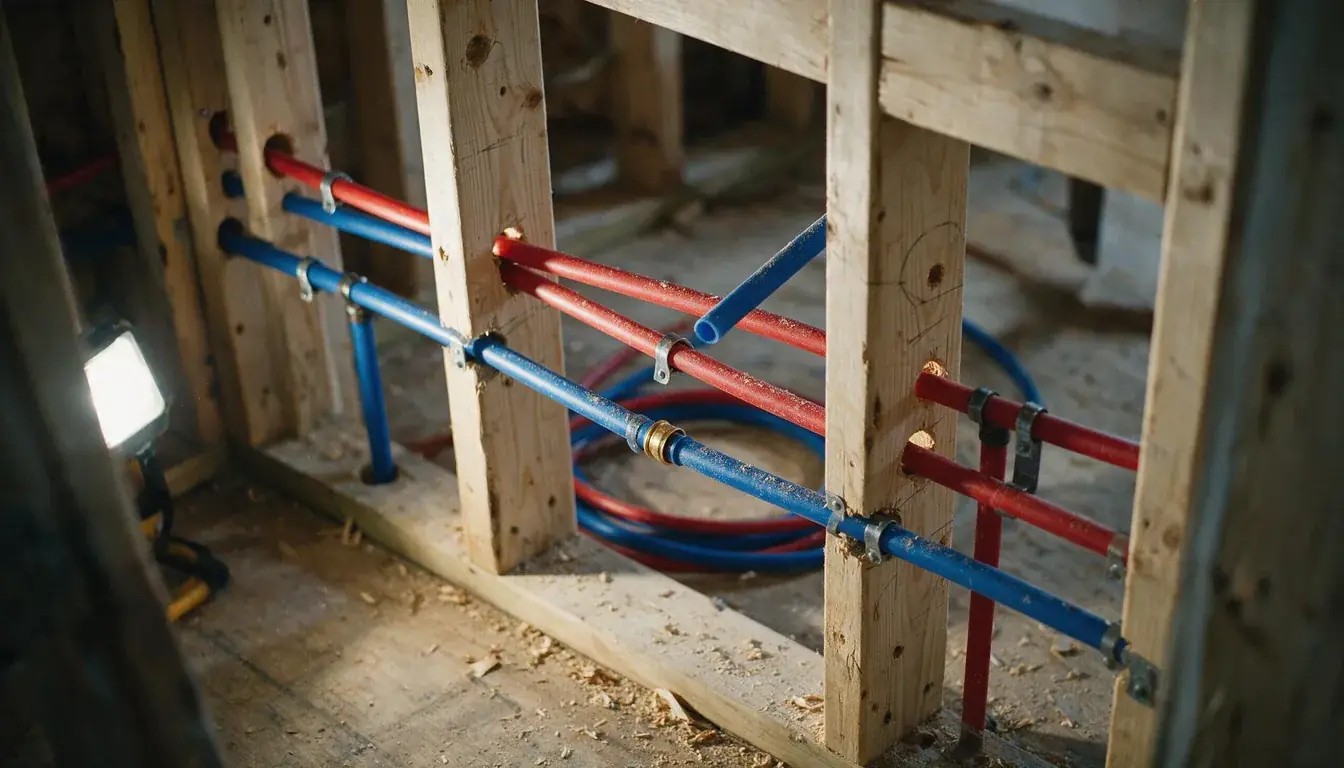
Galvanized supply lines and cast iron drain systems from the 1880s–1940s are past their 40–70-year design life across much of San Francisco. Interior rust scale progressively narrows pipe bore. Plumbers here routinely scope supply lines before quoting any repair — the underlying pipe condition often makes full replacement more cost-effective than patching.
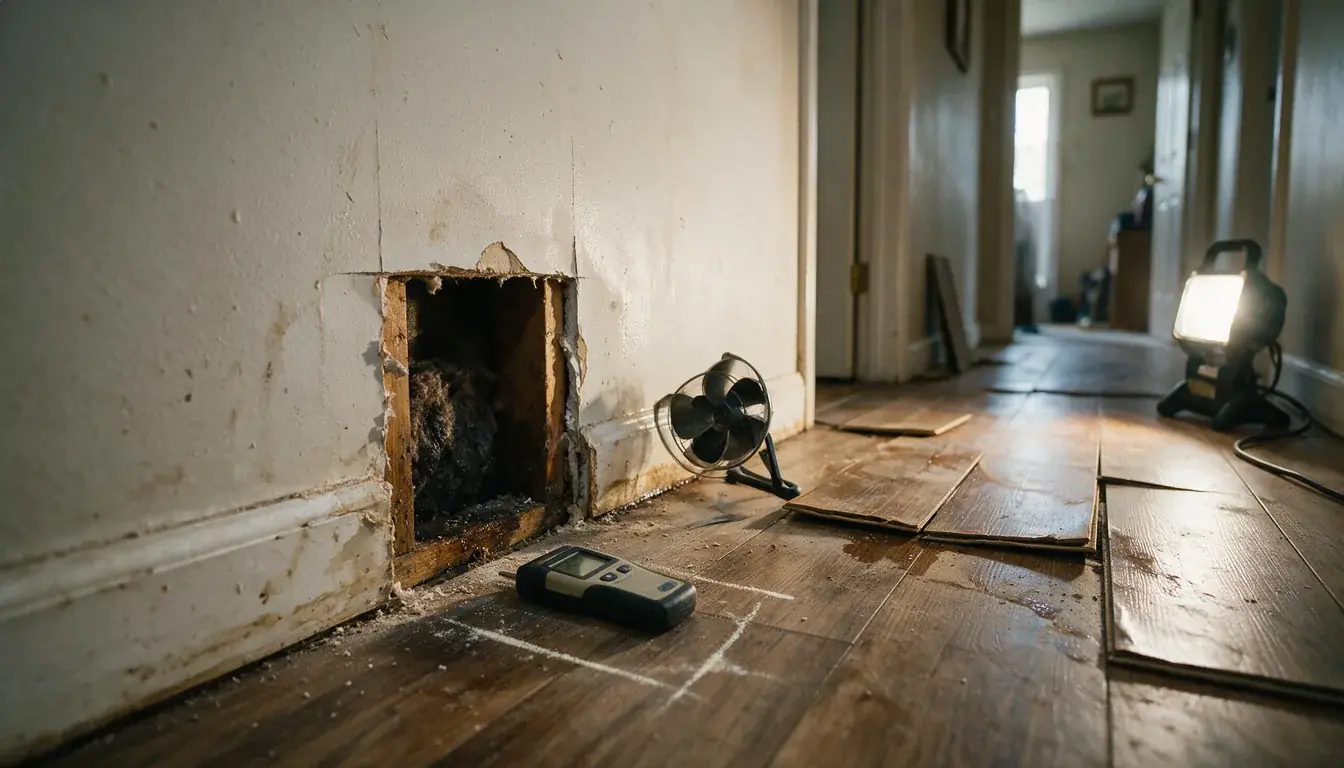
Soft, slightly acidic water in San Francisco is corrosive to copper pipe and solder joints — the opposite failure pattern from hard-water markets. Pinhole failure at fittings and elbows is the dominant non-emergency repair category. Anode rods also deplete faster in soft water, shortening effective tank life without timely replacement.
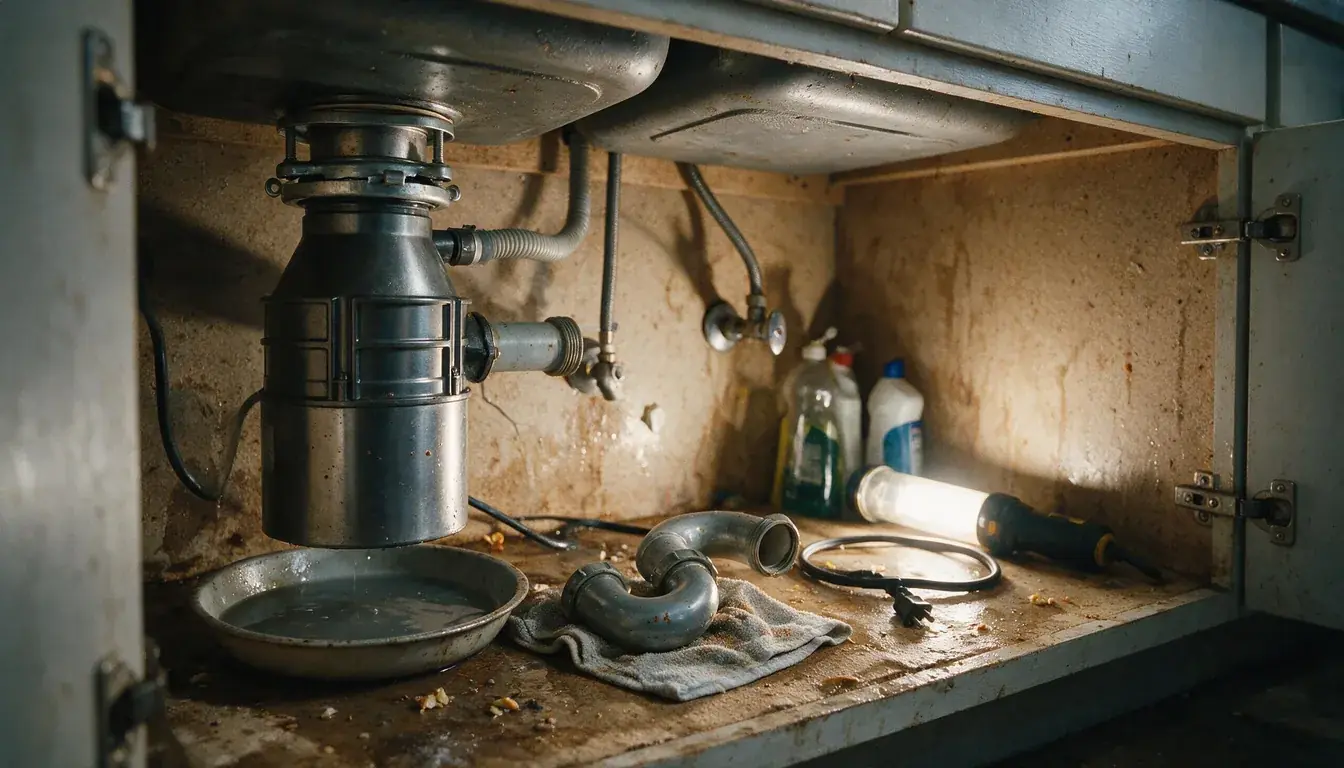
Summer heat above 95–115°F in San Francisco keeps sediment in suspension inside tank water heaters — accelerating element failure instead of allowing sediment to settle and flush. Attic-mounted supply lines face diurnal thermal stress year-round. Root intrusion concentrates around irrigated landscaping rather than distributing evenly across the full sewer lateral path.
Why diagnose before repairing in San Francisco?
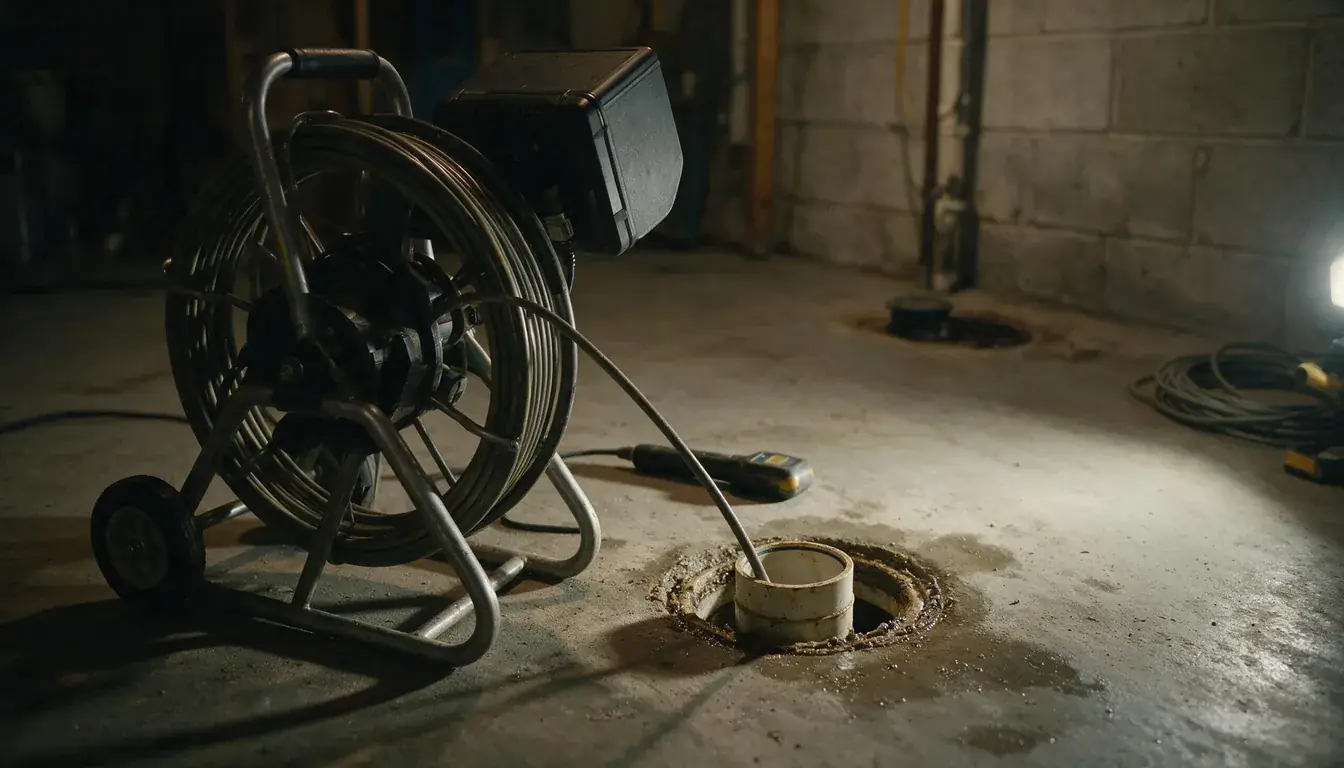
Describe the symptom — not the repair. AlertPlumber routes the call to an independent CA-licensed plumber in its partner's network — ask whether the site visit will use camera tracing, acoustic detection, or hydrostatic pressure testing matched to the reported failure type.
Ask the plumber for a written diagnostic report: confirmed failure location, available repair methods, and tradeoffs — disruption level, material durability, long-term cost, and whether a San Francisco building permit applies to the selected method.
You select the repair path. Ask for a fixed scope and price on the authorized method before the California-licensed plumber proceeds and, where required, who files the permit application to San Francisco.
Slab Leak Repair cost calculator — San Francisco
Pre-filled for slab leak repair in San Francisco. Adjust the ZIP for a neighboring area, or change the service to compare. Calculator pulls from the city's scraped permit-fee + state plumber-density data.
Slab Leak Repair emergency in San Francisco?
Every hour without a repair increases structural risk and remediation cost. Calls connect to independent local plumbers in our partner's network — ask for an arrival time and a written estimate.
What else do people ask about slab leak repair in San Francisco?
How much does slab leak repair cost in San Francisco?
San Francisco slab leak costs: priced per job for a single spot repair (jackhammer the slab, splice in new copper or PEX), a scope-based price for a reroute through walls or attic, and a scope-based price for a full PEX repipe — the durable fix when more than one leak has surfaced. The San Francisco city permit fee applies to any supply-line work. The state-credentialed California plumber pulls the permit and includes the fee in the written quote. Price ranges: slab leak repair cost guide.
How do I know if I have a slab leak in my San Francisco home?
Top diagnostic symptoms in San Francisco:
- Warm spot on the floor (hot-water-line slab leaks dominate at 1.0 gpg hardness)
- Water bill spike of a scope-based price with no usage change
- Meter low-flow indicator moves with all fixtures off
- Faint hissing sound near water heater closet at 2 a.m.
- Hairline cracks in tile or grout above the slab
Why are slab leaks common in San Francisco homes built before 1995?
Pre-1906-earthquake + post-fire reconstruction housing stock with 100-year-old galvanized + cast-iron systems drives constant repipe demand. Coastal salt-air corrosion, soft Hetch Hetchy water (1 gpg), seismic-strap requirements. No freeze risk. San Francisco homes from that era often used Type M copper supply lines run through the slab — once standard practice, now a known failure mode. Hard water at 1.0 gpg accelerates internal pinhole corrosion, especially on the hot-water side where heat compounds the chemistry. Median San Francisco home age of 86 years puts most of the at-risk stock squarely in the 30–50 year copper-failure window per Copper Development Association. 1.0-gpg water from the San Francisco Public Utilities Commission system accelerates copper pinhole corrosion in San Francisco slab-supply systems, especially on the hot-water side. Pre-1995 San Francisco homes from the 86-year median era are squarely in the 30–50 year copper-failure window.
What detection methods does a San Francisco plumber use?
The standard San Francisco workflow: (1) static pressure-isolation test on the supply manifold to confirm a leak exists and isolate hot vs cold side, (2) FLIR thermal imaging across the floor surface to localize the warm anomaly (works best on hot-side leaks, common at 1.0 gpg), (3) acoustic ground-microphone listening to triangulate within 12–18 inches, (4) electronic line-tracing to map the pipe route before any concrete is opened. Skipping the pressure test is the #1 reason a "found" leak turns out to be the wrong location.
Spot repair, reroute, or full repipe — which fits my San Francisco home?
Spot repair: right call for a single first-time leak in a copper line that's otherwise sound. Reroute: right call when the failure is on a single branch (kitchen line, bath group) and overhead access through walls/attic is feasible. Full PEX repipe: right call when 2+ slab leaks have surfaced in 24 months — per Copper Development Association, that pattern means the entire copper system is at end-of-life. Price ranges: slab leak repair cost guide.
Does California homeowners insurance cover San Francisco slab leak detection?
Most California HO-3 policies cover the DETECTION fee when the underlying leak is "sudden and accidental" — not gradual seepage. They typically cover tear-out and access (slab cut, wall opening) but exclude the cost of repairing the failed pipe (treated as wear-and-tear). State Farm, Farmers, and USAA all reimburse San Francisco-area detection invoices when paired with a moisture-mapping report. Submit the plumber's written report with the claim — verbal diagnosis alone is usually denied.
How do I check the license of plumbers in CA?
The partner network requires every plumber routed through AlertPlumber for slab leak work in San Francisco to maintain active California state-credentialed status. CA CSLB, 2024 Q4 lists 19,840 active CSLB C-36 statewide. Slab leak repair requires both the plumbing credential AND specialty experience with concrete cutting + supply-line repipe — confirm any specific plumber's credentials with the state board before authorizing work. California contractor licensing covers slab cut + supply-line repipe; San Francisco permit + inspection is non-negotiable on any slab-cut work. Ask whether the plumber will pull the permit and include the fee in the quote. Permit fee ranges: permit fee estimator.
How long does San Francisco slab leak repair take?
Detection workup: 60–120 minutes. Spot repair (jackhammer + splice + concrete patch): 4–6 hours. Reroute through walls/attic: 1–2 days. Full PEX repipe of a typical San Francisco 3-bath home: 2–3 days. Concrete cure on patches: 24–48 hours before tile/finish work can resume. The matched plumber gives a firm timeline on the callback after reviewing your home's pipe routing and access points.
Should I get a system-wide pressure test on my San Francisco home?
Yes if your San Francisco home is in the 1960–1995 copper-in-slab era and you've already had one slab leak repaired. A system-wide static pressure test isolates each branch (hot, cold, irrigation) and holds 80 psi for 15 minutes — any pressure drop signals an additional weak point that hasn't surfaced yet. Per Copper Development Association field data, homes with one detected slab leak have a 35–50% probability of a second pinhole within 36 months. Price ranges: slab leak repair cost guide.
When is full PEX repipe the right answer in San Francisco?
Full repipe is the durable answer when: (1) you've had 2+ slab leaks in 24 months, (2) the home is past 30 years on Type M copper at 1.0 gpg hardness, OR (3) detection finds multiple at-risk hot-side branches. PEX-A run overhead through walls and attic — never back through the slab — is the standard San Francisco repipe method. Per PEX Association, PEX-A in 2026 carries a 25-year manufacturer warranty when installed per spec. Local context. Pre-1906-earthquake + post-fire reconstruction housing stock with 100-year-old galvanized + cast-iron systems drives constant repipe demand. Coastal salt-air corrosion, soft Hetch Hetchy water (1 gpg), seismic-strap requirements. No freeze risk. 808,437 San Francisco homes with 86-year median age and 1.0-gpg water put copper-in-slab supply systems squarely in the 30–50 year pinhole-failure window. The San Francisco Public Utilities Commission water profile drives the failure curve.
One call puts your problem in front of a local plumber.
Call the number, or put your number in the form below — the request goes to an independent California plumber in our partner's network; ask about the slab leak repair and for a written estimate.
Need a slab leak repair callback in San Francisco?
In a meeting, with the kids, or just prefer not to call? Drop your ZIP and number below. AlertPlumber sends your request to our routing partner — if a participating plumber serves your area, they may call you back directly. For anything urgent, call the number on this page.
- 1 Submit your info. ZIP, phone, and what kind of work you need.
- 2 AlertPlumber passes it on to our routing partner for your area.
- 3 If a participating plumber serves your area, they may call you back. Ask for a written estimate before work starts.
Slab Leak Repair in San Francisco — when to call
Acute plumbing failures cannot wait. AlertPlumber routes calls about slab leak repair in San Francisco to independent California plumbers in our partner's network — call now or submit the form above for a callback.